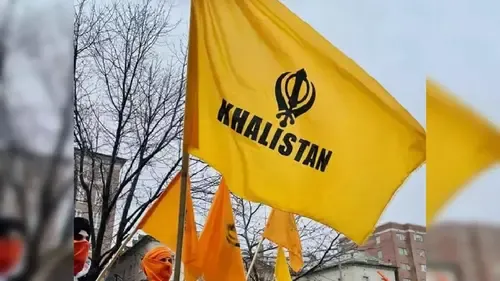
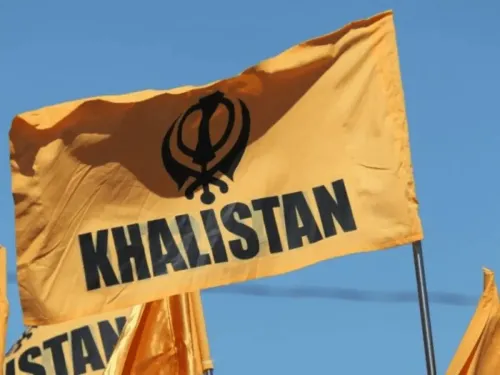
Khalistan movement in credibility crisis as Pannun turns SFJ into extortion racket

Synopsis
India's intelligence agencies say the Khalistan movement is collapsing from within — not because of external crackdowns alone, but because Gurpatwant Singh Pannun has allegedly turned Sikhs for Justice into an extortion operation. With the ISI's consolidation plan failing, recruitment drying up in Punjab, and India, UK and Canada now sharing intelligence, the separatist project is fracturing at its ideological core.
Key Takeaways
The Khalistan movement is losing momentum due to internal splits and alleged financial mismanagement, according to Indian intelligence officials .
Babbar Khalsa International (BKI) is blaming Gurpatwant Singh Pannun of the banned Sikhs for Justice (SFJ) for turning the movement into an extortion racket.
Pannun's referendums abroad, claimed to draw lakhs, reportedly attract fewer than 100 attendees ; collected funds are allegedly unaccounted for.
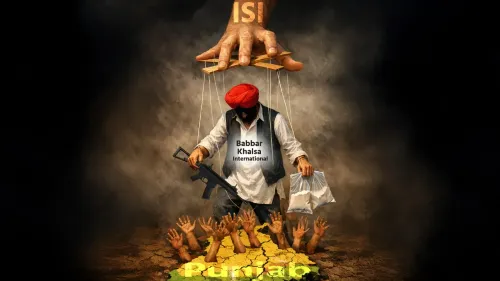
The ISI 's plan to unify all Khalistani outfits under the BKI has stalled, with multiple groups refusing to cede autonomy.
Recruitment in Punjab has dried up, with youth rejecting both ideological appeals and monetary incentives.
India , the United Kingdom , and Canada are sharing intelligence and jointly tracking Khalistani operatives, further limiting their operational space.
The Khalistan movement, which Pakistan's Inter-Services Intelligence (ISI) has been actively attempting to revive, is losing ground rapidly — not because of external pressure alone, but due to deep internal fractures, according to Indian intelligence officials. At the heart of the crisis is Gurpatwant Singh Pannun, the proscribed chief of the banned terror outfit Sikhs for Justice (SFJ), who is accused by rival Khalistani factions of reducing the movement to a money-spinning extortion operation.
BKI Turns on Pannun
The Babbar Khalsa International (BKI) — one of the oldest and most ideologically driven Khalistani outfits — is openly blaming Pannun for hollowing out the movement, officials say. The BKI leadership contends that the SFJ, which was originally assigned a communications role within the broader Khalistani ecosystem, has devolved into a vehicle for financial extortion, abandoning any credible separatist agenda.
'Pannun makes empty threats, and most of his own followers have realised that,' an official noted. 'This is why the SFJ is losing heavily in terms of traction.' The BKI, which still counts ideologically committed veterans in its ranks, reportedly views the SFJ's trajectory as a betrayal of the cause.
ISI's Consolidation Plan Is Failing
According to an Intelligence Bureau (IB) official, the ISI had devised a consolidation strategy: bring all Khalistan-linked outfits — including the Khalistan Liberation Force, Khalistan Tiger Force, Khalistan Zindabad Force, International Sikh Youth Federation, and the Khalistan Command Force — under the unified command of the BKI. The rationale was that multiple command centres were producing conflicting agendas and operational inefficiencies.
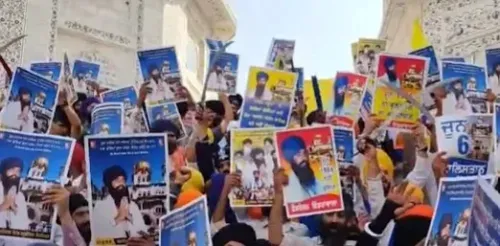
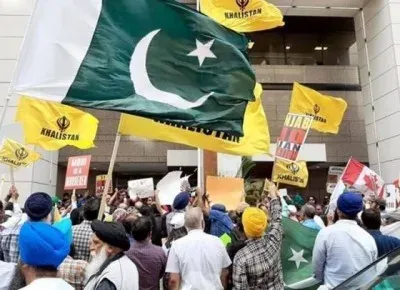
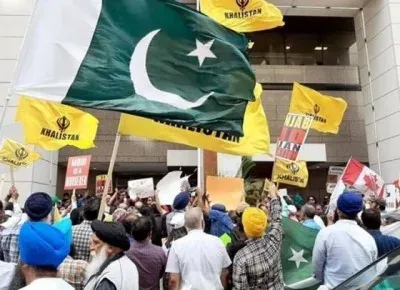
That plan has stalled, officials say, largely because of Pannun. 'He is a man who does not believe in ideology and is only interested in calling for referendums and also threatening people into parting with their money,' a second official said. The referendums Pannun has championed abroad — which he claims draw lakhs of participants — reportedly attract fewer than 100 people in reality, according to officials. The funds collected for these events are allegedly unaccounted for, with the ISI and rival Khalistani groups suspecting that Pannun has been diverting the money to himself and key aides.
Recruitment Drying Up in Punjab
The combined effect of financial mismanagement and ideological incoherence is being felt most acutely in Punjab, where the BKI has been struggling to recruit youth. Officials note that even those approached for recruitment are questioning the purpose of the movement, citing the extortion-driven activities of Khalistani groups abroad as a deterrent.
The ISI reportedly attempted to counter this by instructing the BKI to offer monetary incentives to potential recruits. That approach has also largely failed, with many refusing the bait on the grounds that 'the cause is worthless and the assignment too risky,' according to officials. The SFJ's decision to begin targeting and threatening ordinary Sikhs for money has further alienated the very community the movement claims to represent.
India, UK and Canada Close Ranks
The internal disarray within Khalistani groups has been compounded by a coordinated international response. India, the United Kingdom, and Canada have, according to officials, formed a united front to dismantle Khalistani networks, with intelligence-sharing arrangements now actively tracking key figures. Law enforcement agencies in these countries are reportedly maintaining close surveillance on Khalistani events, making large-scale mobilisation significantly harder.
Officials attribute this renewed international cooperation partly to the diplomatic groundwork laid under Prime Minister Narendra Modi. The trilateral pressure has further constrained the operational space available to groups like the SFJ and BKI.
Pannun's Position Weakening
Officials say Pannun's influence is on a downward curve. He is described as being closely tracked by agencies across multiple jurisdictions. More damaging, perhaps, is that he has lost the confidence of the broader Khalistani network — the very constituency he needs to remain relevant. With the ISI's consolidation strategy in disarray and recruitment at a low ebb, the Khalistan movement's revival, at least in its current form, appears increasingly unlikely, according to officials.
Point of View
It loses the one thing insurgencies depend on: community legitimacy. Pannun's alleged financial siphoning has done more damage to the ISI's revival project than years of counter-terror operations. The more important question mainstream coverage is missing is structural: why has the ISI been unable to find a credible ideological successor to the movement's original leadership? The answer likely lies in the diaspora's own generational shift — younger Sikhs abroad are not the constituency for armed separatism that the ISI once counted on, and no amount of consolidation orders from Rawalpindi can manufacture that political will.
NationPress
14 Sept 2026
Frequently Asked Questions
Why is the Khalistan movement losing credibility?
Indian intelligence officials say the movement is fracturing because Gurpatwant Singh Pannun's Sikhs for Justice has allegedly shifted from separatist activism to running an extortion racket, alienating ideologically driven groups like the Babbar Khalsa International. Recruitment in Punjab has dried up and the ISI's plan to unify all Khalistani outfits has stalled.
What is Gurpatwant Singh Pannun accused of?
Pannun, the proscribed chief of the banned Sikhs for Justice (SFJ), is accused by rival Khalistani factions and Indian officials of using referendum events abroad to collect funds that go unaccounted for, and of threatening ordinary Sikhs into paying money. His referendums, claimed to draw lakhs, reportedly attract fewer than 100 people in reality.
What was the ISI's plan to revive the Khalistan movement?
According to an Intelligence Bureau official, the ISI instructed all Khalistan-linked outfits — including the Khalistan Liberation Force, Khalistan Tiger Force, Khalistan Zindabad Force, International Sikh Youth Federation, and Khalistan Command Force — to operate under the unified command of the Babbar Khalsa International. The plan has failed due to disagreements, largely attributed to Pannun's conduct.
How are India, the UK and Canada responding to Khalistani groups?
The three countries have reportedly formed a united front, sharing intelligence and coordinating law enforcement surveillance on Khalistani operatives and events. Officials say this trilateral cooperation has significantly curtailed the ability of groups like the SFJ and BKI to conduct large-scale activities abroad.
What is the Babbar Khalsa International (BKI)?
The Babbar Khalsa International is one of the oldest Khalistan-linked terror outfits, with a membership that includes veterans who prioritise ideology over financial gain. It is the group the ISI has tasked with leading the Khalistan revival effort, though its efforts have been undermined by internal rifts and Pannun's alleged mismanagement of funds.