Khalistan movement fragmented, factions cannibalising each other: Report
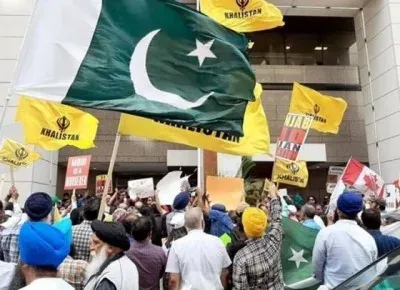
Synopsis
A new Khalsa Vox report exposes the Khalistan movement's most damaging enemy: itself. BKI chief Wadhawa Singh Babbar's Operation Blue Star anniversary letter, far from rallying separatists, reveals a movement consumed by internal contempt — with Pakistan-based handlers asking Sikhs worldwide to sacrifice 'body, mind, and money' for what the report calls proxy warfare, not liberation.
Key Takeaways
The Khalistan movement is not a unified front but a fragmented ecosystem of competing factions, according to a Khalsa Vox report.
BKI chief Wadhawa Singh Babbar 's Operation Blue Star anniversary statement dismisses SFJ referendums as 'toothless theatre' and ridicules Akali Dal factions — signalling deep internal divisions.
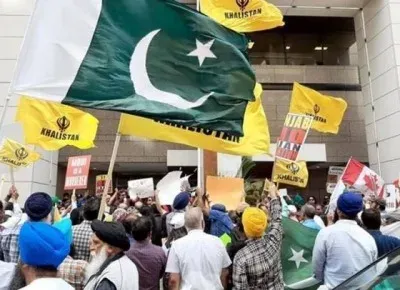
The report describes the movement as operating under handlers in Islamabad pursuing interests unrelated to Sikh welfare.
Wadhawa Singh's letter urges Sikhs in Punjab , Canada , the UK , and Australia to contribute 'body, mind, and money' — which the report calls 'recruitment literature for proxy warfare.' The report stresses that Sikh civic institutions — the langar , seva , and Gurdwara — represent a rich civilizational legacy being exploited by Pakistan-backed separatist networks.
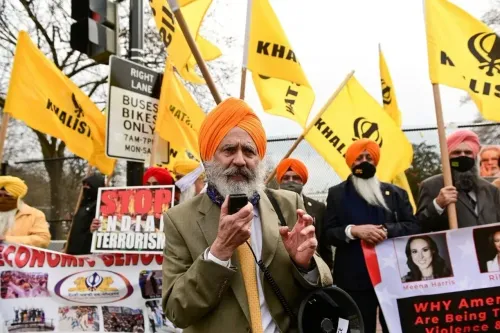
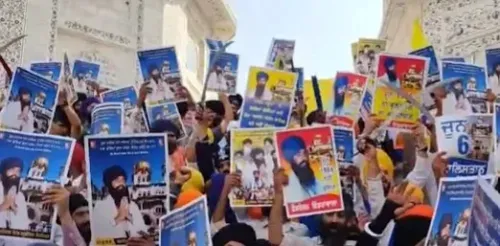
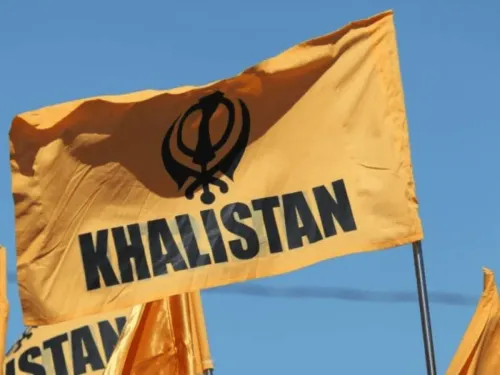
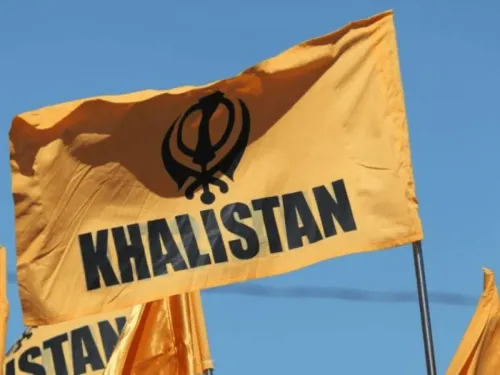
The Khalistan movement — spanning designated terror outfits such as Babbar Khalsa International (BKI) and Sikhs for Justice (SFJ), various Akali Dal factions, and networks linked to imprisoned leader Amritpal Singh — is far from a unified separatist front, according to a new report. Instead, it functions as a fractured ecosystem of competing entities, each undermining the other's credibility while operating under the influence of handlers based in Islamabad whose interests, the report argues, have little to do with Sikh welfare.
BKI Chief's Statement: A Confession of Failure
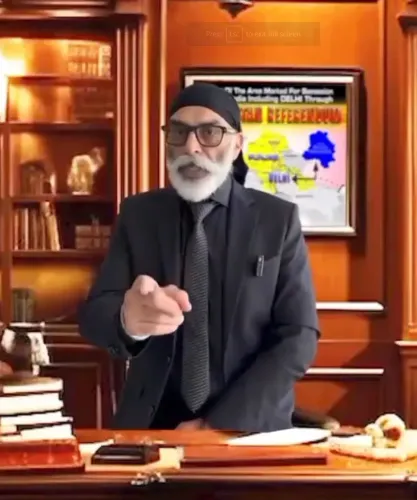
The Khalsa Vox report, released around the Operation Blue Star anniversary in June 2025, analyses a statement by Wadhawa Singh Babbar, chief of the Pakistan-based Babbar Khalsa International — a designated terrorist organisation. Rather than reading as a rallying call, the report concludes, the statement inadvertently lays bare the movement's deep internal contradictions.
'Every June, the anniversaries around Operation Blue Star are used by a handful of overseas-based extremists to reignite a separatist cause that the vast majority of India's Sikh community has long since moved past,' the report noted. It added that Wadhawa Singh's words 'reveal not the strength of the Khalistan movement but its profound and irreversible disarray.'
Factions at War With Each Other
What stands out in Wadhawa Singh's letter, according to the report, is not its anti-India rhetoric — described as 'boilerplate' — but the contempt it directs at fellow pro-Khalistan groups. He reportedly dismisses SFJ's referendum campaigns as 'toothless theatre', ridicules Shiromani Akali Dal factions for seeking electoral relevance within India's constitutional framework, and sneers at parties that 'deliver speeches about Khalistan' without a concrete roadmap.
The report characterises this internal hostility as a 'fragmented ecosystem cannibalising itself' — a far cry from the image of a disciplined liberation movement that overseas extremist networks seek to project.
Pakistan's Role and the Proxy Warfare Charge
The Khalsa Vox report quotes a translation of Wadhawa Singh's letter, in which he states: 'Without a solid, modern plan and arms struggle, Khalistan can't be achieved,' and calls on Sikhs to 'contribute to the Khalistan movement with body, mind, and money.'
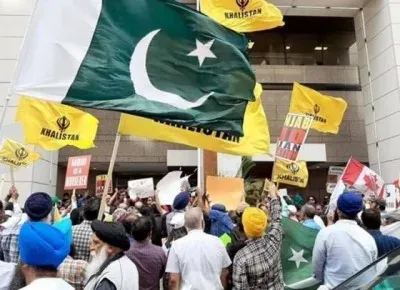
The report is pointed in its response: a man based in Pakistan — a country with a 'documented, decades-long record of weaponising Sikh grievances as a destabilization tool against India' — is asking Sikhs in Punjab, Canada, the UK, and Australia to risk their lives and resources for a cause whose 'principal beneficiary would be the Pakistani deep state.' The report labels this 'recruitment literature for proxy warfare', not liberation theology.
The Sikh Legacy Being Exploited
The report underscores the distinguished contributions of the Sikh community to India — as soldiers, administrators, entrepreneurs, athletes, and artists — and highlights Punjab's farmers as central to the nation's food security. Sikh institutions such as the langar, seva, and the Gurdwara are described as 'some of the most inclusive civic traditions in the world.'
'To reduce this rich civilizational legacy to a violent, Pakistan-sponsored territorial fantasy is not advocacy for Sikh rights. It is exploitation of Sikh identity,' the report stressed.
What This Signals Going Forward
The report's findings suggest that the Khalistan movement's primary vulnerability is not external pressure but its own internal fractures. With rival factions discrediting each other and no unified leadership or roadmap in sight, the movement's operational capacity appears increasingly limited. Observers will watch whether overseas handlers attempt to paper over these divisions ahead of future anniversary cycles or key political moments in the Punjab electoral calendar.
Point of View
The movement's strategic bankruptcy becomes self-evident. What the report also surfaces, and what mainstream coverage tends to underplay, is the Pakistan angle — not as allegation but as structural reality. Islamabad's incentive is perpetual destabilisation, not a Sikh homeland; the two goals are not the same, and the overseas diaspora being recruited deserves to understand that distinction. The real story here is not Khalistan's threat level — which appears to be declining — but the cynical machinery that keeps the embers alive for geopolitical utility.
NationPress
13 Sept 2026
Frequently Asked Questions
What does the Khalsa Vox report say about the Khalistan movement?
The Khalsa Vox report concludes that the Khalistan movement is not a unified political force but a fragmented ecosystem of rival factions — including BKI, SFJ, and various Akali groupings — that actively discredit one another. It argues the movement's internal divisions reveal 'profound and irreversible disarray' rather than the strength of a liberation cause.
Who is Wadhawa Singh Babbar and what did he say?
Wadhawa Singh Babbar is the chief of Babbar Khalsa International (BKI), a Pakistan-based designated terrorist organisation. In his Operation Blue Star anniversary statement, he dismissed SFJ's referendum campaigns as ineffective, ridiculed Akali Dal factions, and urged Sikhs globally to contribute 'body, mind, and money' to the Khalistan cause — remarks the Khalsa Vox report characterises as a confession of the movement's failure.
What is Pakistan's alleged role in the Khalistan movement?
According to the Khalsa Vox report, Khalistan factions are operating under handlers based in Islamabad who are pursuing interests unrelated to Sikh welfare. The report describes Pakistan as having a 'documented, decades-long record of weaponising Sikh grievances as a destabilization tool against India,' and labels BKI's recruitment appeals as 'proxy warfare' rather than a genuine liberation movement.
How does the report view the Sikh community's relationship with India?
The report highlights that Sikhs have served India with distinction as soldiers, administrators, entrepreneurs, athletes, and artists, and that Punjab's farmers have been central to the country's food security. It argues that the Khalistan movement exploits Sikh identity rather than representing it, and that Sikh civic institutions such as the langar, seva, and Gurdwara reflect one of the world's most inclusive traditions.
Is the Khalistan movement a credible threat to India's security?
The Khalsa Vox report suggests the movement's operational credibility is diminishing due to its own internal fractures — rival factions undermine each other's legitimacy and there is no unified leadership or roadmap. However, it cautions that overseas handlers and Pakistan-based networks continue to recruit from diaspora communities in Canada, the UK, and Australia, keeping the separatist cause alive as a geopolitical instrument.