Khalistan movement losing ground as ISI rethinks funding strategy
Synopsis
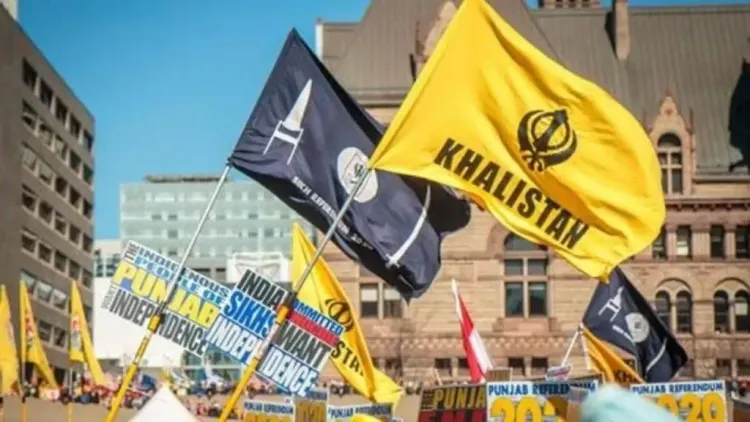
The Khalistan movement is reportedly louder on social media than on the ground — and even that digital noise is masking structural collapse. Canadian Sikh support has fallen from 30% to under 5%, SFJ referendums draw fewer than 30 people, and asylum claims by Khalistani operatives are being thrown out by Canadian courts. The ISI is now rethinking its playbook, but officials warn that desperation — not strength — is what makes these elements dangerous.
Key Takeaways
Intelligence assessments indicate the Khalistan movement has far greater social media presence than ground-level support.
Sikhs for Justice (SFJ) referendums are reportedly drawing only 20 to 30 people , with videos digitally amplified to appear larger.
Canadian Sikh backing for the movement has reportedly fallen from 20–30 per cent to below 5 per cent , according to officials.
CSIS designating Khalistani elements a national security threat and Canadian courts rejecting asylum claims have further weakened the movement.
Indian and Canadian agencies are reportedly now cooperating closely on the issue.
The ISI is recalibrating its approach, planning to focus on social media campaigns and political advocacy rather than direct operational funding, officials say.
Pakistan's Inter-Services Intelligence (ISI) is reassessing its financial strategy for the Khalistan movement after intelligence assessments indicate the separatist cause has far greater visibility on social media than actual traction on the ground, according to officials. Despite sustained Pakistani funding, gang cultivation, and support for overseas pro-Khalistan groups, the movement appears to be hollowing out at its base.
Movement fades on the ground
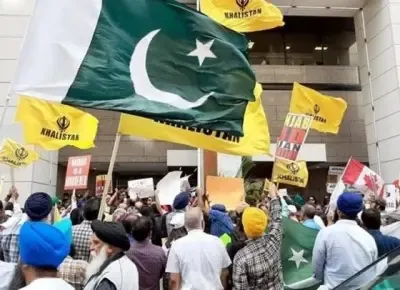
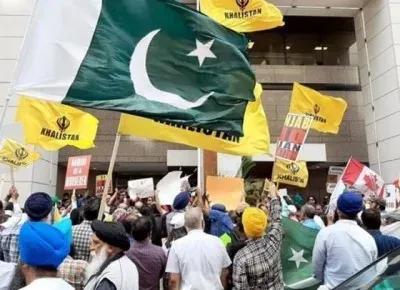
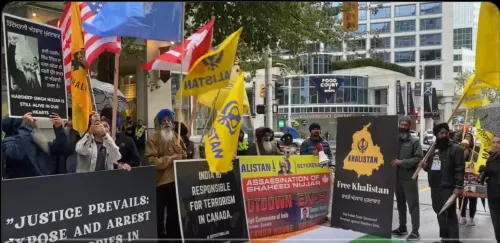
Officials tracking the Khalistan movement note a sharp divergence between its digital footprint and real-world support. Referendums organised by the proscribed outfit Sikhs for Justice (SFJ) — once capable of drawing large crowds — are now reportedly attracting no more than 20 to 30 people, according to intelligence assessments.
'However, when the content is put up on social media, there is a lot of re-working of the videos that is done in a bid to amplify the event,' an official said. The digital amplification, officials argue, masks a structural collapse in on-the-ground mobilisation.
A key reason for the retreat, according to one official, is a growing perception among former sympathisers that the movement has transformed into 'a criminal syndicate specialising in drugs and arms trade while also running an extortion racket,' rather than a political cause.
Canadian support base crumbles
Canada has historically been the movement's most significant overseas base, with a sizeable section of the Sikh diaspora lending financial and political support. That dynamic appears to have shifted dramatically.
'The support base among the Canadian Sikhs for the Khalistan movement, which was at around 20 to 30 per cent, has dropped to below 5 per cent now,' an official said. Many within the community reportedly view groups such as the SFJ as liabilities, arguing their criminal associations are undermining the reputation and hard work of Sikhs abroad.
The Canadian Security Intelligence Service (CSIS) labelling Khalistani elements as a serious national security threat has also, according to officials, significantly shifted community perceptions. Further compounding the movement's difficulties, asylum claims filed by Khalistani operatives before the Immigration and Refugee Board (IRB) and federal courts in Canada have been rejected as 'opportunistic in nature.'
Indian and Canadian agencies now working together
An Intelligence Bureau official confirmed that Indian and Canadian agencies are now cooperating closely on the issue — a notable development given the diplomatic friction between the two countries in recent years over Khalistan-related matters.
The official noted that desperation for funds has led Khalistani groups to resort to threatening members of the Sikh diaspora for money. 'The lack of major donations and the declining support for the movement has made them desperate for funds. They have been threatening the Sikh diaspora to dole out money and in the bargain have modelled themselves as desperate extortionists rather than activists fighting for a cause,' the official said.
ISI recalibrates, danger remains
Despite the movement's declining traction, Indian security agencies say they are not lowering their guard. Officials warn that diminishing support could increase the desperation of fringe elements, potentially triggering a violent incident. The ISI is reportedly analysing the situation and is planning to increase spending — though with greater caution, mindful that cash-strapped operatives within groups like the SFJ could siphon off funds.
According to officials, the ISI is expected to channel future investment primarily into social media initiatives and political advocacy groups rather than direct operational support, in a bid to preserve deniability while sustaining narrative pressure.
Government's outreach and counter-narrative
In 2023, a Sikh delegation met Union Finance Minister Nirmala Sitharaman and stated that measures taken by the Narendra Modi government for the community had contributed to the movement's fizzling out. Officials say the SFJ is now attempting to counter such narratives by portraying the government as anti-Sikh, hoping to reignite communal tensions and eventually foment violence in Punjab.
With support bases shrinking globally and legitimate asylum routes closing, the coming months will test whether the ISI's recalibrated strategy can reverse what intelligence officials describe as a structural decline.
Point of View
But it also signals a more insidious phase: manufactured narratives are harder to counter than rallies that attract 20 people. India-Canada intelligence cooperation is the most significant operational development buried in these assessments — and the most under-reported one.
NationPress
21 Oct 2026
Frequently Asked Questions
Why is the Khalistan movement losing support?
Officials say many former supporters have concluded the movement is effectively a criminal syndicate involved in drug trafficking, arms trade, and extortion, rather than a genuine political cause. The movement's associations with dangerous gangs have alienated large sections of the Sikh diaspora, particularly in Canada.
How much has Canadian Sikh support for Khalistan declined?
According to officials, Canadian Sikh backing for the Khalistan movement has fallen from around 20 to 30 per cent to below 5 per cent. Many Canadian Sikhs now view groups like the SFJ as liabilities that undermine the community's standing abroad.
What is the ISI's new strategy for the Khalistan movement?
The ISI is reportedly planning to shift focus from direct operational funding to backing social media campaigns and political advocacy groups. Officials say the agency is cautious about cash transfers because it fears cash-strapped operatives may siphon off funds.
What role has Canada played in the Khalistan movement?
Canada has historically been the movement's primary overseas base. However, the Canadian Security Intelligence Service (CSIS) has labelled Khalistani elements a serious national security threat, and the Immigration and Refugee Board has rejected asylum claims by Khalistani operatives as opportunistic. Indian and Canadian agencies are now reportedly cooperating on the issue.
Is the Khalistan threat considered over by Indian security agencies?
No. While traction has declined significantly, Indian intelligence agencies say they are not lowering their guard. Officials warn that the movement's desperation for funds and declining legitimacy could push fringe elements toward violence, and the ISI is expected to increase spending in a recalibrated form.