Disillusionment with Khalistan Movement Grows as SFJ's Recent Rally Falls Flat

Synopsis
The Khalistani movement faces increasing skepticism as the SFJ's recent rally in Canada proves to be a failure, reflecting dwindling public support for their cause and signaling a shift in community attitudes.
Key Takeaways
SFJ's rally in Canada failed to attract significant attendance, indicating dwindling support.
Authorities effectively managed the situation, preventing anticipated protests.
Bill C-9 aims to combat hate crimes, affecting the SFJ's operations.
Community disillusionment with Khalistani extremism is on the rise.
Future activities may shift to digital campaigns as traditional support wanes.
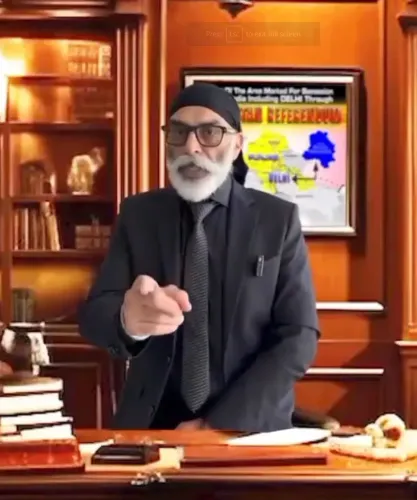
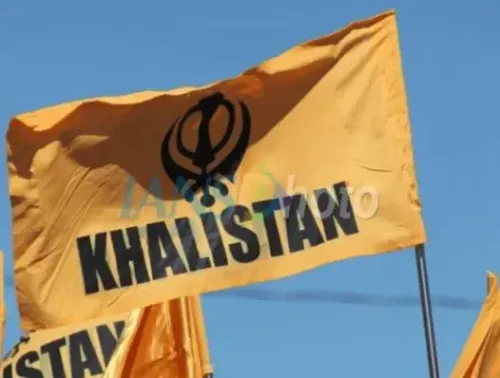
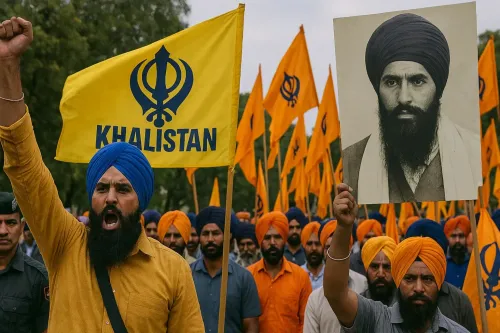
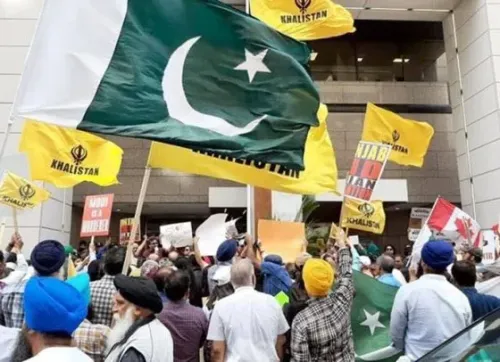
New Delhi, April 7 (NationPress) The narrative surrounding Khalistani extremist factions is rapidly diminishing. A prior call for a referendum by the banned organization Sikhs for Justice (SFJ) once drew a crowd of 130,000, but a recent rally held in Canada proved to be a complete disappointment.
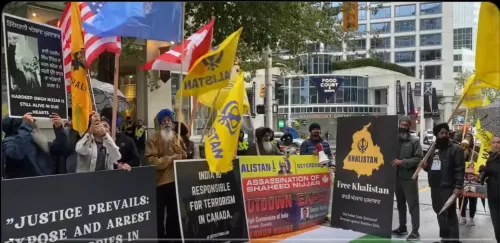
The SFJ had issued a call for an anti-India referendum, urging supporters to gather in significant numbers outside the Triveni Temple and Lakshmi Narayan Temple located in Brampton and Surrey. However, the group was met with unexpected resistance as law enforcement had implemented extensive measures to prevent the protests from unfolding as anticipated.
Initially, authorities expected large crowds and prepared accordingly, yet the turnout was shockingly low, with estimates indicating that attendance may have been as few as 20 individuals.
Following the Surrey demonstration, the SFJ claimed that 136,000 people had attended. However, an official noted that the SFJ is known for inflating attendance figures, and the numbers reported by Gurpatwant Singh Pannun's organization were greatly exaggerated.
Another official remarked that the dismal turnout reflects the shrinking support for the SFJ and other Khalistani factions. Community members are increasingly frustrated with vandalism, leading to a significant decline in their support base.
What was once promoted to the public as a noble cause has devolved into an operation focused on extortion and profit. An Intelligence Bureau official noted that even the core supporters are dwindling, realizing that the Khalistan movement is a lost cause, and they no longer wish to associate with gangsters, criminals, and terrorists. Furthermore, they have recognized that there is little support for this movement even in Punjab, which was historically its stronghold.
India has tackled this issue with stringent measures, ensuring that these elements do not resurface.
The Punjab Police, National Investigation Agency (NIA), and Intelligence Bureau have closely monitored such activities and successfully curtailed them before they could escalate. Additionally, veteran activists in Punjab have taken the initiative to educate the youth about the detrimental aspects of the Khalistan movement.
A pivotal moment came during meetings between Prime Minister Narendra Modi and Canadian Prime Minister Mark Carney, where both leaders committed to collaborating on this issue.
On March 29, the Canadian House of Commons passed Bill C-9, a strict law targeting hate crimes, which was seen as a direct response to the SFJ's referendum call.
This Bill criminalizes actions that intimidate or obstruct access to places of worship, as well as the willful promotion of hatred through symbols associated with hate or terrorism.
If passed by the Senate, this legislation would prohibit members of Khalistani extremist groups from organizing targeted protests near Hindu temples.
The SFJ's 'Khalistan Zindabad' referendum was intended to protest this new law. Nevertheless, Hindus continued to visit the temple and engage in prayers undeterred by the SFJ's actions.
Moreover, the attitude of the few protesters present was markedly different; they complied with police instructions to leave without resistance.
Additionally, due to Brampton's 10-metre safety zone bylaw, protesters were unable to approach the temples, which mandates a distance of 100 metres. This regulation was enforced at the Triveni Mandir, while the Lakshmi Narayan Mandir in Surrey had a court order restricting gatherings within the same 100-metre radius.
Intelligence agencies report that these developments and the lack of public interest have left Pannun and his SFJ associates feeling extremely frustrated. They are coming to terms with the fact that the movement is slipping from their grasp, and that intimidation tactics on the streets will be met with appropriate action from Canadian authorities.
An official mentioned that this frustration may lead the SFJ to intensify its digital campaign against India, with an increase in hate messages and videos anticipated.
Point of View
The decline in support for the Khalistani movement as evidenced by the recent SFJ rally highlights a broader trend of disillusionment within communities. This shift emphasizes the importance of addressing grievances while ensuring that violent extremism is actively countered.
NationPress
15 Oct 2026
Frequently Asked Questions
What caused the low turnout at the SFJ rally in Canada?
The low turnout was attributed to extensive police preparations that prevented protests from occurring as expected, along with a growing disillusionment within the community regarding the Khalistani movement.
What is Bill C-9 and how does it affect the SFJ?
Bill C-9 is a Canadian law aimed at combatting hate crimes, which, if passed, would prohibit Khalistani groups from organizing protests near Hindu places of worship, impacting their operations significantly.
How has the Indian government responded to the Khalistani movement?
The Indian government has taken a firm stance against the Khalistani movement, employing strict measures to prevent its resurgence and working with international partners, including Canada.
What does the future hold for the Khalistani movement?
Given the current trends of declining support and significant legal challenges, the future of the Khalistani movement appears uncertain, with potential shifts towards digital campaigns expected.
Who is Gurpatwant Singh Pannun?
Gurpatwant Singh Pannun is a prominent figure associated with the SFJ, known for advocating the Khalistani cause and leading various initiatives aimed at garnering support for the movement.