SFJ's Edmonton Khalistan referendum on Oct 18 puts Punjab security on alert

Synopsis
The SFJ's unofficial Khalistan referendum in Edmonton on October 18 is more than a symbolic vote — Indian intelligence agencies warn the event is being used as a BKI recruitment tool ahead of Punjab elections, even as drone-based arms and narcotics drops in Punjab have surged 'manifold' and the BKI is reportedly building an all-women's operational wing.
Key Takeaways
The banned Sikhs for Justice (SFJ) has scheduled a Khalistan referendum in Edmonton, Canada on 18 October 2026 , under intelligence surveillance.
Babbar Khalsa International (BKI) has issued a roadmap for attacks in Punjab ahead of elections; drone drops of arms and narcotics have risen 'manifold', according to officials.
The BKI is reportedly building an all-women's wing for surveillance, honey-traps, and moving arms consignments across Punjab.
SFJ chief Gurpatwant Singh Pannun has invited Parti Québécois leaders to the event, attempting to align the Khalistan demand with recognised democratic self-determination movements.
The referendum has no legal or political force; India rejects the demand as illegal and unconstitutional.
Security agencies have intensified measures in Punjab, warning that any lapse could prove costly once the Punjab election cycle begins.
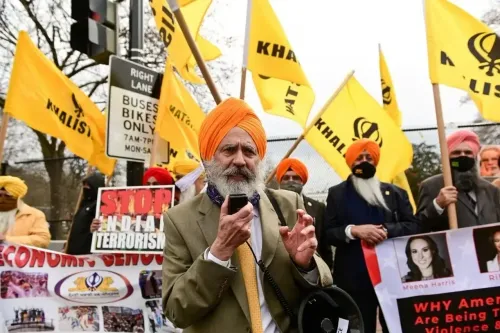
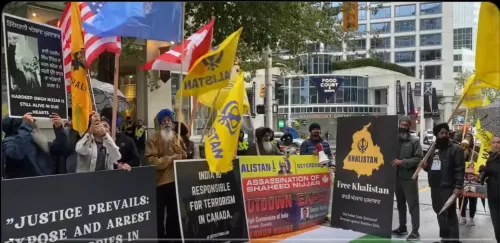
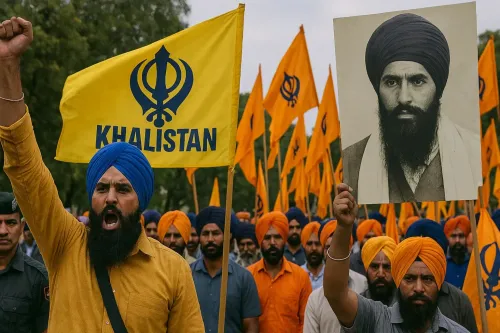
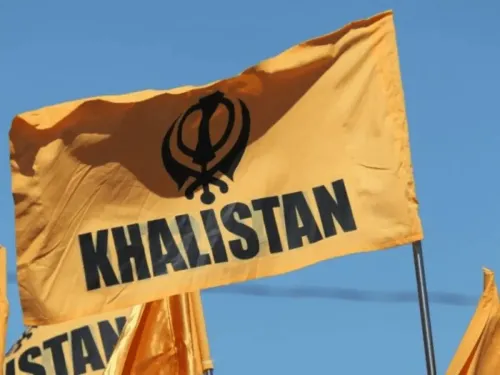
Intelligence agencies are closely monitoring a Khalistan referendum scheduled by the banned outfit Sikhs for Justice (SFJ) in Edmonton, Alberta, Canada on 18 October 2026, amid fresh concerns about terror recruitment and drone-based arms drops in Punjab. Officials say the event is being tracked not just for its symbolic value but for its potential use as a recruitment vehicle by proscribed terror outfit Babbar Khalsa International (BKI) ahead of Punjab elections.
What the SFJ Referendum Involves
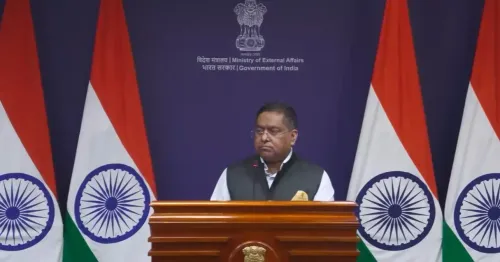
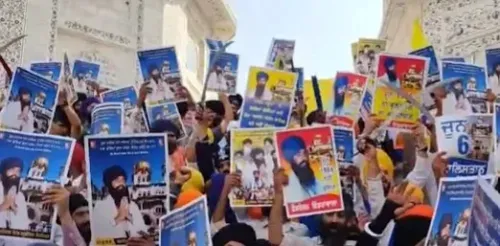
The 18 October event in Edmonton asks participants to vote on whether a separate Khalistan nation should be carved out of Punjab. The exercise is entirely unofficial — the SFJ has held similar referendums in the past, and while earlier votes reportedly favoured the creation of Khalistan, they have had no legal or political bearing on India's territorial integrity. India has consistently rejected the demand as illegal and unconstitutional, a position broadly acknowledged by other nations as well.
Notably, this referendum coincides with the province-wide 2026 Alberta Referendum, in which Albertan voters will decide whether Alberta should remain a province of Canada or begin a legal process toward separation. SFJ chief and designated terrorist Gurpatwant Singh Pannun has also invited leaders of the Parti Québécois — which is set to form the next government in Quebec — to attend the October 18 event. Their own province-level referendum is scheduled for 19 October.
Pannun reportedly argued: 'Whether it is the people of Alberta determining Alberta's political future or Sikhs determining Punjab's political future, the fundamental democratic principle is the same: the political future of a people should be determined by the people.' He added: 'On October 18, Sikhs vote on Punjab. On October 19, Albertans vote on Alberta's political future. Different peoples and different constitutional circumstances, but political questions should be settled democratically.'
The BKI Terror Threat in Punjab
For Indian security agencies, the Edmonton event is inseparable from a broader, worsening security picture in Punjab. An Intelligence Bureau official said that ISI-backed elements — comprising Khalistani terror groups and narcotics cartels operating out of Pakistan — have 'clearly upped the ante' against Indian security agencies. Drone drops carrying ammunition and narcotics have increased 'manifold', according to the official.
The BKI has also reportedly begun targeting women recruits to gather intelligence and to retrieve arms and narcotics delivered by drones. Officials said the SFJ and BKI are 'working overtime' to accelerate recruitment drives ahead of Punjab elections, with a specific focus on establishing an all-women's wing. According to the official, these women would be tasked with 'undertaking surveillance, laying honey-traps, and moving consignments comprising arms, ammunition, and narcotics across the state,' with proceeds intended to fund the revival of the Khalistan movement.
The BKI has also reportedly issued a detailed roadmap for attacks in Punjab ahead of and during the election period, according to officials.
Why Intelligence Agencies Are Watching the October 18 Event
Officials described the timing of the SFJ referendum as strategically calculated. By clubbing its event with the Parti Québécois referendum on 19 October, the SFJ is attempting to project its demand as a legally valid political exercise comparable to recognised democratic self-determination movements. 'The SFJ wants to club the two issues and try and send out a picture that both are making legally valid demands,' an official said.
The event is also seen as a potential recruitment tool for the BKI inside Punjab. This is not the first such attempted alignment — the SFJ has previously sought to leverage separatist movements in Western democracies to lend legitimacy to the Khalistan cause.
What Happens Next
All security measures are being stepped up in Punjab, with agencies focussed on neutralising every operational method of both the BKI and SFJ before the election process gets underway. An official warned that any lapse in vigilance now could have serious consequences once the Punjab election cycle begins. 'If they get away now and the agencies let their guard down, then we would be staring at a very serious problem when the election process gets underway in Punjab next year,' the official said. The 18 October Edmonton event will remain under close watch through and beyond the referendum date.
Point of View
By itself, legally meaningless — but Indian agencies are right to treat it as operationally significant. The pattern here is not new: banned outfits use symbolic overseas events to generate recruitment momentum on the ground in Punjab. What is worrying is the reported surge in drone drops and the alleged pivot to women recruits, which suggests BKI is adapting its modus operandi in anticipation of tighter male-surveillance networks. The attempt to align this event with the Alberta and Quebec referendums is a sophisticated legitimacy play — one that exploits the language of democratic self-determination to blur the line between a constitutional political process and a proscribed terror outfit's agenda. Mainstream coverage often focuses on the referendum as an India-Canada diplomatic flashpoint; the more urgent story is the on-the-ground security buildup in Punjab ahead of elections.
NationPress
12 Oct 2026
Frequently Asked Questions
What is the SFJ Khalistan referendum scheduled for October 18?
It is an unofficial vote organised by the banned outfit Sikhs for Justice (SFJ) in Edmonton, Alberta, Canada, asking participants whether a separate Khalistan nation should be carved out of Punjab. The exercise has no legal or political force, and India has rejected the demand as illegal and unconstitutional.
Why are Indian intelligence agencies concerned about this referendum?
Officials say the event could be used as a recruitment tool by the proscribed Babbar Khalsa International (BKI) inside Punjab, coinciding with a reported surge in ISI-backed drone drops of arms and narcotics and a BKI roadmap for attacks ahead of Punjab elections.
Who is Gurpatwant Singh Pannun and what role does he play?
Gurpatwant Singh Pannun is the chief of the SFJ and a designated terrorist. He has invited leaders of the Parti Québécois to the October 18 event, attempting to align the Khalistan referendum with upcoming separatist votes in Alberta and Quebec to project it as a legitimate democratic exercise.
What is the BKI's reported plan in Punjab?
According to intelligence officials, the Babbar Khalsa International has issued a roadmap for attacks in Punjab ahead of and during elections. It is also reportedly recruiting women to conduct surveillance, lay honey-traps, and transport arms and narcotics delivered by drones from across the border.
Does the SFJ referendum affect India's territorial integrity?
No. The referendum is unofficial and has no bearing on India's territorial integrity or sovereignty. Previous SFJ referendums reportedly favoured Khalistan but did not translate into any formal political process, and other countries broadly recognise the demand as legally meaningless.