CM Rekha Gupta Backs Election Commission After 124 Ex-Officers' Defence
Synopsis
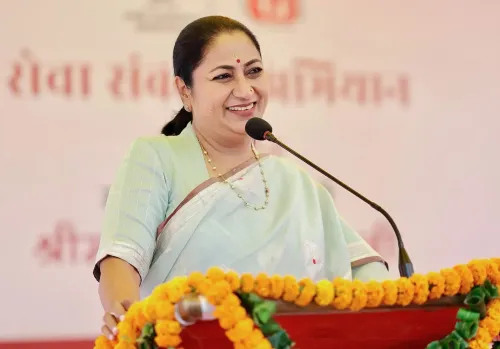
Delhi Chief Minister Rekha Gupta has backed the Election Commission of India, citing a public defence by 124 former IAS, IFS and Allied Service officers. She accused Congress and allies of selectively invoking democracy only when electoral outcomes favour them.
Key Takeaways
Delhi CM Rekha Gupta posted a strong defence of the Election Commission of India on October 12, 2026 .
124 former IAS, IFS and Allied Service officers have publicly defended the poll body's institutional integrity.
Gupta accused Congress and its allies of questioning the Election Commission only when verdicts go against them.
She argued that respect for democracy and its institutions 'cannot be selective.' The post frames career bureaucrats — not politicians — as the primary validators of the Election Commission's credibility.
The credibility of India's democracy, Delhi Chief Minister Rekha Gupta declared on Monday, October 12, 2026, cannot be made hostage to any political party's convenience — and she backed that argument with a pointed reference to a striking show of institutional solidarity.
124 Former Officers Speak Up for the Election Commission
124 former IAS, IFS and Allied Service officers have publicly defended the Election Commission of India's institutional integrity, a development that forms the backbone of Gupta's post. These are career administrators who collectively represent decades of hands-on experience managing India's vast and complex electoral machinery — from voter-roll maintenance to the logistical choreography of polling day across hundreds of thousands of booths. Their intervention carries a particular weight: these are not politicians, but bureaucrats whose professional identity is bound to the impartiality of the state. Gupta's message frames their defence as validation, not partisanship. 'Free and fair elections demand accurate voter rolls, transparent procedures and strong institutions,' she wrote — a line that reads as much as a policy principle as a political counter-punch.The Congress Accusation at the Heart of the Clash
The Chief Minister's sharpest language is aimed squarely at Congress and its allies, whom she accuses of a pattern she calls selective respect: questioning the Election Commission every time an electoral verdict goes against them, while invoking democracy only when it serves their political interest. 'Respect for democracy cannot be selective. Neither can respect for its institutions,' she wrote — a closing line designed to land like a verdict. This is a well-worn fault line in Indian politics. Opposition parties have, at various points, raised concerns about electronic voting machines, voter-roll deletions, and the autonomy of the poll body. The ruling side has consistently argued that such challenges amount to undermining a constitutional institution whenever it delivers an unwelcome result. Gupta's post is the latest, and notably sharp, iteration of that argument — sharpened further by the invocation of the 124 former officers as credible, non-partisan validators.What This Moment Signals for the BJP's Institutional Defence Strategy
The timing and framing matter. By anchoring her argument in the voice of former civil servants rather than political leaders, Gupta is attempting a rhetorical judo move: deflecting a political debate into the terrain of administrative credibility. The implicit message is that the Election Commission's defenders are not BJP cadre but career bureaucrats with no electoral stake in the outcome. Whether that framing holds in public discourse will depend on how the opposition responds — and whether the 124 signatories themselves remain a unified, credible bloc in the days ahead. What is already clear is that the battle over the Election Commission's legitimacy has escalated to a new register, with Delhi's Chief Minister planting the BJP's flag firmly on the side of institutional defence.Point of View
She attempts to shift the credibility contest from the political to the administrative register. The move reflects a broader BJP strategy of using institutional endorsements to insulate constitutional bodies from opposition challenge. How Congress responds — and whether it can distinguish legitimate accountability concerns from partisan grievance — will define the next round of this debate.
NationPress
12 Oct 2026
Frequently Asked Questions
Why did Delhi CM Rekha Gupta post about the Election Commission?
Rekha Gupta posted to defend the Election Commission of India after 124 former IAS, IFS and Allied Service officers publicly backed its institutional integrity, and to counter what she called Congress's selective questioning of the poll body.
What did 124 former IAS and IFS officers say about the Election Commission?
The 124 former IAS, IFS and Allied Service officers issued a public defence of the Election Commission's institutional integrity, affirming the credibility of India's electoral process.
What is the BJP's position on Election Commission criticism?
The BJP, as reflected in Gupta's statement, argues that questioning the Election Commission only after losing elections amounts to selective respect for democracy and undermines a constitutional institution.
Has Congress questioned the Election Commission before?
Congress and several opposition parties have at various points raised concerns about the Election Commission's functioning, including issues related to voter rolls and electoral procedures — allegations the ruling side has consistently rejected as motivated by electoral outcomes.
What does 'respect for democracy cannot be selective' mean in this context?
Gupta used this phrase to argue that political parties cannot invoke democratic principles only when election results favour them; respect for democratic institutions must be consistent and unconditional.