China struggles to attract foreign AI talent despite special visas, grants
Synopsis
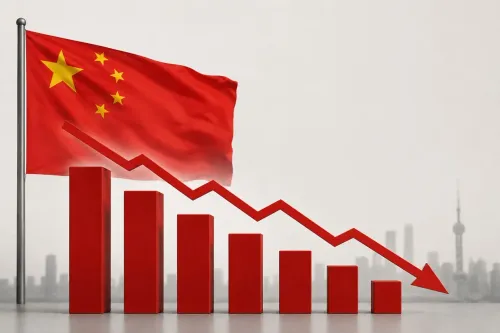
A Carnegie Endowment for International Peace study exposes the depth of China's AI talent deficit: for every 30 Chinese AI researchers working in the US in 2025, just one made the reverse move. Despite special visas and grants, Beijing's international recruitment is barely registering — while Washington's pull on global talent, including from China itself, has only grown stronger.
Key Takeaways
For every 30 Chinese AI researchers in the US in 2025 , only 1 moved the other way — from the US to China.
The share of Chinese-origin researchers working in the US increased compared with three years earlier, despite bilateral tensions.
The study analysed author affiliations from papers accepted at NeurIPS , a leading global machine learning conference.
Lead author Damien Ma of the Carnegie Endowment for International Peace noted that America's structural appeal has outlasted geopolitical friction.
China is, however, improving domestic talent retention , with more home-trained researchers opting to stay.
Experts caution the data may not yet capture the impact of recent US visa restrictions and research funding cuts .
Despite ramping up efforts through special visas, research grants, and dedicated recruitment programmes, China is struggling to draw foreign artificial intelligence researchers to its shores, according to a new study by the Carnegie Endowment for International Peace. The findings, released in October 2026, highlight a stark asymmetry in the global AI talent race between Washington and Beijing.
The 30-to-1 Talent Gap
The study's most striking figure: for every 30 Chinese AI researchers working in the United States in 2025, only one researcher made the reverse journey from the US to China. This ratio underscores how far Beijing remains from its goal of internationalising its AI ecosystem, despite years of policy investment. The research was conducted by analysing papers accepted at NeurIPS, one of the world's foremost conferences on machine learning and computational neuroscience, tracking where authors studied, earned advanced degrees, and ultimately chose to build their careers.
America's Enduring Pull on Chinese Talent
Notably, the share of Chinese-origin researchers working in the United States actually increased relative to three years earlier — defying widespread expectations that mounting bilateral tensions and tighter US immigration policies would suppress talent flows. Damien Ma, lead author of the study, observed that America's structural advantages as a research destination have proved more durable than geopolitical friction would suggest. The US continues to draw highly skilled scientists from China, India, and South Korea, among others, reinforcing its position at the frontier of AI research.
Where China Is Gaining Ground
China's international recruitment may be faltering, but it is winning on a different front: domestic talent retention. A growing proportion of Chinese researchers trained within the country's own academic system are opting to pursue careers at home rather than seeking opportunities abroad. This comes amid sustained state investment in AI infrastructure, leading domestic labs, and competitive compensation packages at Chinese technology companies. While this does not close the foreign-talent gap, it narrows the overall talent deficit.
Caveats and What the Data May Be Missing
Experts caution that the study's dataset may not yet reflect the full impact of recent US policy shifts. Many researchers captured in the analysis reportedly made their decisions to study or work in America several years before current visa restrictions and cuts to research funding took effect. The lagged nature of academic career trajectories means the effects of those changes — which have accelerated in 2025 and 2026 — may only become visible in future data rounds. This is a critical caveat: the window of America's advantage, while currently wide, is not guaranteed to remain so.
The Bigger Picture for the AI Race
The findings reinforce the consensus view that the United States and China are the two dominant centres of frontier AI research globally. Foreign-born scientists remain, according to the study, a critical structural advantage for America's AI leadership — one that Beijing's incentive architecture has so far been unable to replicate or erode. How that dynamic evolves as US policy tightens and Chinese domestic capability matures will likely define the trajectory of global AI development through the rest of this decade.
Point of View
But the more consequential finding may be its staying power — the gap widened even as US-China relations deteriorated and American immigration policy tightened. China has poured resources into recruitment infrastructure, yet structural factors like academic freedom, research funding depth, and peer networks continue to tilt the field toward the US. The study's own caveat is worth flagging: policy changes from 2025 onward are not yet in the data. If US visa restrictions and funding cuts begin to bite, the next iteration of this research could tell a very different story. India, a significant supplier of AI talent to the US, should watch these dynamics closely — any thinning of American openness creates both a risk and an opportunity for domestic research ecosystems.
NationPress
12 Oct 2026
Frequently Asked Questions
What did the Carnegie Endowment study find about China's AI talent recruitment?
The study found that China is struggling to attract foreign AI researchers despite offering special visas, research grants, and other incentives. For every 30 Chinese AI researchers working in the US in 2025, only one researcher made the reverse move from the US to China.
Why are foreign AI researchers not moving to China?
The study suggests that the United States retains strong structural advantages — including research depth, academic networks, and funding — that outweigh China's recruitment incentives. America's appeal has remained durable despite growing geopolitical tensions between the two countries.
Is China making any progress in the global AI talent race?
China is making progress on domestic talent retention, with more Chinese-trained researchers choosing to build careers at home rather than going abroad. However, its efforts to attract foreign scientists have yielded limited results so far, according to the Carnegie Endowment research.
How was the Carnegie Endowment AI talent study conducted?
Researchers analysed papers accepted at NeurIPS, one of the world's leading machine learning and computational neuroscience conferences. They tracked where authors studied, earned advanced degrees, and ultimately chose to work, mapping global talent flows in AI research.
Could US policy changes affect these findings in the future?
Experts caution that recent US visa restrictions and reductions in research funding may not yet be visible in the data, since many researchers studied captured their decisions several years ago. Future studies could show a shift if those policy changes significantly reduce talent flows to America.