China surpasses US as top workplace for elite AI researchers
Synopsis
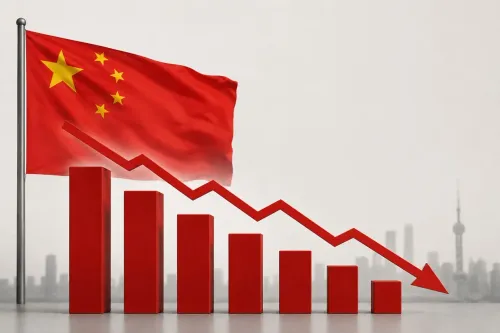
China now employs 41% of the world's top AI researchers, overtaking the US at 34%, according to a Carnegie China study — a stunning reversal from 2022, when the US led 46% to 27%, signalling a fundamental reshaping of global AI talent geography.
Key Takeaways
China employed 41 per cent of the world's leading AI researchers last year, surpassing the US at 34 per cent , according to Carnegie China .
In 2022 , the US led with 46 per cent versus China's 27 per cent — a reversal of nearly 30 percentage points in the gap within four years.
Domestic AI companies including DeepSeek (headquartered in Hangzhou ), Moonshot AI , and Alibaba have created elite career paths that previously did not exist at scale in China .
The study, titled Who's ahead in the global AI talent race , was released by think tank Carnegie China in the week of 25 September 2026 .
US export controls on advanced chips and tightened research visa scrutiny in Washington are cited as contributing factors to the talent repatriation trend.
China has overtaken the United States as the world's leading workplace for top-tier artificial intelligence researchers, according to a study released this week by think tank Carnegie China — a dramatic reversal that underscores the accelerating redistribution of global AI talent.
The numbers behind the shift
The study, titled Who's ahead in the global AI talent race, found that China employed 41 per cent of the world's leading AI researchers tracked last year, pulling ahead of the US at 34 per cent. That marks a sharp reversal from 2022, when the US held a commanding lead at 46 per cent compared with China's 27 per cent — a swing of nearly 30 percentage points in the gap between the two nations in just a few years.
Why it matters
For decades, Silicon Valley functioned as a near-gravitational pull for the world's most ambitious AI researchers, including those from China. The new data suggests that pull has weakened considerably, with a growing number of elite Chinese researchers choosing to build careers domestically rather than emigrating. The rise of homegrown AI powerhouses — including DeepSeek, Moonshot AI, and the research labs of Alibaba — has created competitive career opportunities that did not exist at scale just a few years ago.
The competitive backdrop
The findings arrive against a backdrop of sustained US export controls on advanced semiconductors and growing scrutiny of Chinese-affiliated researchers in Washington. Those policy pressures, combined with the rapid commercial growth of China's domestic AI sector, appear to have accelerated a talent repatriation trend that industry analysts have been watching closely. Figures such as Yang Zhilin, founder of Moonshot AI, and researchers affiliated with DeepSeek — based in Hangzhou — have become emblematic of a new generation of elite AI talent opting to remain in or return to China.
What's next
The Carnegie China study is likely to intensify debate in Washington over immigration policy, research visa frameworks, and national security screening processes that critics argue are inadvertently accelerating China's talent advantage. For the global AI industry, the data raises fundamental questions about where the next generation of foundational model breakthroughs will originate. Policymakers and technology executives in both countries will be watching whether China's lead continues to widen through 2027 and beyond.
Point of View
US policy may be self-defeating. Semiconductor export controls were designed to slow China's AI progress, but tightened visa scrutiny and an unwelcoming research environment appear to have accelerated the very talent shift Washington sought to prevent. What mainstream coverage tends to underweight is the compound effect: as China's share of elite researchers grows, so does its capacity to produce the next generation of foundational models indigenously, reducing dependence on Western architectures. The 2022-to-2026 swing is not a blip — it reflects structural changes in career incentives, funding availability, and national prestige that will be difficult to reverse through policy alone.
NationPress
25 Sept 2026
Frequently Asked Questions
Has China really overtaken the US in AI researchers?
Yes. According to a Carnegie China study released in September 2026 , China now employs 41 per cent of the world's top AI researchers, ahead of the US at 34 per cent . This is a reversal from 2022 , when the US led with 46 per cent to China's 27 per cent .
What caused China to pull ahead in AI talent?
The rise of well-funded domestic AI companies such as DeepSeek , Moonshot AI , and Alibaba 's AI labs has created elite career opportunities in China that previously did not exist at scale. Simultaneously, US visa restrictions and national security scrutiny have made it harder for Chinese researchers to build long-term careers in Silicon Valley .
Which Chinese AI companies are driving the talent trend?
DeepSeek , based in Hangzhou , Moonshot AI — whose founder is Yang Zhilin — and Alibaba are among the most prominent employers attracting elite AI talent within China . These companies have become competitive alternatives to US tech giants for top-tier researchers.
What does this mean for US AI leadership?
The shift poses a long-term challenge to US dominance in foundational AI research. As more elite researchers concentrate in China , the probability of major model breakthroughs originating there increases. Policymakers in Washington face pressure to revisit immigration and research visa frameworks to reverse the trend.
Who conducted the AI talent study?
The study was conducted by Carnegie China , a think tank, and is titled Who's ahead in the global AI talent race . It was released in the week of 25 September 2026 and tracks the workplace locations of the world's leading AI researchers.