Tharoor Backs INC's Chalo Dilli Protest March
Synopsis
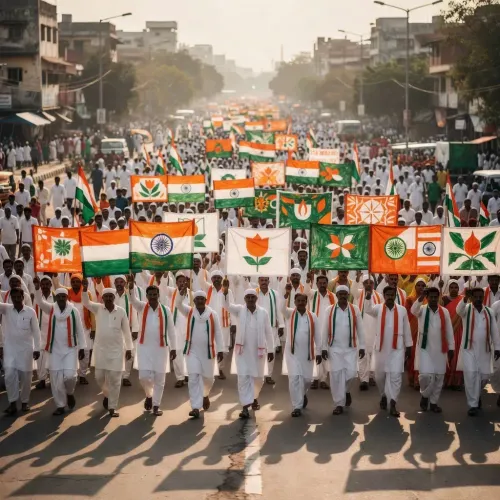
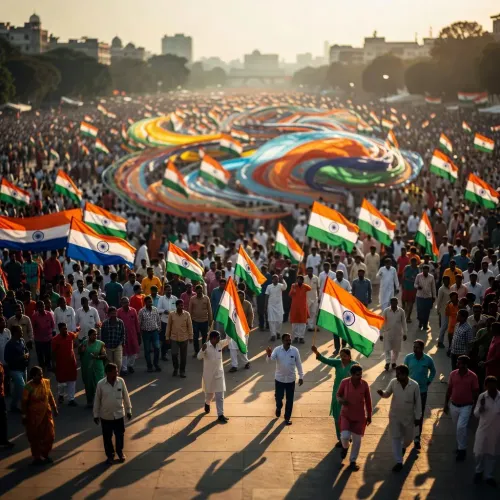
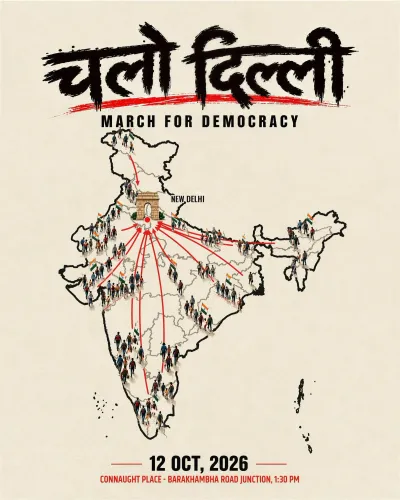
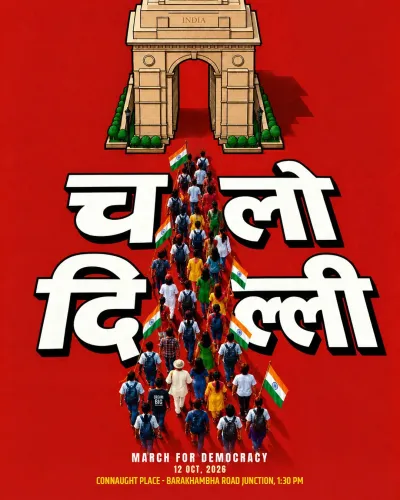
Congress MP Dr. Shashi Tharoor backed the Indian National Congress's #ChaloDilli protest on October 12, 2026, sharing remarks on the march's purpose and objectives as the party mobilised supporters toward New Delhi to press demands on the Central government.
Key Takeaways
Shashi Tharoor , Congress MP from Thiruvananthapuram , publicly backed the #ChaloDilli protest on October 12, 2026 .
The #ChaloDilli hashtag signals a Congress-organised mass march converging on New Delhi .
Tharoor tagged @INCIndia , indicating coordinated, party-level amplification of the protest call.
The march follows a pattern of Congress using large-scale street mobilisations — including the Bharat Jodo Yatra — as opposition strategy.
Tharoor's English-language framing targets urban voters and international audiences alongside the party's core base.
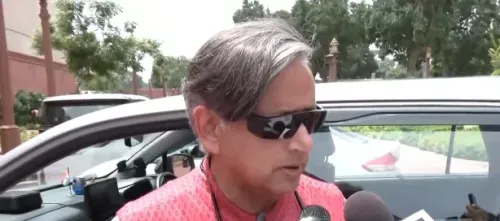
Congress MP Dr. Shashi Tharoor joined the Indian National Congress's call to action on Monday, October 12, 2026, sharing remarks on the purpose and objectives of the party's #ChaloDilli protest, urging supporters to converge on the capital.
What the #ChaloDilli call means for the Opposition
The hashtag #ChaloDilli — literally 'Let's go to Delhi' — is a familiar rallying cry in Indian protest politics, used when opposition parties mobilise mass marches toward the national capital to press demands on the ruling government. Tharoor's post, shared directly from his handle and tagging @INCIndia, signals that the party's senior leadership is aligned behind the mobilisation.
While the specific grievances driving today's march were outlined in his accompanying remarks, the format — a unified opposition-led descent on Delhi — is designed to generate maximum visibility and pressure on the Central government. Such demonstrations have historically drawn participation from across Congress's state units, allied parties, and civil society groups.
Tharoor's role in amplifying the party's street politics
Dr. Tharoor, the two-time Lok Sabha MP from Thiruvananthapuram, Kerala, and a former UN Under-Secretary-General, has increasingly used his international profile and social-media reach to give opposition campaigns a wider, often English-language, audience. His framing of protest objectives — analytical and precise in register — tends to speak as much to urban, educated voters and the international press as to the party's traditional base.
The Congress party, led by Mallikarjun Kharge as president, has in recent years used mass marches — from the Bharat Jodo Yatra to targeted Delhi rallies — as a core tool of street-level political assertion against the ruling BJP-led government.
A protest designed to land in the capital's headlines
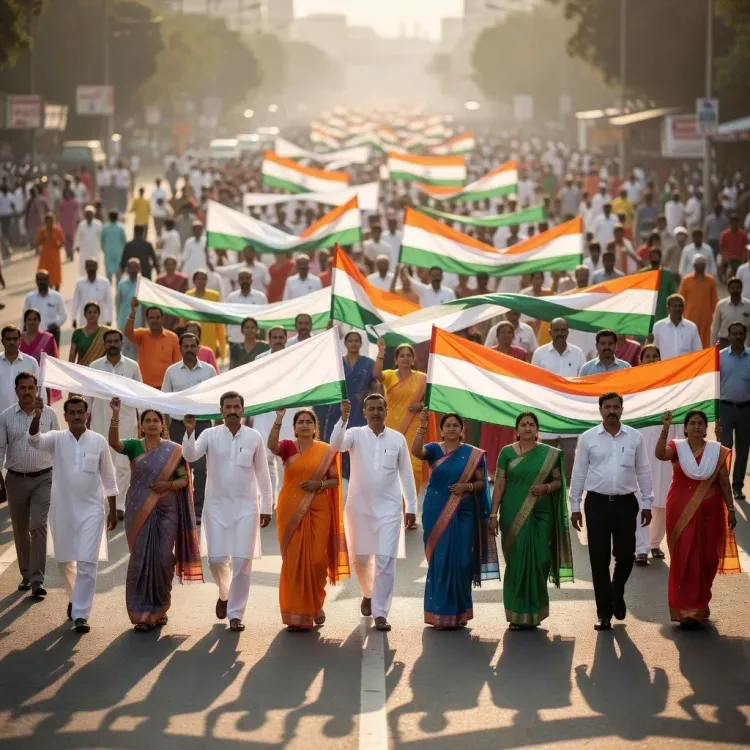
Choosing Delhi as the destination rather than a state capital is deliberate: it places the demonstration at the doorstep of Parliament and the Central government ministries, ensuring media saturation and forcing a response from the administration. The #ChaloDilli framing concentrates the narrative on a single, photogenic act of arrival — crowds at the capital's gates — rather than diffuse, state-by-state agitation.
Whether today's march translates into measurable political momentum will depend on turnout, the clarity of the demands Tharoor outlined, and the government's response — or studied silence.
Point of View
As with all such marches, is whether the demands are specific enough to hold the government accountable or broad enough to dissipate after the cameras leave.
NationPress
12 Oct 2026
Frequently Asked Questions
What is the Congress #ChaloDilli protest about?
The #ChaloDilli protest is an Indian National Congress-organised march to New Delhi , with Congress MP Dr. Shashi Tharoor sharing remarks on its stated purpose and objectives on October 12, 2026 . The specific policy demands were outlined in his accompanying remarks on X.
Who is organising the Chalo Dilli protest?
The protest is organised by the Indian National Congress , tagged as @INCIndia , with senior leaders including Dr. Shashi Tharoor amplifying the call to march on Delhi.
Why did Shashi Tharoor post about Chalo Dilli?
As a senior Congress MP and prominent party voice, Dr. Tharoor shared his remarks to explain the protest's objectives and mobilise supporters, lending his public profile to the party's street-politics campaign.
What is the significance of a Chalo Dilli march?
A 'Chalo Dilli' — meaning 'Let's go to Delhi' — march places opposition pressure directly at the Central government's seat of power, maximising media attention and signalling coordinated national-level opposition rather than localised dissent.
How does today's protest fit into Congress's broader strategy?
The march continues Congress's pattern of large-scale street mobilisations — including the Bharat Jodo Yatra — as tools of political assertion. Converging on the capital amplifies demands and forces the ruling BJP -led government to respond publicly.