Rahul Gandhi Calls Nation to Delhi in #ChaloDilli March
Synopsis
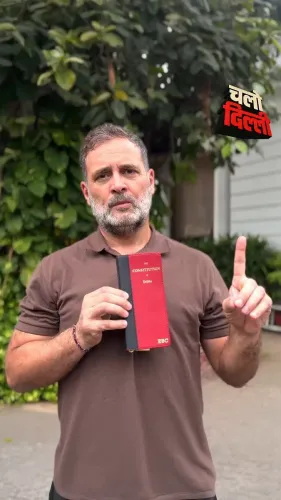
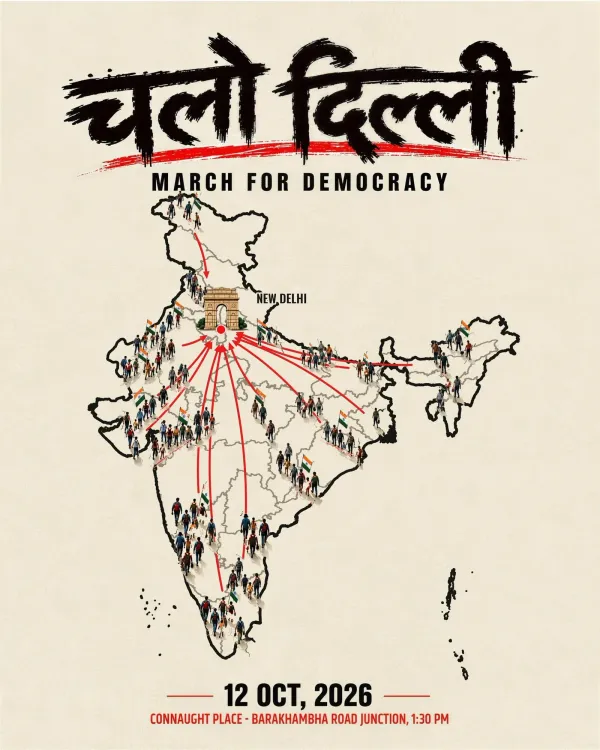
Congress leader Rahul Gandhi has issued a #ChaloDilli call on X, urging citizens to march to New Delhi for democracy and justice. The terse but pointed rallying cry signals a major Opposition mobilisation, consistent with Gandhi's past Bharat Jodo yatras, though no date or specific grievance has yet been named.
Key Takeaways
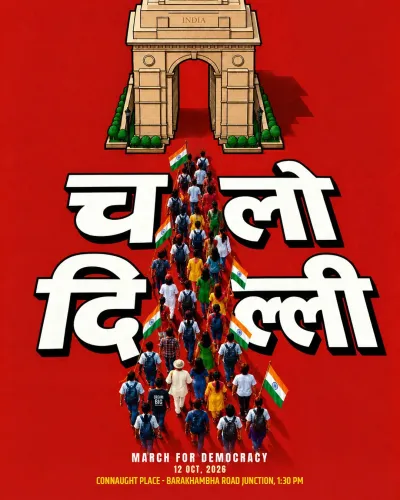
Rahul Gandhi posted a #ChaloDilli call on Monday, October 12, 2026 , urging a 'March for Democracy' and 'March for Justice' to New Delhi.
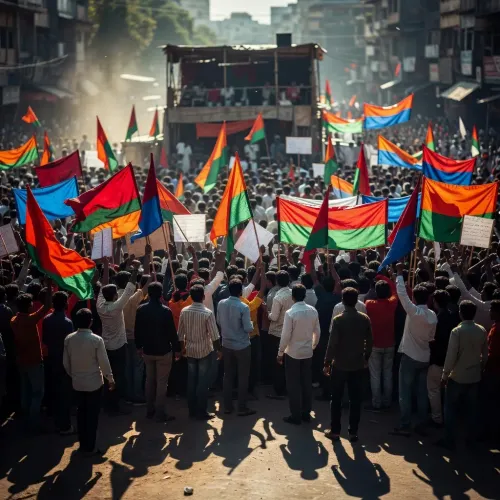
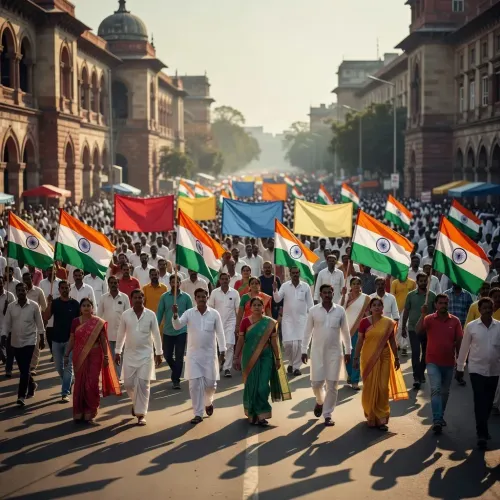
The hashtag Chalo Dilli ('Come to Delhi') signals a mass Opposition convergence on the national capital.
No specific date, route, or singular grievance was named in the post, giving the call maximum coalition breadth.
Gandhi has used long-march tactics before — including the Bharat Jodo Yatra (2022-23) and the Bharat Jodo Nyay Yatra (2024) — to build national narrative around constitutional values.
The framing around 'democracy' and 'justice' suggests the Opposition is positioning this as a broad constitutional moment rather than a single-issue protest.
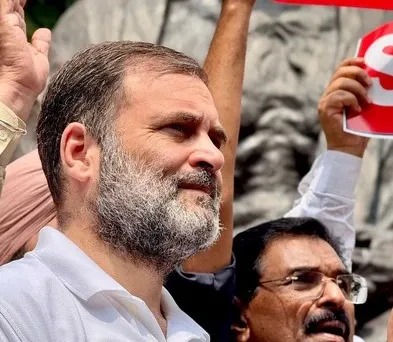
A two-word rallying cry — Chalo Dilli — and a demand for democracy and justice: Congress leader and Leader of the Opposition Rahul Gandhi on Monday, October 12, 2026, issued a public call to march to the national capital, signalling a major Opposition mobilisation is underway.
The #ChaloDilli Call and What It Signals
Gandhi's post, brief but pointed, framed the mobilisation around two of the most charged words in Indian political vocabulary — democracy and justice. The hashtag #ChaloDilli (meaning 'Come to Delhi') has historically been used by Indian political movements to signal a mass convergence on the capital, a tactic designed to project both numerical strength and moral urgency directly at the seat of power.
The choice to anchor the call in 'March for Democracy' and 'March for Justice' — rather than any single policy grievance — suggests the Opposition is pitching this as a broader constitutional moment rather than a sectoral protest.
Opposition Street Politics and the Delhi Stage
New Delhi has long served as the pressure-valve destination for Opposition movements seeking national attention. A march to the capital forces a national media lens onto the marchers' demands, raises the stakes for the ruling dispensation to respond, and tests the Opposition's own organisational muscle in turning out numbers.
For Gandhi, who leads the Congress in Lok Sabha from Rae Bareli, street mobilisation has been a recurring strategic tool — most notably the Bharat Jodo Yatra of 2022-23 and the Bharat Jodo Nyay Yatra of 2024, both of which built public narrative around constitutional values and economic inequality. A Delhi march would be a shorter, sharper, more confrontational instrument.
What the Sparse Detail Leaves Open
Gandhi's post offers no date, no route, and no specific grievance — unusual for an operational march call, but consistent with a mobilisation announcement designed to build momentum before logistics are finalised. The absence of a single named cause gives the call maximum coalition breadth, potentially drawing in allies across the INDIA bloc and independent civil-society groups.
Whether the march materialises at scale, and on what precise date and terms, will determine whether #ChaloDilli becomes a defining Opposition moment or a pressure point that fades before it lands.
Point of View
Using the symbolism of a Delhi march to project moral authority and test INDIA bloc cohesion without committing to a specific date or demand — a classic 'announce-then-organise' sequencing. The democracy-and-justice framing is deliberately broad, designed to be a tent large enough for diverse grievances rather than a narrow policy ask. Whether the call translates into organisational muscle on the ground will be the real test — a march that draws massive numbers reshapes the political atmosphere; one that fizzles hands the ruling dispensation a counter-narrative. The move also keeps Gandhi at the centre of Opposition storytelling heading into what remains a volatile political cycle.
NationPress
12 Oct 2026
Frequently Asked Questions
What is the #ChaloDilli march called by Rahul Gandhi?
#ChaloDilli, meaning 'Come to Delhi', is a mass mobilisation call issued by Congress leader Rahul Gandhi on October 12, 2026, urging citizens to march to New Delhi for democracy and justice. Specific dates and routes had not been announced at the time of posting.
Why is Rahul Gandhi calling a march to Delhi?
Gandhi framed the call around 'March for Democracy' and 'March for Justice', signalling broad constitutional concerns. No single policy grievance was specified, suggesting the march is intended as a wide-coalition Opposition mobilisation.
What is the date of the Congress Chalo Dilli march 2026?
As of Gandhi's October 12, 2026 post, no specific march date had been announced. The #ChaloDilli call is a mobilisation signal; operational details are expected to follow.
Has Rahul Gandhi done similar marches before?
Yes. Gandhi led the Bharat Jodo Yatra from September 2022 to January 2023, a foot march from Kanyakumari to Kashmir, and the Bharat Jodo Nyay Yatra in 2024, both built around themes of unity, democracy, and economic justice.
What does Chalo Dilli mean in politics?
'Chalo Dilli' literally means 'Come to Delhi' and has been used historically by Indian political and social movements to signal a mass convergence on the national capital, designed to apply maximum pressure on the central government.