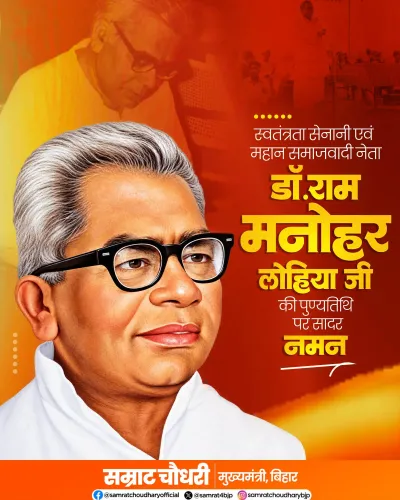
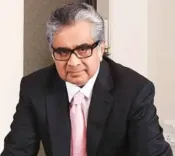
CM Samrat Choudhary pays tribute to Dr Ram Manohar Lohia on death anniversary
Synopsis
Bihar Chief Minister Samrat Choudhary honoured Dr Ram Manohar Lohia on his death anniversary on 12 October 2026, saluting the socialist leader's legacy as a freedom fighter, thinker, and statesman whose ideas still shape Indian politics.
Key Takeaways
Bihar Chief Minister Samrat Choudhary paid tribute to Dr Ram Manohar Lohia on his death anniversary, 12 October 2026 .
Choudhary described Lohia as a 'fierce intellectual, celebrated statesman, and great freedom fighter.' Dr Lohia, who died on 12 October 1967 , was a foundational figure of India's democratic socialist and non-Congress opposition politics.
A University of Berlin doctoral scholar, Lohia championed backward-class rights and was imprisoned multiple times by British authorities.
Tributes to Lohia cross party lines in Bihar, reflecting his influence on caste politics and OBC mobilisation in the state.
On the death anniversary of one of independent India's most consequential socialist thinkers, Bihar Chief Minister Samrat Choudhary paused to honour a legacy that still reverberates through Indian politics. On Monday, 12 October 2026, the senior BJP leader offered his homage to Dr Ram Manohar Lohia, remembering him as a 'prakhara chintaka, prakhyata rajneta evam mahan swatantrata senani' — a fierce intellectual, celebrated statesman, and great freedom fighter.
Dr Lohia's death anniversary, observed every 12 October, draws tributes from across the political spectrum — a testament to how thoroughly his ideas on caste, class, and democratic socialism cut across party lines. He passed away on this date in 1967, leaving behind a body of thought that shaped the very architecture of India's non-Congress opposition politics for decades.
The man who refused easy politics
Dr Lohia was not a comfortable figure. A doctoral scholar from the University of Berlin, he returned to join the Indian National Congress's socialist wing, was imprisoned multiple times by the British, and later broke with Nehru-era Congress to champion the rights of backward classes and marginalised communities at a time when such advocacy was politically costly. His concept of the 'saptakranti' — a seven-pronged revolution covering gender, caste, race, colonialism, economic inequality, political freedom, and individual liberty — remained philosophically ambitious long before it became fashionable.
Why a BJP chief minister quotes a socialist icon
Choudhary's tribute is a reminder of something distinct about Bihar's political culture: Dr Lohia's influence is claimed by parties of nearly every hue in the state. The Samajwadi Party, the Janata Dal (United), the RJD — and leaders beyond them — trace ideological or organisational lineage back to Lohia's socialist movement. For the BJP, especially in a state as caste-conscious as Bihar, engaging with Lohia's memory is also an act of political outreach toward the OBC communities that Lohia championed. Choudhary, himself deeply embedded in Bihar's caste arithmetic, signals respect for a tradition that transcends party labels.
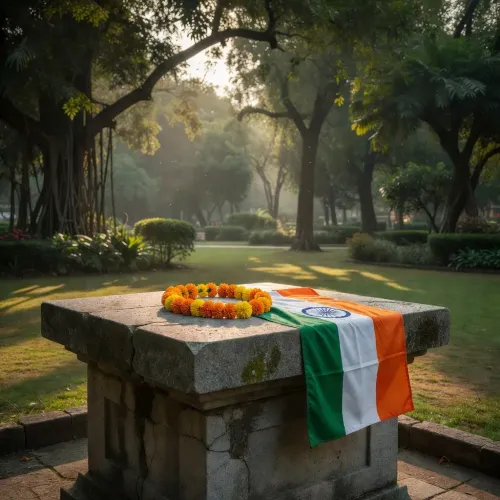
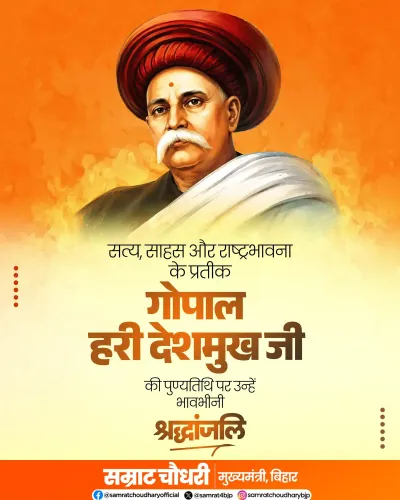
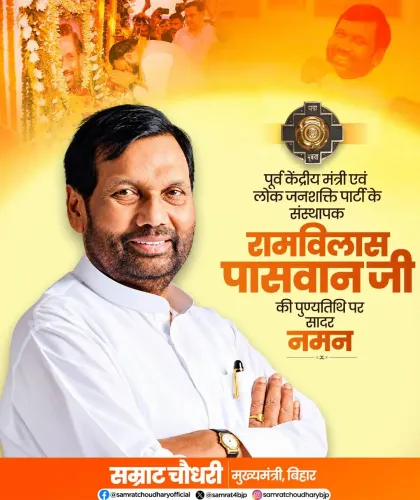
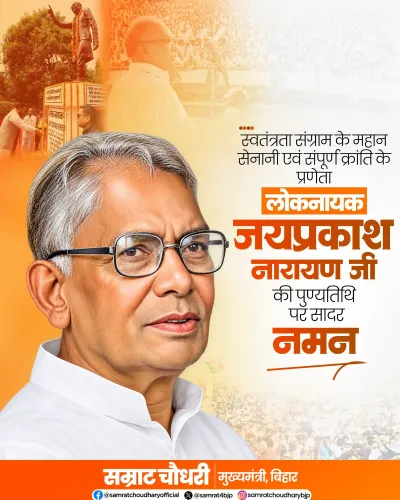
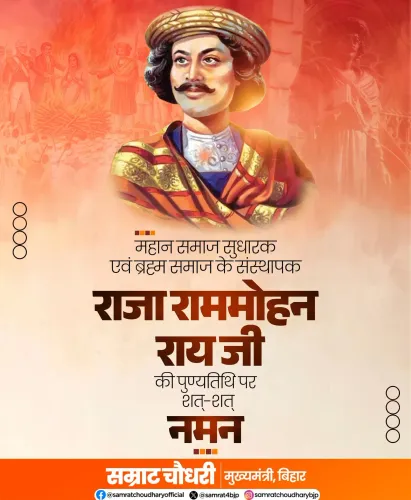
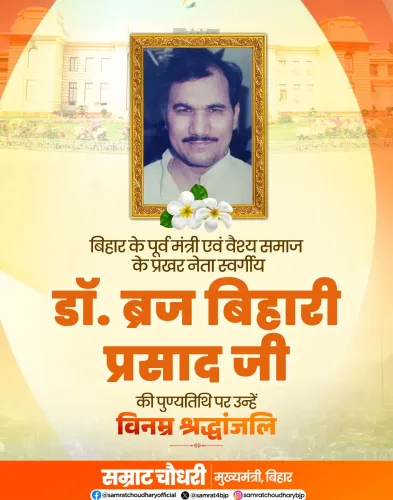
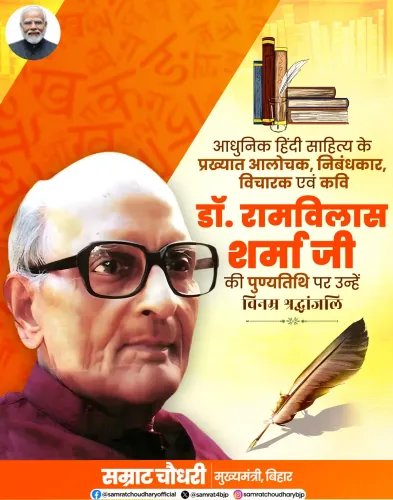
The tribute, accompanied by four images shared on X, captures a moment of cross-ideological recognition — one of Indian democracy's quieter, recurring rituals, where rivals find common ground in honouring the dead that the living still argue over.
Dr Lohia's enduring provocation to Indian politics: the questions he raised about who truly benefits from power have never fully been answered.
Point of View
Where OBC consolidation is the decisive variable in almost every election, invoking Lohia is never merely ceremonial; it is a quiet assertion of ideological kinship with communities Lohia spent his life advocating for. Choudhary's tribute fits a broader BJP pattern of selectively but consistently engaging with non-Hindu-right icons to broaden its social coalition. The irony that a party born of a very different ideological tradition now competes to own Lohia's memory is itself a measure of how thoroughly his social-justice framework colonised Indian political common sense.
NationPress
12 Oct 2026
Frequently Asked Questions
When did Ram Manohar Lohia die?
Dr Ram Manohar Lohia died on 12 October 1967 . His death anniversary is observed annually on this date across India.
Why did Samrat Choudhary pay tribute to Lohia?
Bihar CM Samrat Choudhary paid tribute on Dr Lohia's death anniversary, honouring him as a freedom fighter, thinker, and statesman whose socialist legacy continues to influence Bihar's political landscape.
What is Ram Manohar Lohia known for?
Dr Lohia is known for championing democratic socialism, OBC rights, and anti-caste politics. He was a freedom fighter, a scholar educated at the University of Berlin , and a foundational figure of India's non-Congress opposition.
What is the significance of Lohia's death anniversary in Bihar?
Bihar has been a stronghold of Lohia's ideas. His death anniversary draws tributes from leaders across parties — BJP, JDU, RJD, and Samajwadi — reflecting his deep influence on caste-based political mobilisation in the state.
What is the 'saptakranti' concept associated with Lohia?
Dr Lohia's 'saptakranti' or seven-pronged revolution addressed gender equality, caste discrimination, racial justice, anti-colonialism, economic inequality, political freedom, and individual liberty as interconnected struggles.