CM Samrat Choudhary pays tribute to Raja Ram Mohan Roy on death anniversary
Synopsis
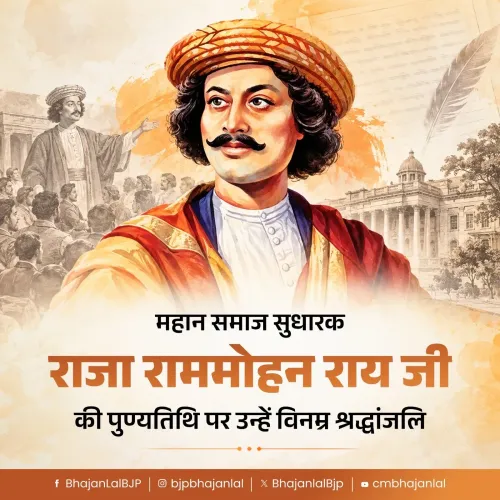
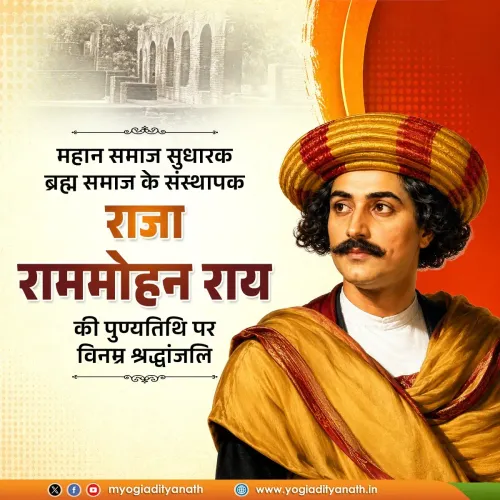
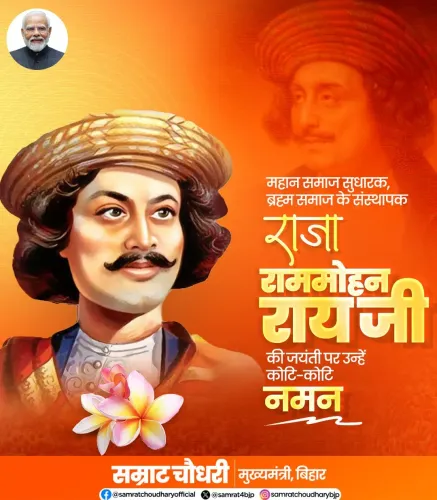
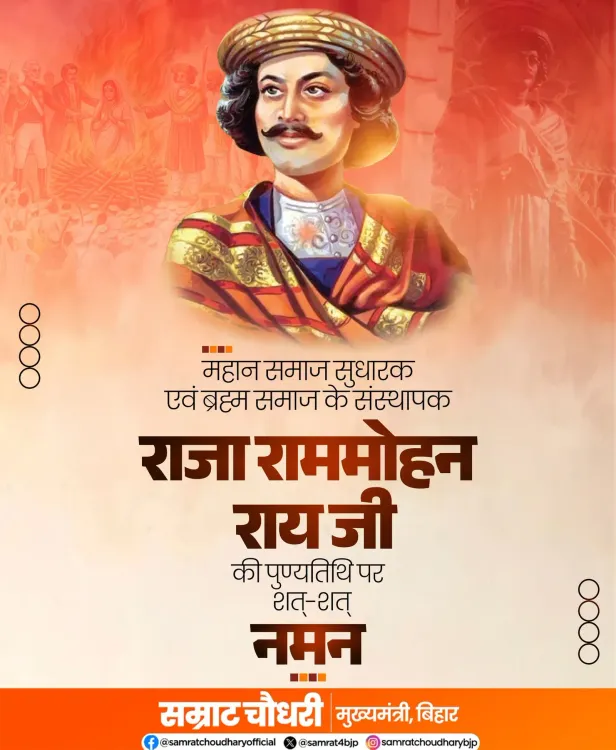
Bihar Chief Minister Samrat Choudhary paid tribute to Raja Ram Mohan Roy on his death anniversary, honouring the 19th-century founder of Brahmo Samaj whose campaign against sati and social evils transformed colonial India.
Key Takeaways
Bihar Chief Minister Samrat Choudhary paid homage to Raja Ram Mohan Roy on his death anniversary on 27 September 2026 .
Roy founded the Brahmo Samaj in 1828 , a monotheistic reformist movement that challenged caste discrimination and idol worship.
His advocacy led to the British colonial ban on sati in 1829 , one of the landmark social reforms in Indian history.
Roy is widely regarded as the 'Father of the Indian Renaissance' and died in 1833 in Bristol, England.
Indian political leaders across parties routinely issue tributes on the death anniversaries of 19th-century social reformers.
A reformer who dismantled one of colonial India's most entrenched social evils is remembered once again. Bihar Chief Minister Samrat Choudhary paid homage to Raja Ram Mohan Roy on his death anniversary on Sunday, 27 September 2026, honouring the 19th-century visionary who reshaped Indian society from its roots.
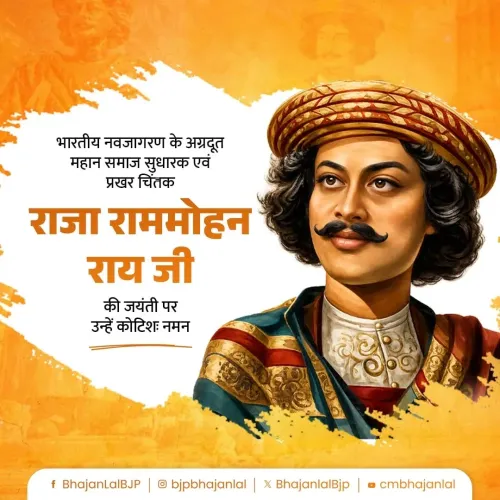
Posting on X in Hindi, the Chief Minister offered a heartfelt tribute: 'शत्-शत् नमन' — a hundred-fold salutation — to the 'great social reformer and founder of Brahmo Samaj.' He noted that Roy's struggle against social evils and his tireless efforts to spread awareness and usher in reform 'will always remain a source of inspiration.'
The man who took on sati — and won
Raja Ram Mohan Roy was not a man who petitioned quietly. Born in 1772 in Bengal, he confronted the practice of sati — the immolation of widows on their husbands' funeral pyres — not just with moral argument but with persistent political campaigning that ultimately compelled the British colonial administration to outlaw the practice in 1829. That single achievement alone would secure his place in history. But Roy went further: he challenged child marriage, promoted women's right to inheritance, and championed English-language education at a time when both were radical positions.Brahmo Samaj: the reform institution he built
In 1828, Roy founded the Brahmo Samaj, a monotheistic reformist movement within Hinduism that rejected idol worship and caste-based discrimination. The organisation became one of the most influential intellectual and social institutions of 19th-century India, shaping generations of reformers and thinkers who followed him. Its legacy threads directly into modern Indian secular and liberal thought. Roy died in 1833 in Bristol, England — far from the Bengal he had transformed — and is widely regarded as the 'Father of the Indian Renaissance.'A tribute in a familiar political cadence
Tributes to 19th-century reformers on their birth and death anniversaries have become a fixture of Indian political life, with leaders across the spectrum paying public homage on social media. Chief Minister Choudhary's post follows that tradition — a brief but sincere acknowledgement that the battles Roy fought, against superstition, against injustice, against the subordination of women, are never entirely won. The reformer lived for only 61 years, but the society he left behind was irreversibly different from the one he was born into. That is the measure India keeps returning to.Point of View
Operating in Bihar — a state where caste arithmetic and social identity politics run deep — invoking a reformer of Roy's stature carries quiet but real symbolic weight. These commemorations rarely shift policy, but they shape the ideological vocabulary politicians choose to inhabit.
NationPress
27 Sept 2026
Frequently Asked Questions
Who was Raja Ram Mohan Roy?
Raja Ram Mohan Roy was a 19th-century Bengali social reformer born in 1772 who founded the Brahmo Samaj in 1828 and campaigned against practices such as sati, child marriage, and caste discrimination. He is often called the 'Father of the Indian Renaissance.'
When did Raja Ram Mohan Roy die?
Raja Ram Mohan Roy died on 27 September 1833 in Bristol, England, at the age of 61.
What is Brahmo Samaj?
Brahmo Samaj is a monotheistic Hindu reform movement founded by Raja Ram Mohan Roy in 1828. It rejected idol worship and caste discrimination and became one of the most influential social reform institutions of 19th-century India.
Why is Raja Ram Mohan Roy famous for sati abolition?
Raja Ram Mohan Roy campaigned persistently against sati — the practice of widows being immolated on their husbands' funeral pyres — and his advocacy directly led the British colonial administration to outlaw the practice through the Bengal Sati Regulation Act of 1829.
Why did Bihar CM Samrat Choudhary pay tribute to Raja Ram Mohan Roy?
Samrat Choudhary paid tribute on the occasion of Raja Ram Mohan Roy's death anniversary on 27 September 2026, honouring the reformer's legacy of fighting social evils and promoting awareness and reform in Indian society.