Nitish Kumar pays tribute to Ram Manohar Lohia on death anniversary
Synopsis
Former Bihar Chief Minister Nitish Kumar offered a heartfelt tribute to socialist icon Dr. Ram Manohar Lohia on his death anniversary, asserting that Lohia's ideals of equality, justice, and public welfare remain an enduring source of inspiration.
Key Takeaways
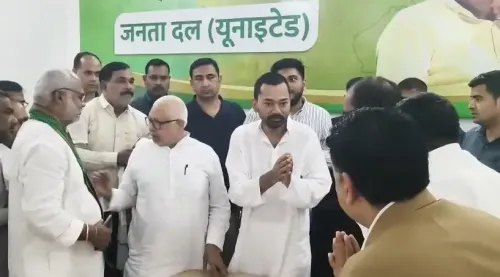
Former Bihar CM and JD(U) national president Nitish Kumar paid tribute to Dr.
Ram Manohar Lohia on his death anniversary, October 12, 2026 .
Kumar described Lohia as a 'great socialist thinker' whose ideas of equality, justice, and public welfare remain relevant and inspiring today.
Lohia's death anniversary is a significant date for parties rooted in India's socialist tradition, including JD(U) and the Samajwadi Party.
Nitish Kumar's political career traces a direct ideological lineage to Lohia's school of thought, shaped in the 1970s student movement.
The tribute reflects JD(U)'s continued public identification with the socialist legacy in contemporary Indian politics.
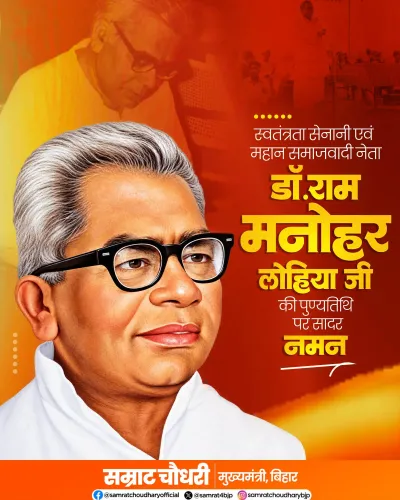
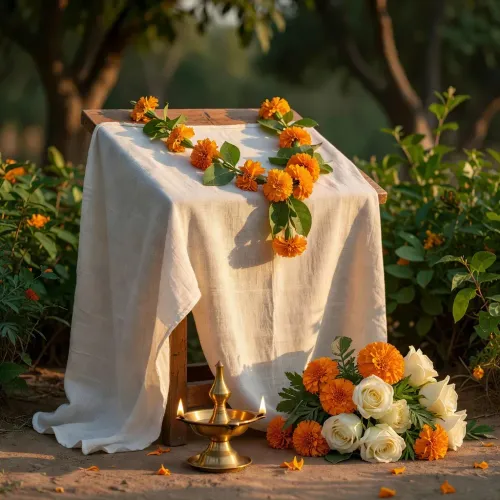
On the death anniversary of one of India's most consequential socialist thinkers, former Bihar Chief Minister Nitish Kumar paid a heartfelt tribute to Dr. Ram Manohar Lohia on Monday, October 12, 2026, calling his ideas of equality, justice, and public welfare as relevant today as they were in his lifetime.
Kumar posted on X in Hindi, writing — 'महान समाजवादी चिंतक स्व० डॉ० राम मनोहर लोहिया जी की पुण्यतिथि पर उन्हें भावपूर्ण श्रद्धांजलि' — which translates to: 'A heartfelt tribute to the great socialist thinker, the late Dr. Ram Manohar Lohia, on his death anniversary. His ideas of equality, justice, and public welfare remain relevant today and serve as an inspiration for all of us.'
Lohia's enduring shadow over Indian socialism
Dr. Ram Manohar Lohia — philosopher, freedom fighter, and founder of the Socialist Party of India — remains one of the defining intellectual forces of post-independence Indian politics. His fierce advocacy for the marginalised, his challenge to Nehruvian consensus, and his insistence that caste and class oppression be dismantled together gave Indian socialism its sharpest edge.
Lohia's death anniversary, observed on October 12, draws tributes annually from across the political spectrum — but particularly from parties rooted in the socialist tradition, including the Janata Dal (United), the Samajwadi Party, and their ideological predecessors.
Nitish Kumar's socialist lineage
For Nitish Kumar, national president of Janata Dal (United) and a product of the Lohiaite political school, this tribute carries more than ceremonial weight. His political formation in the 1970s student movement, his years under the mentorship of George Fernandes, and JD(U)'s stated commitment to social justice all trace a direct line back to Lohia's intellectual legacy.
The tribute is a reminder that socialist thought — however contested its electoral expression today — remains the moral foundation that Bihar's longest-serving chief minister publicly claims as his own. In an era of shifting alliances and ideological fluidity, that claim still means something on the ground.
Point of View
Justice, and public welfare, Kumar reinforces JD(U)'s claim to the socialist tradition at a time when that space is fiercely contested by the Samajwadi Party and others. It also signals to Bihar's OBC and marginalised constituencies — Lohia's original political audience — that the party's foundational commitments remain intact. In Indian politics, whose memory you honour is as consequential as whose alliance you join.
NationPress
12 Oct 2026
Frequently Asked Questions
When is Ram Manohar Lohia's death anniversary?
Dr. Ram Manohar Lohia's death anniversary falls on October 12 , observed annually across India, particularly by parties with socialist roots.
Why did Nitish Kumar pay tribute to Ram Manohar Lohia?
Nitish Kumar paid tribute to mark Lohia's death anniversary, and as JD(U) national president, he publicly reaffirmed his party's connection to the socialist political tradition that Lohia founded.
Who was Dr. Ram Manohar Lohia?
Dr. Ram Manohar Lohia was a freedom fighter, philosopher, and founder of the Socialist Party of India, known for his advocacy against caste and class oppression and his challenge to the dominant political consensus of post-independence India.
What is Nitish Kumar's connection to socialist politics?
Nitish Kumar's political formation happened through the 1970s student movement under Lohiaite influence, and his party JD(U) claims a direct ideological descent from socialist principles of social justice and equality.
What did Nitish Kumar say about Ram Manohar Lohia?
Kumar said Lohia's ideas of equality, justice, and public welfare 'remain relevant today and serve as an inspiration for all of us,' posting his tribute in Hindi on X on October 12, 2026.