Three Indian-American Democrats ousted in 2026 primaries by left-wing challengers
Synopsis
Three Indian-American Democratic incumbents — including Congressman Shri Thanedar of Detroit — have been unseated by DSA or progressive challengers in the 2026 primary cycle, exposing a sharpening ideological contest within the Democratic Party. With Indian-American voters still favouring Democrats 66–18, the real question heading into November 3 is not community loyalty but who, within the party, speaks for that loyalty.
Key Takeaways
Congressman Shri Thanedar (Michigan's 13th District) lost the August 4 primary to state Representative Donavan McKinney — 51.9% to 48.1% — despite holding roughly $5 million on hand.
New York Assemblywoman Jenifer Rajkumar — the first Indian-American woman elected to New York state office — lost to DSA member David Orkin , 58.8% to 40.9% , on June 23 .
Rahul Garabadu lost the June 16 Georgia Senate District 7 runoff to Ruwa Romman by 39.9% to 60.1% .
Justice Democrats spent nearly $1 million backing McKinney; Senator Bernie Sanders endorsed challengers in multiple races.
Indian-American voters still back Democratic House candidates 66% to 18% , per an AAPI Vote/AAPI Data survey, even as Indian-American incumbents face left-wing primary pressure.
All six current Indian-American US House members are Democrats; 12 incumbents total — seven Democrats — lost primaries in this cycle.
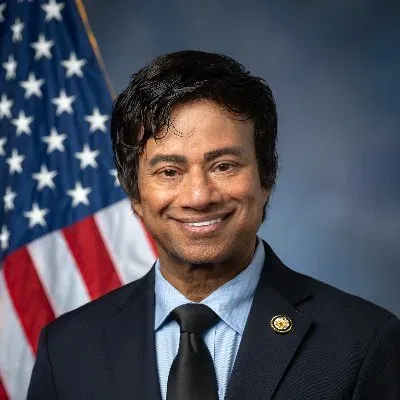
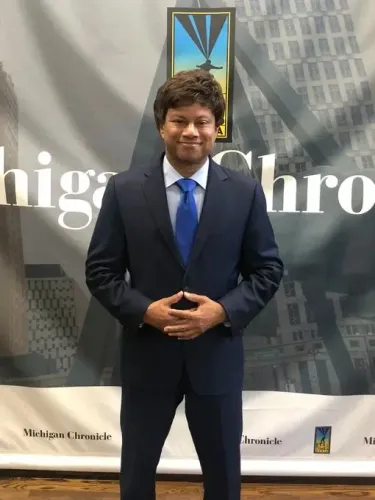
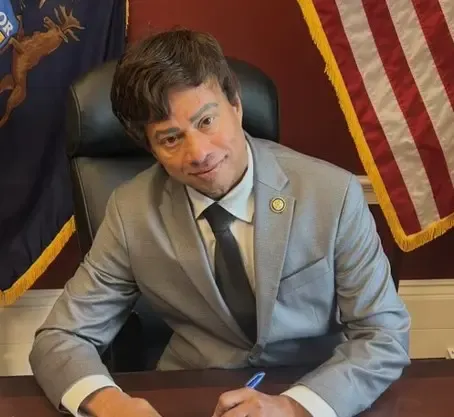
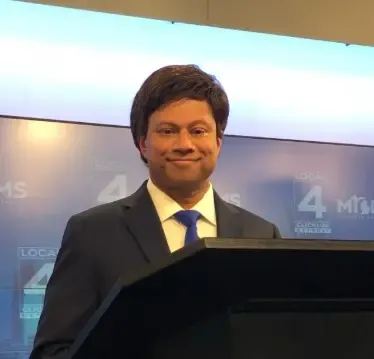
Three Indian-American Democratic legislators — including two-term US Congressman Shri Thanedar of Detroit — have lost their 2026 primary contests to progressive or Democratic Socialists of America (DSA)-backed challengers, in a cycle that underscores a deepening ideological fault line within the Democratic Party ahead of the November 3 midterm elections.
Thanedar Falls in Michigan
Congressman Shri Thanedar, representing Michigan's 13th Congressional District, was defeated in the August 4 primary by state Representative Donavan McKinney, who won 51.9 per cent to Thanedar's 48.1 per cent, according to Michigan Public. Despite being a significant self-funder with approximately $5 million on hand — against McKinney's $1.37 million raised — Thanedar could not hold his seat. House Democratic Leader Hakeem Jeffries had backed Thanedar.
McKinney was supported by Justice Democrats, who reportedly spent nearly $1 million on the race, as well as Senator Bernie Sanders, Congresswoman Rashida Tlaib, and Congresswomen Ayanna Pressley, Ilhan Omar, and Summer Lee. 'I want to congratulate Representative Donavan McKinney on a hard fought race. It was a tough election cycle and, in the end, the voters of the 13th District chose him to represent them moving forward,' Thanedar said on August 5. McKinney framed his victory as a directional signal: 'Today, we showed why being always with the people is more than a slogan — it's a roadmap for the Democratic Party on how to move forward…'
Rajkumar Ousted in Queens
New York Assemblywoman Jenifer Rajkumar of Queens — the first Indian-American woman elected to New York state office when she won in 2020 — lost the June 23 primary in Assembly District 38 to DSA member David Orkin, 58.8 per cent to 40.9 per cent, with more than 94 per cent of votes counted. Orkin was backed by New York City DSA and DRUM Beats (Desis Rising Up and Moving), a South Asian working-class advocacy group.
The contest was notably acrimonious. Orkin filed suit over alleged forged petition signatures — a case subsequently dismissed on procedural grounds — while Rajkumar accused the DSA of waging what she described as a campaign of hate against her, according to the Queens Chronicle. Orkin called his victory 'a historic win for the left and for the working people of South Queens'. JTA described him as an anti-Zionist Jewish candidate. 'Through every battle and every challenge, I remain committed to the same purpose that first called me to public service: lifting people up and fighting for a better New York,' Rajkumar said in a statement on June 24.
Garabadu Loses Georgia Runoff
In Georgia, Rahul Garabadu lost the June 16 Democratic runoff for state Senate District 7 in Gwinnett County to state Representative Ruwa Romman, receiving 3,073 votes against Romman's 4,636 — a margin of 39.9 per cent to 60.1 per cent. The district has a sizeable Asian-American electorate, including a significant Indian-American population. Romman was backed by Sanders, Congresswoman Alexandria Ocasio-Cortez, and Congressman Hank Johnson. 'We proved tonight that progressive values and grassroots power are more powerful than special interests,' Romman said.
The Broader Pattern
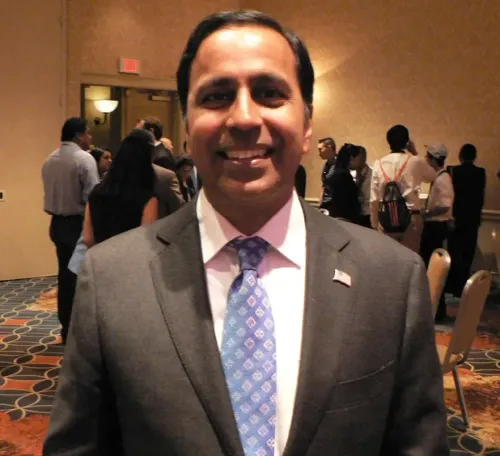
The three defeats occurred in a primary cycle in which 12 House incumbents lost their primaries — seven of them Democrats. Notably, Congressman Raja Krishnamoorthi's March loss in the Illinois Senate primary was to Lieutenant Governor Juliana Stratton, a contest between two establishment Democrats rather than a left-wing insurgency.
The insurgent left also has Indian-American figures of its own. New York City Mayor Zohran Mamdani, the city's first Indian-American mayor, is a DSA member. South Asian progressive Nida Allam narrowly lost to incumbent Valerie Foushee in North Carolina's 4th District on March 3, by 48.2 per cent to 49.2 per cent. Saikat Chakrabarti ran as a progressive in California's 11th District but finished third in the June 2 primary.
All six current Indian-American members of the US House are Democrats. An AAPI Vote/AAPI Data survey conducted this summer found that Indian-American voters still favoured Democratic House candidates by 66 per cent to 18 per cent, suggesting the community's broader party alignment remains intact even as its representation within Democratic primaries faces fresh pressure from the left. The November 3 midterms will test whether the insurgent wave can consolidate its gains.
Point of View
Rajkumar, and Garabadu is less about Indian-American political identity than about a structural realignment on the Democratic left — one where fundraising advantages and establishment endorsements no longer guarantee survival. What is striking is that Thanedar entered the race with nearly four times McKinney's war chest, yet Justice Democrats' $1 million buy and a star-studded endorsement slate proved decisive. The community's 66–18 Democratic lean is durable, but the primaries signal that the left is actively contesting who holds safe Democratic seats — and Indian-American incumbents in diverse urban districts are not insulated from that contest. Mainstream coverage frames this as a loss for the Indian-American community; the more accurate framing is that it is a stress test for the Democratic Party's internal power map, with consequences that extend well beyond any one ethnic constituency.
NationPress
12 Oct 2026
Frequently Asked Questions
Why did Shri Thanedar lose the 2026 primary?
Thanedar lost the August 4 Democratic primary in Michigan's 13th Congressional District to state Representative Donavan McKinney, 51.9% to 48.1%, despite a significant fundraising advantage. McKinney was backed by Justice Democrats — who spent nearly $1 million on the race — and endorsed by Senator Bernie Sanders and several progressive House members.
Who defeated Jenifer Rajkumar in the Queens Assembly race?
DSA member David Orkin defeated Rajkumar in Assembly District 38 on June 23, winning 58.8% to 40.9%. Orkin was backed by New York City DSA and DRUM Beats, a South Asian working-class group.
What happened to Rahul Garabadu in Georgia?
Garabadu lost the June 16 Democratic runoff for Georgia state Senate District 7 in Gwinnett County to state Representative Ruwa Romman, receiving 3,073 votes to Romman's 4,636 — a 39.9% to 60.1% margin. Romman was endorsed by Sanders and Congresswoman Alexandria Ocasio-Cortez.
How do Indian-American voters lean ahead of the November 2026 midterms?
Indian-American voters continue to favour Democratic House candidates heavily — 66% to 18% — according to a summer survey by AAPI Vote and AAPI Data. The primary losses have not, at least yet, shifted the community's broader partisan alignment.
Are there Indian-American figures on the progressive left as well?
Yes. New York City Mayor Zohran Mamdani, the city's first Indian-American mayor, is a DSA member. Nida Allam narrowly lost a progressive primary challenge in North Carolina's 4th District in March, and Saikat Chakrabarti ran as a progressive in California's 11th District, finishing third in the June 2 primary.