End green card country quotas for skilled workers: Congressman Shri Thanedar
Synopsis
Indian-American Congressman Shri Thanedar is pushing to dismantle the per-country green card cap that forces Indian professionals into decades-long queues — framing it not as an immigration debate but as an American economic necessity. With Silicon Valley CEOs privately echoing his concerns, the question is whether Congress will finally act on a reform that has stalled for over two decades.
Key Takeaways
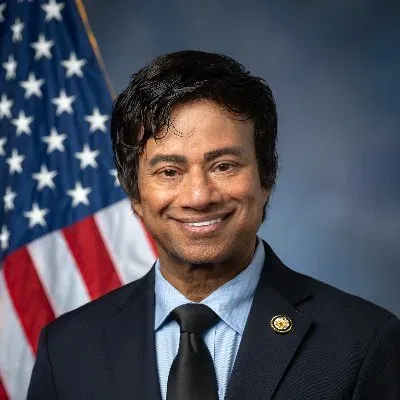
Congressman Shri Thanedar , a Democratic lawmaker from Michigan , has called for the elimination of country-based green card quotas in the US.
He urged faster visa processing, saying US businesses struggle to find workers with specialised skills.
Indian professionals face some of the longest employment-based green card waits globally due to per-country annual caps.
Thanedar said Silicon Valley 'could not survive without immigrants, especially Indian, Indian Americans.' He also flagged a 'wave of anti-immigrant attitude' in the US and said he is actively fighting to restore respect for immigrant contributions in Congress.
Indian-American Congressman Shri Thanedar has called on the United States to eliminate country-based green card quotas and accelerate visa processing, arguing that skilled immigrants are essential to sustaining American economic growth and job creation. The Democratic lawmaker from Michigan made the remarks in an interview, ahead of the US marking the 250th anniversary of its independence.
The Case Against Country Quotas
Under the current US employment-based immigration system, annual permanent residency visas are capped per country of origin — a structure that has produced some of the longest wait times in the world for applicants from India, who constitute a disproportionately large share of highly skilled foreign professionals in the country.
'We need to process visas quicker. We need to get rid of country quotas so we can get the skilled workforce our businesses need,' Thanedar said. He noted that US companies continue to report significant difficulty sourcing workers with specialised technical skills.
What Silicon Valley CEOs Are Saying
'Every time I go meet Silicon Valley entrepreneurs, CEOs, they all tell me about how difficult it is to get a skilled workforce,' Thanedar said. He emphasised that Indian and Indian-American professionals have been particularly critical to the technology sector, adding: 'Silicon Valley could not survive without immigrants, especially Indian, Indian Americans.'
This concern is not new — industry bodies and tech employers have lobbied for quota reform for over two decades, with little legislative movement. The per-country cap was originally designed to prevent any single nationality from dominating immigration flows, but critics argue it now penalises high-demand, high-skill cohorts.
Train Americans First, But Don't Wait
Thanedar was careful to frame immigration not as a replacement for domestic workforce development, but as a bridge. 'The only way we can get those skilled workforce businesses need is to train Americans for these skills, and until such thing happens where there are enough Americans, we need to continue to encourage immigrants to come and contribute to our economy and contribute to our GDP and help create more American jobs,' he said.
This dual-track argument — invest in domestic training while keeping immigration pathways open — mirrors positions taken by several moderate Democrats and some Republicans, though comprehensive immigration reform has stalled repeatedly in Congress.
Fighting Anti-Immigrant Sentiment in Congress
Thanedar also raised concern about what he described as a broader shift in public and political attitudes toward immigrants. 'Currently there is such a wave of anti-immigrant attitude all across America,' he said. 'And what I'm doing is in fighting, I'm in Congress, I'm fighting to restore the respect for immigrants.'
He pointed to Indian-American entrepreneurs as emblematic of immigrant contribution: 'These are people who have worked hard to build businesses all across America, and they symbolise what immigrants have done for this country.'
What Comes Next
No specific legislative timeline was offered, and quota reform bills have historically struggled to advance in a divided Congress. However, as the US approaches its 250th independence anniversary, Thanedar's push reflects a growing chorus within the Democratic Party — and parts of the business community — to modernise an immigration framework widely seen as outdated. Indian professionals on employment-based green card queues could potentially wait decades under the current system, making reform a high-stakes issue for hundreds of thousands of applicants.
Point of View
A distinction that could attract bipartisan support if handled carefully. Yet quota reform has died in Congress repeatedly, not for lack of economic logic but because of political optics around immigration. The harder question his remarks leave unanswered is what specific legislation he is backing and whether the Democratic Party, currently navigating its own internal tensions on immigration, will make this a priority. For the hundreds of thousands of Indian professionals in the green card backlog, the gap between congressional sympathy and congressional action remains the defining frustration.
NationPress
15 Oct 2026
Frequently Asked Questions
What is the green card country quota that Congressman Thanedar wants to end?
The US employment-based immigration system caps the number of permanent residency visas issued annually to nationals of any single country. This per-country limit has created extremely long wait times for Indian professionals, who make up a large share of skilled foreign workers in the US and can face waits spanning decades under the current structure.
Who is Congressman Shri Thanedar?
Shri Thanedar is an Indian-American Democratic Congressman representing a district in Michigan. He is one of a small number of Indian-Americans serving in the US House of Representatives and has been vocal on immigration reform issues affecting the Indian-American community.
Why does Thanedar say the US needs skilled immigrants?
Thanedar argues that US businesses — particularly in technology and innovation sectors — cannot find enough workers with specialised skills domestically. He cited direct feedback from Silicon Valley entrepreneurs and CEOs who told him recruiting a skilled workforce remains a persistent challenge.
Does Thanedar support replacing American workers with immigrants?
No. Thanedar explicitly said the US must train more Americans for high-skill roles. He frames immigration as a necessary bridge until sufficient domestic talent is available, not as a substitute for investing in American workforce development.
What is the current status of green card quota reform in the US Congress?
As of mid-2025, no comprehensive reform bill has passed. Quota reform proposals have been introduced in various forms over the past two decades but have repeatedly stalled due to broader political disagreements over immigration policy. Thanedar did not announce a specific bill or legislative timeline in his remarks.