Nitish Kumar pays tribute to George Fernandes on birth anniversary
Synopsis
Former Bihar Chief Minister Nitish Kumar paid homage to former Union Minister George Fernandes on his birth anniversary, describing the late socialist and trade union leader in a brief Hindi post on X. The JD(U) chief's tribute reinforces his long-standing identification with India's Janata-era socialist tradition and its trade-union legacy.
Key Takeaways
Former Bihar CM Nitish Kumar paid tribute to George Fernandes on his birth anniversary in a Hindi post on X.
Fernandes was a former Union Defence Minister and a leading figure of India's socialist movement.
He led the landmark 1974 All India Railwaymen's Federation strike against the Congress government.
Nitish Kumar and Fernandes were associated through the Samata Party , the precursor to the JD(U).
The tribute fits a pattern of JD(U) commemorations of pre-1990s socialist figures.
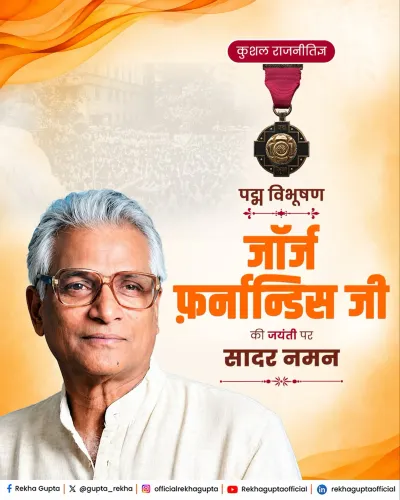
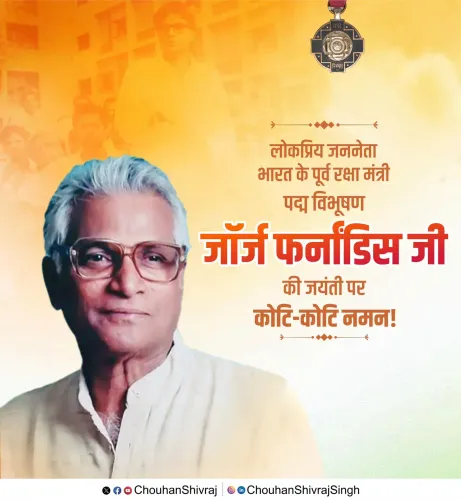
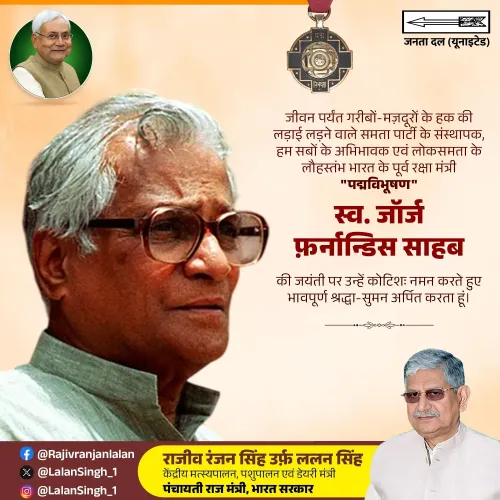
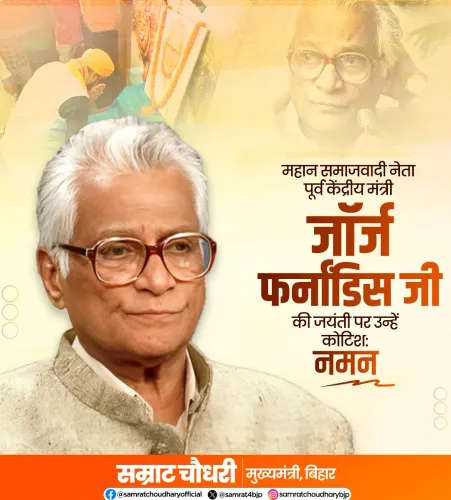
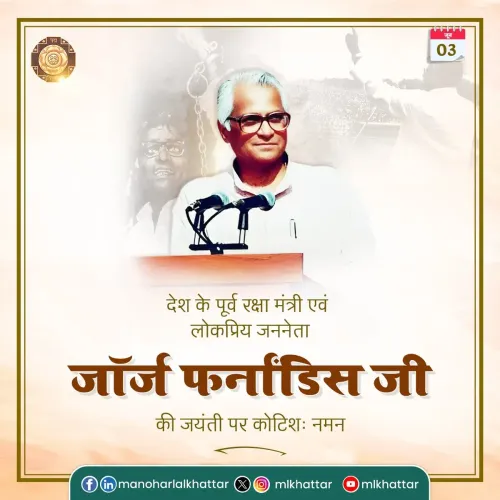
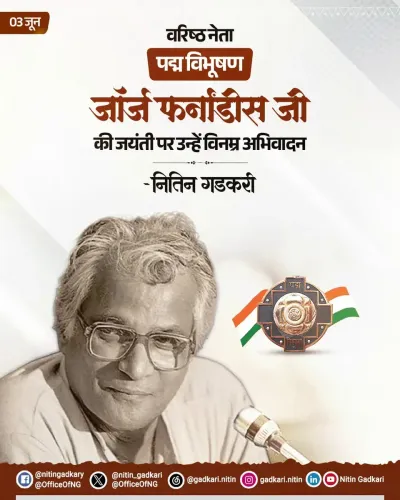
Former Bihar Chief Minister Nitish Kumar on Wednesday paid tribute to former Union Minister and socialist stalwart George Fernandes on his birth anniversary, posting a brief homage on X that described the late leader as a 'distinguished socialist and forceful trade union leader'. The Janata Dal (United) national president's message continues his long-standing practice of publicly honouring senior figures of India's socialist movement.
In the post, written in Hindi, Nitish Kumar wrote 'पूर्व केंद्रीय मंत्री, प्रख्यात समाजवादी एवं प्रखर श्रमिक नेता जॉर्ज फर्नान्डिस जी की जयंती पर उन्हें सादर नमन' (Respectful salutations to former Union Minister, distinguished socialist and forceful labour leader George Fernandes ji on his birth anniversary). The tribute was short, ceremonial, and carried no accompanying image or video.
Context
George Fernandes, who passed away in 2019, was among the most recognisable faces of post-Independence socialist politics in India. He served as Union Defence Minister and held several other Cabinet portfolios across non-Congress governments, while remaining a lifelong organiser of industrial workers and railway employees.
Fernandes is most closely associated with the 1974 All India Railwaymen's Federation strike, which mobilised lakhs of railway workers and became a defining moment of the pre-Emergency opposition to the Congress government. The agitation cemented his image as one of the country's most combative trade unionists.
Policy backdrop
Nitish Kumar's political career grew out of the same socialist Janata movement that produced Fernandes. The JD(U) leader has consistently invoked the symbolism of that generation, particularly figures whose work bridged trade-union activism, anti-Congress coalitions and the Janata Party experiments of the late 1970s and 1980s.
Tributes of this kind serve a dual purpose in Bihar politics. They signal continuity with the ideological lineage of Ram Manohar Lohia-era socialism, and they reinforce the JD(U)'s self-positioning as the inheritor of that legacy at a time when multiple parties in the state claim parts of the same political ancestry.
Stakeholders and impact
For trade unionists and older socialist cadres, Fernandes remains a touchstone, and public commemorations from a serving political leader of Nitish Kumar's stature carry organisational weight. The tribute is also likely to resonate with sections of Bihar's voter base whose political memory is shaped by the anti-Emergency mobilisation and the subsequent rise of the Janata family.
Within the JD(U), invoking Fernandes — who was a co-founder of the Samata Party, the precursor to the present-day JD(U) — reaffirms an internal narrative about the party's origins. Nitish Kumar and Fernandes worked closely during the Samata Party years and through the National Democratic Alliance governments at the Centre.
What's next
Commemorations such as this one typically precede a wider season of party programmes built around socialist anniversaries, and observers will watch whether Bihar's political calendar features further events tied to the Janata-era pantheon. References to labour-law reforms, railway workers' welfare and the symbolism of the 1974 strike often resurface in legislative debates and campaign speeches when leaders draw on this legacy.
For Nitish Kumar, the tribute reiterates a familiar template — using the memory of a senior socialist to anchor his own political identity. As Bihar moves through its next electoral cycle, such invocations of the 1970s opposition tradition are likely to remain a recurring feature of his public messaging.
Point of View
A co-founder of the Samata Party, also reaffirms the JD(U)'s own origin story. Such commemorations function as low-cost but high-symbol signals to older cadres and to cross-caste socialist voter blocs. Expect more such anchor-moments as Bihar approaches its next electoral cycle.
NationPress
18 Oct 2026
Frequently Asked Questions
Why did Nitish Kumar pay tribute to George Fernandes?
Nitish Kumar paid tribute to George Fernandes on the latter's birth anniversary, describing him as a distinguished socialist and forceful trade union leader. The two were long-time political associates within the socialist Janata tradition.
Who was George Fernandes?
George Fernandes was a former Union Minister, socialist leader and trade unionist who served as India's Defence Minister and led major labour agitations, including the 1974 railway strike. He passed away in 2019.
What was the 1974 railway strike led by George Fernandes?
The 1974 All India Railwaymen's Federation strike, organised by George Fernandes, mobilised lakhs of railway workers and became a defining moment of pre-Emergency opposition to the Congress government.
What is the link between George Fernandes and the JD(U)?
George Fernandes was a co-founder of the Samata Party, which later merged into the Janata Dal (United). Nitish Kumar worked closely with him through the Samata Party years and in NDA governments at the Centre.
What did Nitish Kumar say in his tribute post?
In Hindi, Nitish Kumar offered 'respectful salutations to former Union Minister, distinguished socialist and forceful labour leader George Fernandes ji on his birth anniversary'. The post carried no image or video.