CM Rekha Gupta pays tribute to George Fernandes on birth anniversary
Synopsis
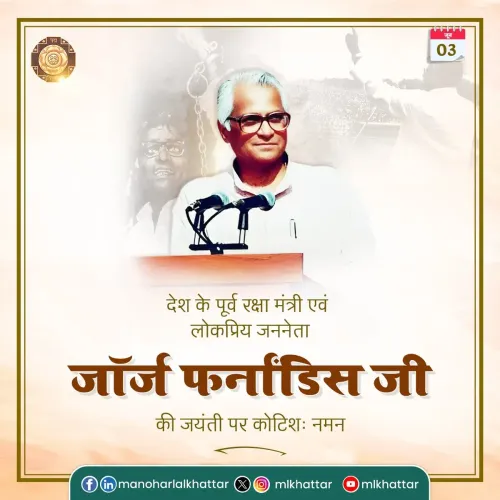
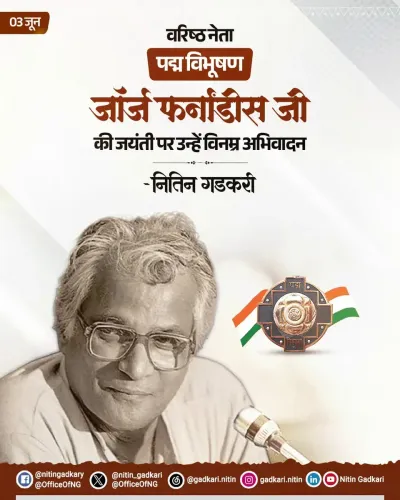
Delhi Chief Minister Rekha Gupta on 3 June 2026 honoured former Union Minister George Fernandes on his birth anniversary, calling him a vigilant sentinel of democracy and a symbol of simplicity. Her message highlighted his role during the 1975 Emergency and his work for marginalised sections of society.
Key Takeaways
Delhi CM Rekha Gupta posted a tribute to George Fernandes on his birth anniversary on 3 June 2026.
She described him as a 'vigilant sentinel of democracy' and 'symbol of simplicity'.
Her message highlighted his struggle to protect democracy during the 1975-1977 Emergency.
Fernandes (1930-2019) served as Union Defence Minister in the Vajpayee government.
He is widely remembered for leading the 1974 Railway Strike and for his socialist politics.
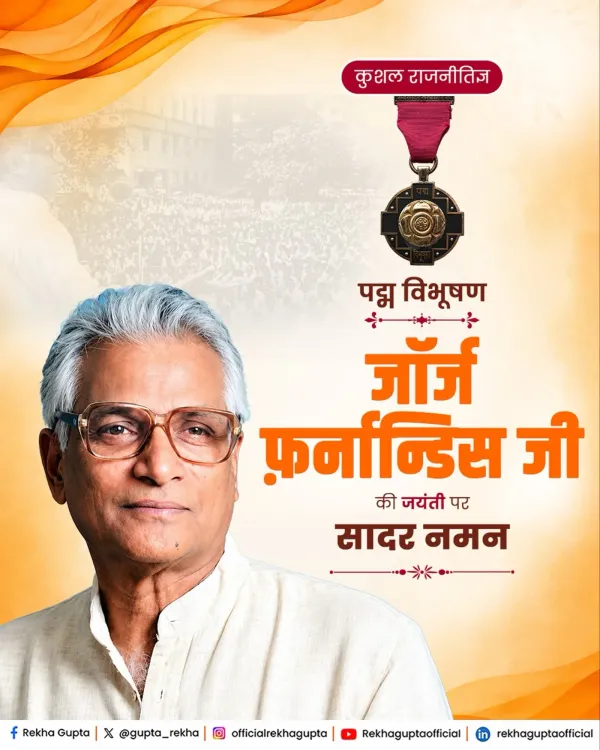
Delhi Chief Minister Rekha Gupta on 3 June 2026 paid tribute to former Union Minister George Fernandes on his birth anniversary, hailing him as a 'vigilant sentinel of democracy' and a 'symbol of simplicity'. The post, shared on X from the national capital, invoked Fernandes's role during the Emergency and his lifelong commitment to public service.
In her message, originally posted in Hindi, Gupta wrote that her 'humble salutations' went to the late leader, adding that 'aapatkaal ke kathin daur mein loktantra ki raksha ke liye unka sangharsh tatha janseva ke prati unka samarpan atulniya tha' (his struggle to protect democracy during the difficult days of the Emergency, and his dedication to public service, were unparalleled). She described his work for the country's progress and for the welfare of deprived and exploited sections of society as a source of inspiration.
Context
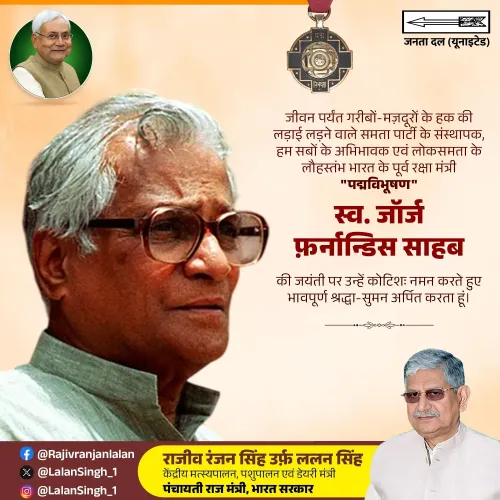
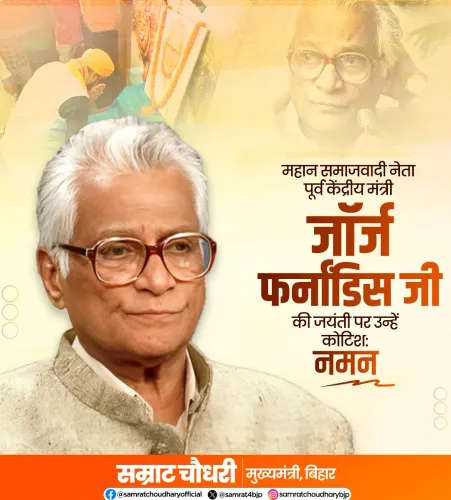
George Fernandes, born on 3 June 1930 in Mangaluru, rose from the trade union movement in Mumbai to become one of India's most recognisable socialist politicians. He passed away on 29 January 2019 after a prolonged illness. His career spanned decades of parliamentary politics, multiple ministerial portfolios and the founding of the Samata Party.
Fernandes is most often remembered for going underground during the 1975-1977 Emergency imposed by then Prime Minister Indira Gandhi, and for the Baroda Dynamite Case that followed. He later served as Union Defence Minister in the Atal Bihari Vajpayee-led NDA government and held the railways and industries portfolios in earlier coalitions.
Policy backdrop
Tributes to Fernandes from BJP leaders typically foreground two themes: resistance to the Emergency and the socialist concern for workers and marginalised groups. Gupta's message echoes both, linking his anti-authoritarian credentials to the welfare of 'deprived and exploited' sections — language consistent with how the NDA has positioned its outreach to working-class voters.
Commemorations on 3 June have become an annual fixture across party lines, with leaders from socialist, regional and national formations marking the day. The remembrance also forms part of a wider political effort to keep public memory of the Emergency alive, particularly as the country approaches the 50th anniversary of its end in 2027.
Stakeholders and impact
For the BJP, invoking Fernandes serves both ideological and symbolic purposes. As a non-Congress stalwart who allied with the Jana Sangh and later the BJP-led coalition, he is frequently cited to underline a tradition of cross-ideological opposition to Congress dominance. Gupta, as a first-term Chief Minister of Delhi, joining this annual chorus aligns her with the party's national narrative.
For trade unions and socialist formations, Fernandes remains a touchstone figure. His legacy continues to shape how leaders speak about civil liberties, railway workers' rights — he led the historic 1974 Railway Strike — and the politics of dissent.
What's next
Similar tributes are expected from leaders across the political spectrum through the day. With the 50th anniversary of the Emergency's lifting approaching in 2027, references to Fernandes are likely to feature prominently in BJP-led commemorations of that period, sharpening the contrast the party draws between its own democratic lineage and the events of the mid-1970s.
Point of View
She ties the party's national outreach to working-class voters with a curated memory of 1970s dissent. As the 50th anniversary of the Emergency's end approaches in 2027, expect such invocations to grow louder. For a first-term Delhi CM, joining this annual remembrance is also a low-cost way to signal alignment with the party's central messaging.
NationPress
19 Sept 2026
Frequently Asked Questions
Who was George Fernandes?
George Fernandes (1930-2019) was an Indian socialist leader, trade unionist and former Union Minister who served as Defence Minister in the Atal Bihari Vajpayee government and led the historic 1974 Railway Strike.
Why is 3 June associated with George Fernandes?
3 June is George Fernandes's birth anniversary. He was born on 3 June 1930 in Mangaluru and is commemorated annually by leaders across the political spectrum.
What did Delhi CM Rekha Gupta say about George Fernandes?
Rekha Gupta called him a vigilant sentinel of democracy and a symbol of simplicity, praising his struggle to protect democracy during the Emergency and his dedication to the welfare of deprived and exploited sections.
What was George Fernandes's role during the Emergency?
Fernandes went underground during the 1975-1977 Emergency imposed by Indira Gandhi and became a leading face of resistance, later facing prosecution in the Baroda Dynamite Case.
Which ministerial posts did George Fernandes hold?
He served as Union Defence Minister under Prime Minister Atal Bihari Vajpayee and earlier held the Railways and Industries portfolios in coalition governments.