CJI Surya Kant declines INDIA bloc meet, cites judiciary's role
Synopsis
CJI Surya Kant shut the door on a political meeting but kept the court's doors open — telling the INDIA bloc its issues are sub judice and the path forward is a petition, not a delegation. With the Opposition's march proceeding regardless, the standoff over electoral roll irregularities and the Election Commission's future has moved from the street to the steps of the Supreme Court.
Key Takeaways
CJI Surya Kant declined on 12 October 2026 to meet the INDIA bloc , citing the judiciary's role and confidential reasons in his reply.
The CJI reportedly said the issues raised are already sub judice and the court cannot receive a political delegation at the administrative level.
The INDIA bloc 's planned march to the Supreme Court in New Delhi reportedly proceeded despite the refusal.
The Opposition is demanding the resignation of Chief Election Commissioner Gyanesh Kumar over alleged irregularities in the Special Intensive Revision (SIR) of electoral rolls.
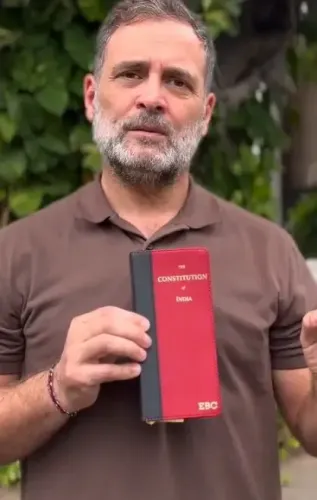
Rahul Gandhi framed the march as 'not of a political party, but of all Indians', broadening its stated scope.
The INDIA bloc had submitted a charter of four key demands on electoral reforms to President Droupadi Murmu the previous Friday.
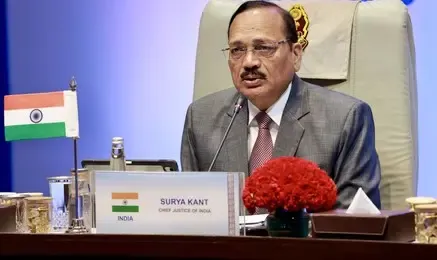
Chief Justice of India CJI Surya Kant on Monday, 12 October 2026, declined a request by the Congress-led INDIA bloc of Opposition parties for a personal meeting, advising them to file a petition before the Supreme Court instead. The CJI confirmed he had replied to the bloc's letter, citing reasons he chose to keep confidential, even as the Opposition proceeded with its planned march to the apex court in New Delhi.
What the CJI Said
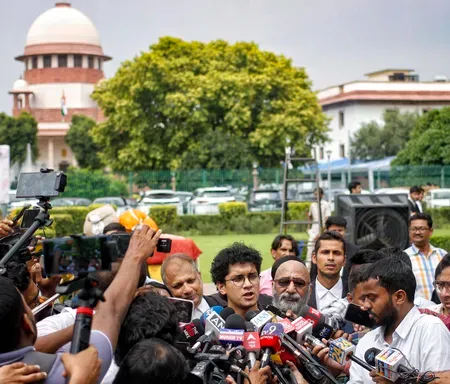
Speaking to reporters, CJI Surya Kant said, 'I received their letter yesterday and replied to it last night. The letter was dated the day before yesterday, but I was away, so I received it yesterday. I have given certain reasons in my reply and expressed my inability to meet them. I would request you to ask them about the contents of the letter. I have maintained its confidentiality.'
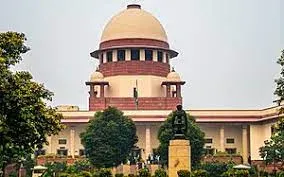
He reiterated the court's accessibility to all citizens: 'The doors of the Supreme Court are open to everyone. Anyone can file a petition, whether they are an ordinary citizen or a member of an elected body. Every citizen of India has the right to approach us. We will hear their grievances in accordance with the law and ensure that those entitled to relief receive it.'
Why the Meeting Was Refused
According to reports, the CJI conveyed that the issues the Opposition leaders intend to raise are already sub judice and are being actively heard by the Supreme Court. He reportedly emphasised that the judiciary's role is to hear petitions and deliver judgments — not to receive political delegations at the administrative level. He is also learnt to have stressed that the court cannot meet a group representing a political party outside the formal judicial process.
He additionally reiterated that the Supreme Court, as the country's highest judicial body, remains 'committed to protecting the fundamental rights of every citizen' and is accessible 'open 24 hours a day for all.'
The INDIA Bloc's Demands
The march and meeting request are part of a broader campaign by Opposition parties demanding the resignation of Chief Election Commissioner Gyanesh Kumar over alleged irregularities in the Special Intensive Revision (SIR) of electoral rolls, among other electoral concerns. Despite the CJI's refusal to grant a meeting, the INDIA bloc's planned march reportedly proceeded on Monday.
Leader of the Opposition in the Lok Sabha, Rahul Gandhi, maintained that the planned march is 'not of a political party, but of all Indians', seeking to broaden the campaign's reach and build pressure on both the Chief Election Commissioner and the Narendra Modi-led Bharatiya Janata Party (BJP) government at the Centre.
Electoral Roll Controversy
Rahul Gandhi has alleged that the ruling government benefited from the SIR exercise, which has become a major flashpoint between the Opposition and the Election Commission of India (ECI). Notably, the INDIA bloc had submitted a charter of four key demands related to electoral reforms and alleged vote manipulation to President Droupadi Murmu the previous Friday, days before the march.
What Happens Next
With the CJI firmly directing the Opposition to the formal judicial route, the focus now shifts to whether the INDIA bloc files a fresh petition before the Supreme Court on the electoral roll issue. The broader political standoff over the SIR exercise and the future of Chief Election Commissioner Gyanesh Kumar is unlikely to ease in the near term.
Point of View
The Supreme Court has effectively handed the Opposition a roadmap to escalate the electoral roll dispute into formal litigation. That is either a masterclass in institutional restraint or a slow-burning risk: if a bench then rules on the SIR exercise, every outcome will be read through a political lens, regardless of its legal merit. The deeper issue — whether the SIR exercise was conducted with procedural fairness — remains unresolved, and neither a street march nor a meeting with the CJI was ever the right forum for it.
NationPress
12 Oct 2026
Frequently Asked Questions
Why did CJI Surya Kant refuse to meet the INDIA bloc?
CJI Surya Kant declined the meeting because the issues the Opposition intended to raise are reportedly already sub judice and under active hearing by the Supreme Court. He also stated that the court cannot receive a delegation representing a political party at the administrative level, emphasising that the proper channel is a formal petition.
What are the INDIA bloc's main demands?
The INDIA bloc is primarily demanding the resignation of Chief Election Commissioner Gyanesh Kumar over alleged irregularities in the Special Intensive Revision (SIR) of electoral rolls. The bloc also submitted a charter of four key demands on electoral reforms and alleged vote manipulation to President Droupadi Murmu the previous Friday.
Did the INDIA bloc's march to the Supreme Court go ahead?
Yes, despite the CJI's refusal to grant a meeting, the INDIA bloc's planned march to the Supreme Court in New Delhi reportedly proceeded on 12 October 2026. The demonstration is part of a broader series of Opposition protests over electoral roll issues.
What is the Special Intensive Revision (SIR) of electoral rolls?
The Special Intensive Revision (SIR) is an exercise conducted by the Election Commission of India to update and revise voter rolls. The INDIA bloc has alleged irregularities in the process and claims the ruling BJP government benefited from it, accusations the government and ECI have not publicly accepted.
What can the INDIA bloc do after the CJI's refusal?
The CJI explicitly advised the Opposition to approach the Supreme Court through a formal petition, which is the standard judicial route. Filing such a petition would allow the court to formally hear arguments on the electoral roll irregularities, placing the dispute within the judicial process rather than on the streets.