CJI Surya Kant at NHRC: Govt must ensure water reaches people with dignity
Synopsis
India's Chief Justice used the NHRC's 33rd Foundation Day to deliver a pointed message: a tap without water is not access, and a pipe carrying arsenic is not a right fulfilled. Justice Surya Kant framed safe, reliable water supply as a constitutional imperative under the right to life — and put the burden squarely on governments to close the gap between infrastructure statistics and ground reality.
Key Takeaways
CJI Justice Surya Kant addressed the NHRC 33rd Foundation Day at Vigyan Bhawan, New Delhi , on 12 October 2026 .
He argued that governments must ensure water is safe, reliable, and consistently available — not merely that pipes and taps are installed.
Water contaminated with arsenic or fluoride , or a tap connection that runs dry, does not constitute fulfilment of the right to water.
The CJI linked access to safe water to Article 21 of the Constitution, citing the Supreme Court's environmental jurisprudence on the right to a pollution-free environment.
He flagged the disproportionate impact of water scarcity on women and farmers , and stressed an intergenerational responsibility to protect aquifers and rivers.
The NHRC conference theme was 'Water — The Elixir of Life' , attended by NHRC Chairperson Justice V.
Ramasubramanian and other members.
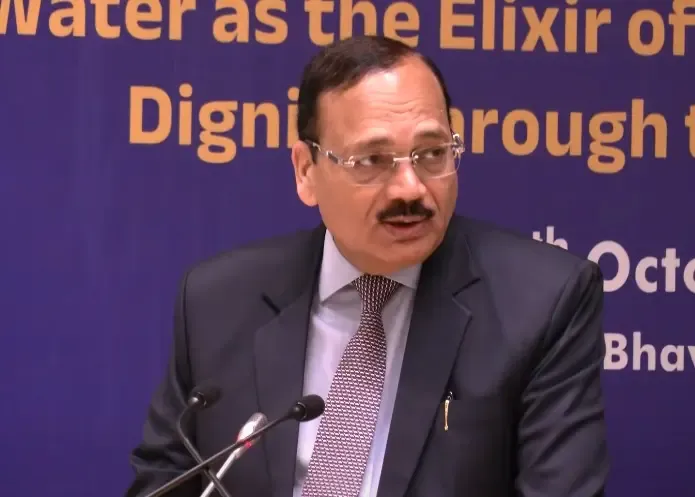
Chief Justice of India (CJI) Justice Surya Kant on Monday, 12 October 2026, called on governments to move beyond building water infrastructure and take responsibility for ensuring that water supply remains safe, reliable, and continuous — framing access to clean water as a constitutional obligation central to human dignity. He was speaking at the 33rd Foundation Day of the National Human Rights Commission (NHRC) at Vigyan Bhawan in New Delhi.
Core Argument: Infrastructure Alone Is Not Enough
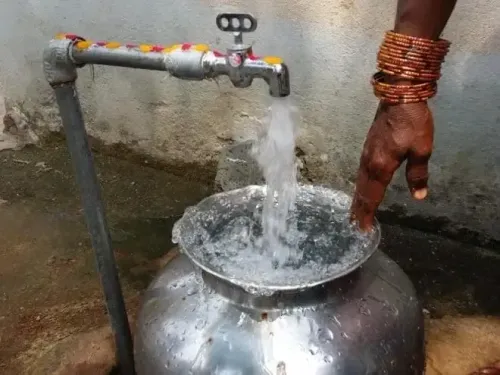
The CJI drew a sharp distinction between the presence of physical infrastructure and the fulfilment of the right to water. 'A mere tap is not the same as access to water. A pipe that runs dry cannot fulfil the promise that the pipe represents,' he said, cautioning that contamination by arsenic, fluoride, or other harmful substances posed a direct threat to life and health.
Justice Kant stressed that the government's responsibility extended beyond laying pipelines to guaranteeing that the water flowing through them was safe and consistently available. 'Government must build and maintain the systems through which water reaches people,' he said, calling for a coordinated institutional response to systemic water-access challenges.
Water as a Constitutional Right
Placing the argument firmly within India's constitutional framework, the CJI said the Supreme Court's evolving environmental jurisprudence had recognised that the right to life under Article 21 encompasses the right to enjoy pollution-free water and air. He noted that the constitutional understanding of the right to life had expanded over decades to include conditions necessary for a dignified existence — among them, access to health, food, shelter, livelihood, and a clean environment.
'A community without reliable access to water cannot fully enjoy the dignity that our Constitution promises,' he said, underlining that water was not a standalone entitlement but a prerequisite for the exercise of other fundamental rights.
Wider Social and Economic Consequences
Justice Kant highlighted the disproportionate burden that water scarcity placed on specific groups. Women, he observed, spent hours each day fetching water — time lost to education, economic participation, and family life. Farmers, whose livelihoods depended on reliable irrigation, were equally exposed to the consequences of supply failure.
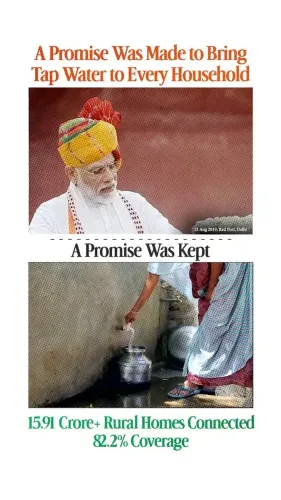
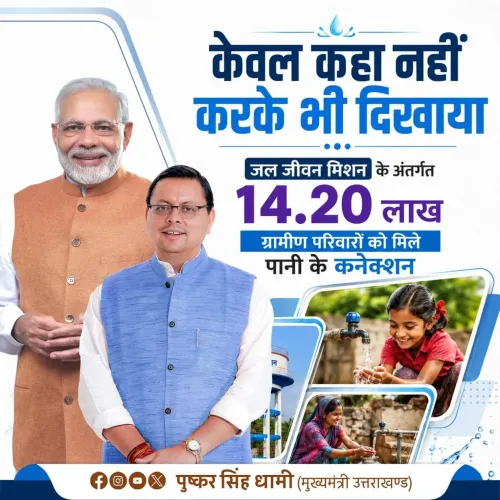
He acknowledged India's recent progress in expanding drinking water access — including through household tap connections in rural areas — but stressed that the next phase of the effort must prioritise the quality and reliability of supply, not merely the count of connections. This comes amid ongoing government schemes aimed at universal rural tap coverage, where coverage statistics have at times masked ground-level service gaps.
Intergenerational Responsibility and Global Cooperation
The CJI broadened the frame beyond current citizens, urging that the right to water be understood as a responsibility towards future generations. He warned that depleted aquifers, polluted rivers, and compromised drinking water sources would impose a burden on those not yet born. 'Water itself teaches us something consequential: it crosses boundaries. Our response to it must do the same,' he said, calling for cross-sectoral and international cooperation.
He also underscored the role of civil society in surfacing ground realities and of international institutions in contributing scientific knowledge and cooperation to address water-related challenges.
NHRC Conference and Attendees
The Foundation Day function was organised around the theme 'Water — The Elixir of Life', with a national conference examining the relationship between water, human dignity, and human rights protection. The event was attended by NHRC Chairperson Justice V. Ramasubramanian, Members Justice (Dr.) Bidyut Ranjan Sarangi, Vijaya Bharathi Sayani, and Priyank Kanoongo, along with Secretary General Piyush Goyal, senior officers, and other dignitaries.
As India's water governance framework faces growing scrutiny over quality shortfalls and climate-linked supply stress, the CJI's remarks signal the judiciary's continued interest in holding governments accountable to a substantive — not merely nominal — standard of water access.
Point of View
Not just an infrastructural one. India's flagship rural tap-connection programme has made significant numerical gains, but independent assessments have repeatedly flagged that a large share of those connections deliver water intermittently or below safety thresholds. By invoking Article 21 and the pollution-free environment doctrine, Justice Kant has effectively placed water quality within the ambit of rights enforcement — potentially a precursor to stronger judicial oversight. The intergenerational framing is also notable: it broadens accountability beyond electoral cycles to a longer arc of constitutional obligation.
NationPress
12 Oct 2026
Frequently Asked Questions
What did CJI Surya Kant say about water access at the NHRC event?
CJI Justice Surya Kant said governments must build and maintain systems that ensure water is safe, reliable, and continuously available to all citizens. He cautioned that a tap connection or pipeline that does not deliver clean water does not fulfil the constitutional promise of the right to water.
What is the constitutional basis for the right to water in India?
The CJI cited the Supreme Court's evolving interpretation of Article 21 — the right to life — which has expanded to include conditions necessary for a dignified existence, among them access to pollution-free water and air. He said water access is therefore a constitutional responsibility of the government, not merely a welfare objective.
What was the theme of NHRC's 33rd Foundation Day conference?
The 33rd Foundation Day conference of the National Human Rights Commission was held on 12 October 2026 under the theme 'Water — The Elixir of Life', examining the intersection of water access, human dignity, and human rights protection.
Who is most affected by unreliable water access, according to the CJI?
Justice Surya Kant specifically highlighted women, who spend hours daily fetching water, and farmers, whose livelihoods depend on reliable irrigation, as the groups most severely impacted by water scarcity and supply failure.
What did the CJI say about India's progress on drinking water coverage?
The CJI acknowledged progress in expanding drinking water access, including household tap connections in rural areas, but stressed that the focus must now shift from the number of connections to the quality and reliability of the water supplied. He warned that contamination by arsenic, fluoride, or other substances remained a serious threat.