India's fielding culture in crisis: R Sridhar warns of 'undercooked' T20 squad ahead of New Zealand tour
Synopsis
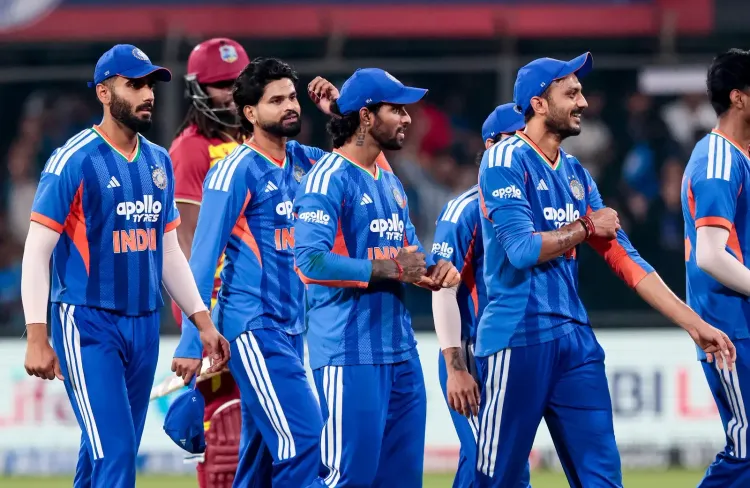
Former India fielding coach R. Sridhar has delivered a blunt verdict: India's T20 fielding culture is broken, with 58 catches dropped, a net deficit of 97 runs, and new players arriving through the domestic system focused on batting alone. With the New Zealand tour starting 22 October in cold, demanding conditions, the crisis is about to face its most immediate test.
Key Takeaways
Former India fielding coach R.
Sridhar says India urgently needs a cultural overhaul in fielding ahead of the New Zealand tour starting 22 October 2026 .
India ranks second-to-last among top 10 nations in T20I catching efficiency at 73.4% , having dropped 58 catches in 2026.
Fielding errors have leaked 226 runs against 129 saved , a net deficit of 97 runs .
India leads all teams in missed run-out opportunities with 19 squandered in 2026.
Sridhar flagged that young squad entrants are 'undercooked' in fielding, shaped by a domestic system that prioritises batting.
Fielding coach Subhadeep Ghosh and head coach Gautam Gambhir must rebuild standards for the 2027 ODI World Cup build-up.
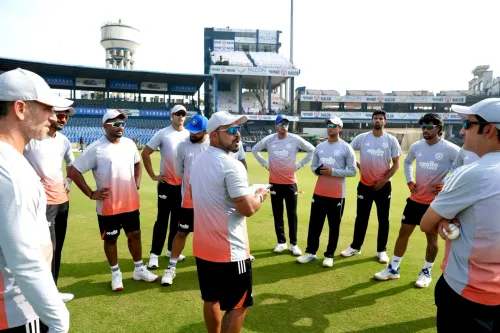
Former India senior men's fielding coach R. Sridhar has sounded a sharp alarm over the Indian cricket team's declining fielding standards in T20 internationals, warning that the squad requires an urgent cultural overhaul ahead of the all-format tour of New Zealand starting 22 October 2026. Speaking in a select virtual interaction on Monday, 12 October, Sridhar said new entrants to the squad are arriving 'undercooked' in their fielding abilities — a structural problem, he argued, that runs deeper than any single match or series.
The Numbers Behind the Slump
Statistical data from Cricket-21 paints a damning picture of India's T20I fielding performance in 2026. India currently ranks second-to-last among the top 10 nations in catching efficiency, at just 73.4 per cent, having dropped a staggering 58 catches. While Indian fielders have saved 129 runs through competent ground fielding, dropped catches and errors have leaked 226 runs, producing a net fielding deficit of 97 runs. India also leads all teams in missed run-out opportunities, squandering 19 despite converting 14. Wicketkeepers missed two stumpings from five chances.
Sridhar did not shy away from acknowledging the scale of the problem. 'The form is not great. The fielding form of the Indian team, not just over the last few matches, but the last few months, it's not been great. We ended up winning the T20 World Cup, but still we were nowhere near being a good fielding unit in that tournament as well. Axar Patel probably just saved us from falling by the wayside in that semifinal. So we need to pick up our act together,' he said.
Culture Gap at the Root
Sridhar pointed to an absence of fielding culture as the core issue, contrasting it with the clearly defined identity India has built around batting and fast bowling. 'Fielding has now definitely taken a backseat in terms of application and in terms of building a certain culture. As we can see, there is a clear culture with the batting, the way the Indian team is batting. Similarly, there's a clear culture in the way the Indian team is using fast bowlers... But whereas in fielding, that seems to be absent,' he observed.
Most worryingly, he flagged that young players entering the squad are coming through the domestic system with single-skill development. 'The new kids who are coming into the squad are undercooked in their fielding ability... whoever is coming in, they don't seem to be the kind of fielder a Kohli is or even a Surya or Shreyas is... they seem to have been brought up on only one skill, that is batting,' Sridhar said. He called on the broader domestic ecosystem — not just the national team management — to confront this deficit.
New Zealand Conditions Add Another Layer
The New Zealand tour presents an immediate environmental test on top of the structural one. Matches are scheduled to begin at 8 pm local time — biting cold conditions for fielders. India's tour, falling in late October and November, is one of the rare occasions the side visits New Zealand outside the Jan-Feb summer window. Sridhar flagged specific challenges: Wellington's wind making high catches particularly difficult, and sub-zero conditions at the Hagley Oval in Christchurch requiring fielders to use hand warmers between deliveries. 'It's not going to be easy,' he said plainly. The team is set to depart India on 18 October, landing on 19 October, with just days to acclimatise before the first T20I on 22 October.
Accountability Framework and the Kohli Blueprint
Sridhar outlined two pillars for rebuilding fielding culture: self-set internal standards among players, and objective tracking metrics. Modern tools available to the coaching staff include throw speed from the boundary, reaction time on sharp chances, catch conversion rates, runs saved, and direct-hit percentages. He recalled the benchmark set under former captain Virat Kohli, where attendance at every fielding session was tracked, and during the 2018 ODI series in South Africa, bowlers were explicitly instructed to see themselves as run-savers and run-out creators for the 40 overs they were not bowling.
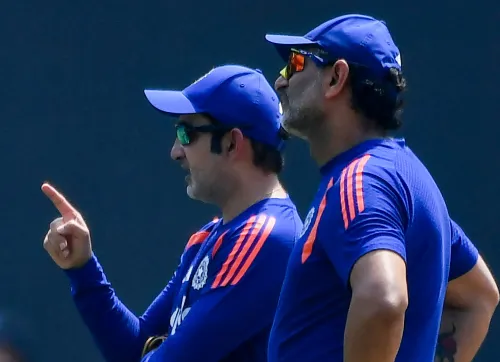
Current fielding coach Subhadeep Ghosh — who took over from T Dilip earlier in 2026 — and head coach Gautam Gambhir are now responsible for reinstituting those standards within the T20I squad led by Shreyas Iyer. Sridhar backed Ghosh's capabilities but stressed the task is formidable. 'He needs to objectivize every match more, and he's got the methods for it. He's a good coach,' Sridhar said, adding that definitive plans must be built around certainties even before the 2027 ODI World Cup squad takes final shape.
Vaibhav Sooryavanshi and the Long View
Sridhar singled out 15-year-old batting prodigy Vaibhav Sooryavanshi as a specific case requiring a structured fielding schedule, expressing concern that being substituted during matches at his age sets a poor precedent. 'At 15, if you are being subbed out, it's not a great sign. By 18 or 19, you would want Vaibhav to evolve as a very, very good fielder,' Sridhar said, urging the coaching staff to personally oversee a daily fielding programme for the youngster. He invoked Suryakumar Yadav's match-winning boundary catch in the 2024 T20 World Cup final and Kapil Dev's iconic take in the 1983 World Cup final as reminders of fielding's capacity to alter cricketing history — not just match results.
With the New Zealand tour days away, India's fielding culture faces its most public stress test in years — and, according to Sridhar, the solutions are neither quick nor cosmetic.
Point of View
Masking a growing deficit with superior batting and bowling firepower. But that buffer has limits, especially in knockout cricket where a single dropped catch — as the Axar Patel semifinal moment illustrated — can decide a tournament. The deeper concern is the domestic pipeline: if players are arriving in the national squad having been coached exclusively for batting, no amount of camp-level correction by Subhadeep Ghosh can substitute for systemic change at the Board of Control for Cricket in India (BCCI) level. The 2027 ODI World Cup gives India roughly 18 months to close that gap. Whether the administration treats Sridhar's warning as a genuine alarm or a pundit's aside will say everything about how seriously Indian cricket takes the third dimension of the game.
NationPress
12 Oct 2026
Frequently Asked Questions
How bad is India's T20I fielding record in 2026?
India ranks second-to-last among the top 10 nations in catching efficiency at 73.4%, having dropped 58 catches in T20Is in 2026, according to Cricket-21 data. Fielding errors have leaked 226 runs against 129 saved, resulting in a net deficit of 97 runs.
What did R. Sridhar say about India's fielding culture?
Sridhar said fielding has taken a clear backseat in terms of application and culture within the Indian squad, unlike batting and fast bowling, which have well-defined identities. He warned that new players entering the team are 'undercooked' in fielding, having been developed through the domestic system with a near-exclusive focus on batting.
Why will conditions in New Zealand be a specific challenge for India's fielders?
India's tour falls in late October and November — early spring in New Zealand — unlike the usual Jan-Feb visits when temperatures are warmer. Matches begin at 8 pm local time, meaning fielders will operate in cold conditions, with cities like Wellington presenting wind challenges for high catches and Christchurch's Hagley Oval requiring hand warmers.
Who is now responsible for India's fielding standards?
Fielding coach Subhadeep Ghosh, who replaced T Dilip earlier in 2026, is now responsible alongside head coach Gautam Gambhir. Sridhar backed Ghosh's experience and work ethic but noted the job ahead is substantial, requiring objective match metrics and clear positional roles for fielders.
What did Sridhar say about Vaibhav Sooryavanshi's fielding?
Sridhar urged the coaching staff to build a dedicated daily fielding schedule for 15-year-old Vaibhav Sooryavanshi, saying being substituted during matches at his age is 'not a great sign'. He wants Sooryavanshi to evolve into a reliable fielder by the time he turns 18 or 19.