Parthiv Patel flags India's fielding as most alarming T20I concern after Ireland series loss
Synopsis
Parthiv Patel's post-series verdict on India's 2-0 T20I loss to Ireland goes beyond the scoreline — he flags a systemic fielding collapse spanning men's, women's, and junior cricket, calls for T20-specialist bowlers over familiar names, and warns that a six-left-hander top seven is structurally unsustainable. The critique lands at a sensitive moment for Indian T20 cricket.
Key Takeaways
Former India keeper Parthiv Patel called fielding the 'most alarming' aspect of Indian cricket after India's 2-0 T20I series loss to Ireland .
Parthiv said dropped catches directly allowed Ireland to post over 180 in the first T20I, with the same pattern repeating in the second game.
He urged selectors to identify T20 specialist bowlers , naming Prince Yadav and Mohsin Khan as options beyond established names.
Parthiv warned that a top seven featuring six left-handers is not sustainable in the long term.
Tilak Varma was identified as key to restoring batting balance, provided he returns to form.
Parthiv's fielding concern extended to the women's team and junior cricket , flagging it as a systemic issue.
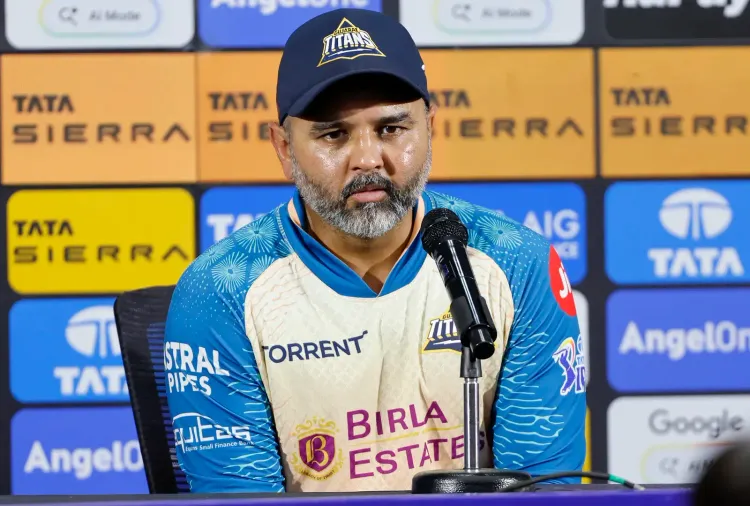
Former India wicketkeeper-batter Parthiv Patel has identified fielding as the 'most alarming' aspect of Indian cricket following the Men in Blue's 2-0 T20I series defeat to Ireland and a recent series surrender to England. Speaking on 11 July, Parthiv said repeated catching lapses have become a deeply troubling pattern across all tiers of Indian cricket.
Fielding Failures Prove Decisive
Parthiv was unequivocal in pinpointing India's on-field errors as a primary reason for the Ireland series loss, arguing the margin of defeat would have looked very different had basic chances been held.
'The result was a bit surprising and shocking. You can't expect to beat Ireland after playing poor cricket. Over the last two to two-and-a-half years, the most alarming aspect of Indian cricket has been fielding, across the men's team, the women's team and even junior cricket. Even in the Ireland series, had those two or three catches been taken in the first game, they wouldn't have scored over 180. The same thing happened in the second game. This is definitely an area India needs to address because they're dropping catches at crucial moments,' Parthiv said.
The observation carries weight: Ireland posting over 180 in the first T20I was, by Parthiv's reckoning, directly enabled by India's sloppy catching. The pattern repeated in the second game, sealing a series loss that few had anticipated.
Call for T20 Specialist Bowlers
Beyond the fielding crisis, Parthiv questioned India's bowling strategy in the shortest format. He argued that the team's tendency to fall back on established multi-format names — rather than identifying bowlers purpose-built for T20 cricket — is a structural weakness that needs to be corrected.
'Secondly, just as we have T20 specialists in batting, why don't we look for the same in bowling? We always think, Bumrah will come back and do the job. Then we keep going back to the likes of Prasidh Krishna. We also have bowlers like Prince Yadav and Mohsin Khan, so we need to start looking at T20 specialist bowlers as well,' he stated.
The remarks are notable in that Parthiv specifically named Prince Yadav and Mohsin Khan as examples of bowlers who deserve a closer look, suggesting the talent pool exists — but selection habits have not kept pace with the format's demands.
Batting Balance and Tilak Varma's Form
Parthiv also raised concerns about the structural composition of India's batting order, flagging a left-hand-heavy top seven as a long-term liability. He pointed to Tilak Varma as a critical piece in restoring balance — but only if the batter can rediscover his run-scoring touch.
'I'm just hoping we don't see another vice-captain get dropped. The kind of batting line-up we have can't work in the long term. If six of your top seven batters are left-handers, that batting order won't work. Changes have to be made somewhere. Now, who comes into the side and which right-hander gets backed, I don't know. That's why Tilak Varma needs to score runs,' Parthiv added.
The reference to 'another vice-captain' being dropped alludes to a broader pattern of selection instability that has drawn scrutiny in recent months.
A Wider Warning for Indian Cricket
Parthiv's critique is not confined to the senior men's team. His mention of fielding standards slipping across the women's team and junior cricket as well points to what he sees as a systemic, cross-programme issue — one that coaching and selection structures need to address at the root level. This comes amid a period of transition for Indian T20 cricket, with the team experimenting with combinations ahead of future ICC events. The back-to-back series losses to Ireland and England are likely to intensify the debate around selection philosophy and player workload management.
Point of View
Women's, and junior — rather than isolating a single team's failings. The fielding critique is well-founded: India has dropped regulation catches in high-stakes moments with troubling regularity, and no structural fix has been publicly announced. More pointed is his call for T20 bowling specialists — a conversation Indian selectors have consistently deferred by cycling through all-format names. The batting balance observation deserves particular attention: a top seven skewed heavily left-handed is a matchup vulnerability any smart opposition will target with right-arm over-the-wicket angles. If the selectors do not act before the next major tournament cycle, these will not remain talking points — they will become defining weaknesses.
NationPress
10 Oct 2026
Frequently Asked Questions
Why did India lose the T20I series against Ireland 2-0?
India lost the T20I series to Ireland 2-0, with former wicketkeeper Parthiv Patel attributing the defeat primarily to poor fielding — specifically dropped catches that allowed Ireland to post totals above 180. He also pointed to a lack of T20-specific bowling options and an imbalanced batting order as contributing factors.
What did Parthiv Patel say about India's fielding?
Parthiv Patel said fielding has been the 'most alarming' aspect of Indian cricket over the last two to two-and-a-half years, affecting the men's team, women's team, and junior cricket. He specifically noted that dropped catches in both Ireland T20Is proved decisive in the series outcome.
Which T20 specialist bowlers did Parthiv Patel recommend for India?
Parthiv named Prince Yadav and Mohsin Khan as bowlers India should consider as T20 specialists, arguing the team relies too heavily on established multi-format names like Jasprit Bumrah and Prasidh Krishna rather than building a format-specific bowling group.
Why is India's batting order a concern according to Parthiv Patel?
Parthiv flagged that having six left-handers in India's top seven is structurally unsustainable, as it creates a matchup vulnerability that oppositions can exploit. He said changes are necessary and pointed to Tilak Varma's return to form as critical for restoring right-left balance in the line-up.
What is the significance of India's consecutive T20I series losses?
India's back-to-back T20I series defeats — to Ireland and England — have intensified scrutiny on selection philosophy, fielding standards, and batting composition during a transitional phase ahead of future ICC events. The losses are particularly notable given Ireland's status as a relatively lower-ranked side.