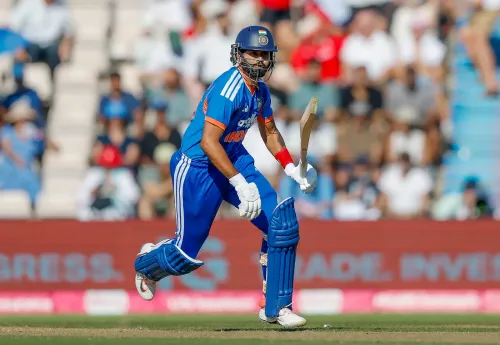
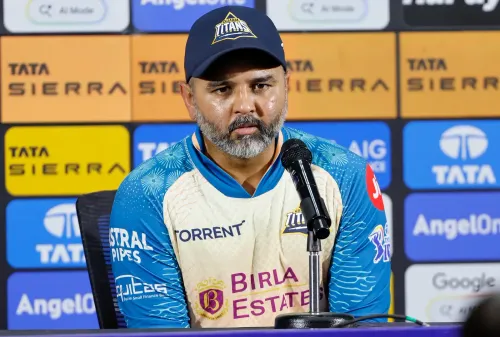
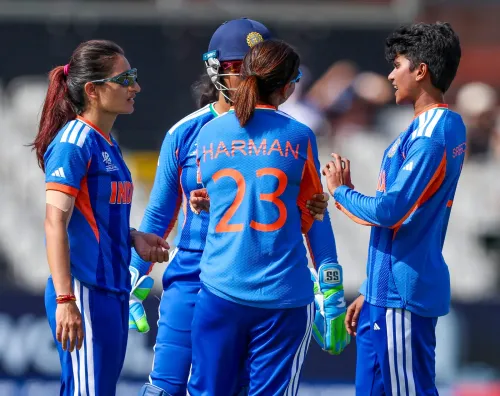
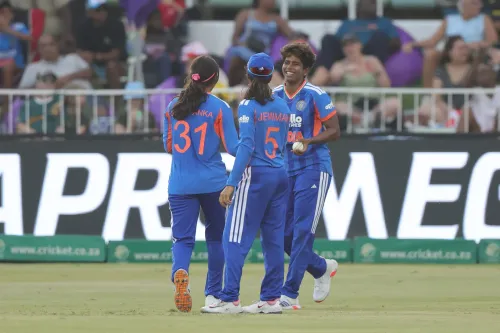
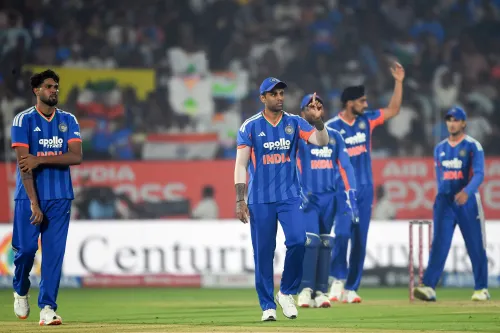
India's bowling combination under scrutiny after T20I loss to England in Manchester

Synopsis
Former India wicketkeeper Deep Dasgupta has flagged a structural flaw in India's T20I bowling attack after the Manchester defeat — arguing that two specialist seamers plus Shivam Dube is simply not enough cover in English conditions. His call for a third seamer, even at the cost of batting depth, puts the team management under real selection pressure with three games still to play.
Key Takeaways
Deep Dasgupta called for India to add a third specialist seamer following their defeat in the second T20I in Manchester .
England lead the five-match T20I series 1-0 after the Manchester result.
Dasgupta argued that relying on two seamers plus Shivam Dube leaves India exposed if one pacer underperforms.
He questioned whether India need three spinners in English conditions, where seam and bounce are more influential.
Dasgupta conceded that playing a third seamer may require sacrificing some batting depth — a trade-off he believes is worth making.
Former India wicketkeeper-batter Deep Dasgupta has called on the Indian team management to urgently reconsider their bowling combination after India's defeat to England in the second T20I in Manchester, which handed the hosts a 1-0 lead in the five-match series. Dasgupta argued that the current attack structure leaves India dangerously exposed, particularly when a frontline pacer has an off day.
The Core Problem: Too Few Seamers
Dasgupta pointed to India's reliance on two specialist seamers alongside all-rounder Shivam Dube as the root of the vulnerability. 'The main concern for India has been their bowling combination. When you go in with only two seamers plus Shivam Dube, and if one of them has an off day, you are left with very few options,' he said.
He stressed that the absence of a like-for-like pace replacement in the middle overs allows the opposition to identify and target the weaker links in the attack. 'You don't have a like-for-like replacement in the middle overs, and the opposition can target the weaker links. I think this is something the team needs to look at,' Dasgupta added.
The Case for a Third Specialist Seamer
Dasgupta was categorical in his recommendation: India should field three specialist seamers rather than the current combination. 'They should consider going with three seamers instead of two plus Shivam Dube,' he said. This would require dropping one of the three spinners currently in the XI — a selection call he believes is justified given English conditions, where seam movement and bounce traditionally play a decisive role.
'The other couple of questions the team needs to answer are whether they really need three spinners and whether they can afford to play an extra seamer,' Dasgupta noted.
The Trade-Off: Batting Depth vs Bowling Firepower
Dasgupta acknowledged that adding a third seamer would likely come at the cost of batting depth — a genuine concern in a format where lower-order contributions can be decisive. However, he argued the conditions in England make the trade-off worthwhile. 'That might mean they have to sacrifice a bit of batting depth. But in conditions where pace and bounce matter more, that could be a risk worth taking. So yes, some tough decisions need to be made,' he said.
This is not the first time India's bowling balance in overseas T20Is has drawn scrutiny. The team has frequently been caught between the desire for batting insurance and the need for a fuller pace attack in seam-friendly conditions abroad.
What the Selection Dilemma Means for the Series
With three matches remaining in the five-match series and England already ahead, the Indian team management faces a pivotal selection call ahead of the third T20I. Dasgupta's remarks reflect a wider concern among former cricketers about India's adaptability to conditions outside the subcontinent. Whether the management opts to persist with the existing combination or makes the structural change Dasgupta advocates will likely define India's prospects of levelling and winning the series.
Point of View
Built around spin depth and batting insurance, was designed for home conditions and Asian surfaces. In England, that template has a known weakness in the middle overs, and two frontline seamers is often one short. The management's reluctance to drop a spinner suggests they still see batting depth as non-negotiable — but losing the series would make that calculus look short-sighted.
NationPress
5 Oct 2026
Frequently Asked Questions
What did Deep Dasgupta say about India's bowling combination?
Deep Dasgupta said India's biggest concern in the T20I series against England is their bowling combination. He argued that fielding only two specialist seamers alongside Shivam Dube leaves the attack with very few options if one pacer has an off day, and recommended moving to three specialist seamers.
Why does Dasgupta want India to play three seamers in England?
Dasgupta believes English conditions — characterised by seam movement and bounce — favour pace bowling over spin. He argued that three spinners in the current XI is one too many for these conditions, and that a third seamer would give India better middle-overs control and a like-for-like replacement option.
What is the current series score between India and England?
England lead the five-match T20I series 1-0 after winning the second T20I in Manchester. Three matches remain in the series.
What trade-off does adding a third seamer involve for India?
According to Dasgupta, playing a third specialist seamer would likely require dropping one of the three spinners currently in the XI, which could reduce India's batting depth. He acknowledged the risk but said it is worth taking given the conditions in England.
Who is Shivam Dube and what is his role in India's bowling attack?
Shivam Dube is an Indian all-rounder who contributes seam-up overs as part of India's bowling mix. Dasgupta's concern is that Dube does not serve as a true like-for-like replacement for a specialist fast bowler, leaving gaps in the attack during the middle overs.