CM Dhami: India's diversity is the mark of our unity
Synopsis
Chief Minister Pushkar Singh Dhami of Uttarakhand declared on 11 July 2026 that India's diversity is the very mark of its unity and that folk culture embodies the nation's civilisational consciousness, reaffirming the state's commitment to its Garhwali and Kumaoni heritage.
Key Takeaways
CM Pushkar Dhami stated on 11 July 2026 that India's diversity is the defining mark of its unity.
He described folk culture as 'the form of our civilisation and cultural consciousness.' The statement was shared by the official Chief Minister's Office of Uttarakhand on X.
Uttarakhand , formed in 2000 , holds two distinct folk traditions from the Garhwal and Kumaon regions.
The message aligns with the Central government's Ek Bharat Shreshtha Bharat programme launched in 2015 .
Folk artists and cultural communities across the state stand to benefit if the statement leads to policy action.
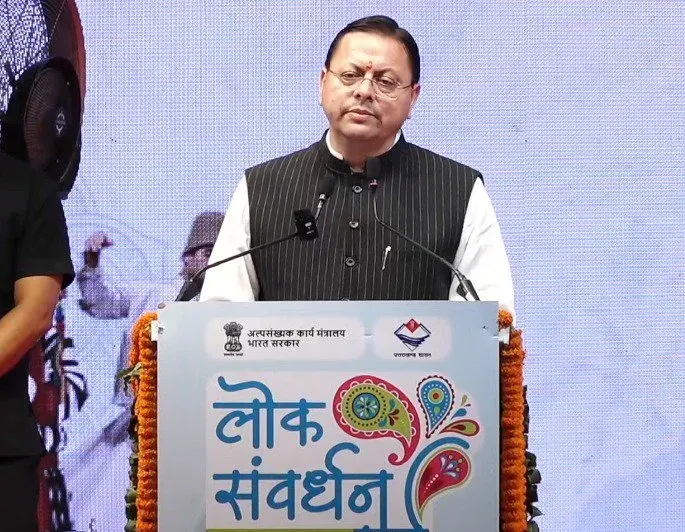
The Chief Minister's Office of Uttarakhand shared a statement by Chief Minister Pushkar Singh Dhami on Saturday, 11 July 2026, affirming that India's diversity is the defining expression of its unity and that folk culture represents the living form of the nation's civilisational consciousness.
Context
Speaking on the theme of culture and national identity, CM Dhami said: 'Bharat vividhataon ko samete hue desh hai aur yahi vividhata hamari ekta ki pehchaan hai' — 'India is a country that encompasses diversity, and this very diversity is the mark of our unity.' He further stated that folk culture is the form of our civilisation and cultural consciousness.
The statement, posted from the official Chief Minister's Office (CMO) account, underscores the Uttarakhand government's consistent effort to position the state's rich folk heritage within the larger frame of India's pluralist identity.
Policy Backdrop
The sentiment echoes the spirit of the Ek Bharat Shreshtha Bharat programme, launched by the Central government in 2015, which was designed to promote inter-state cultural exchange and reinforce national integration through shared heritage. Uttarakhand, formed as a separate Himalayan state in 2000, carries two distinct folk traditions — those of the Garhwal and Kumaon regions — that have been central to the state's cultural self-identification since its inception.
State administrations in Uttarakhand have consistently invoked local cultural forms to build a bridge between regional identity and the national narrative of unity in diversity, a pattern that has intensified in recent years as folk arts gain wider visibility.
Stakeholders and Impact
The primary beneficiaries of this cultural framing are folk artists and cultural communities across Uttarakhand, whose traditions in music, dance, and craft stand to gain institutional recognition and support when such statements translate into policy action. For the broader public, the message reinforces the constitutional value of pluralism as a lived, cultural reality rather than an abstract principle.
Uttarakhand's folk traditions — including Jagar, Chholiya dance, and Aipan art — represent a heritage that artists and community groups have long sought to preserve against the pressures of migration and urbanisation in the hill state.
What's Next
Observers will watch for follow-through in the form of state-level cultural festivals, heritage documentation drives, or Uttarakhand's participation in national integration events in the coming months. CM Dhami's statement sets a public tone that cultural communities will hope is backed by concrete programme support, particularly ahead of any major state or national cultural calendars. The broader implication is that Uttarakhand intends to remain an active voice in India's ongoing conversation about how regional folk identity strengthens, rather than fragments, national cohesion.
Point of View
Dhami positions Uttarakhand not merely as a recipient of national policy but as an active cultural contributor to the idea of India. The statement carries political utility as well — in a state where hill identity and migration concerns run deep, celebrating local folk traditions is a low-cost, high-resonance move. The real test will be whether this rhetoric translates into measurable support for the folk artists and communities who sustain these traditions on the ground.
NationPress
10 Oct 2026
Frequently Asked Questions
What did CM Pushkar Dhami say about Indian culture?
CM Pushkar Dhami said that India is a country that encompasses diversity and that this diversity is the mark of its unity, adding that folk culture represents the form of India's civilisation and cultural consciousness.
What is the folk culture of Uttarakhand?
Uttarakhand has two distinct folk traditions from the Garhwal and Kumaon regions, including performing arts like Jagar and Chholiya dance and visual art forms like Aipan, which have been central to the state's cultural identity since it was formed in 2000.
What is Ek Bharat Shreshtha Bharat?
Ek Bharat Shreshtha Bharat is a Central government programme launched in 2015 to promote inter-state cultural exchanges and strengthen national integration by celebrating India's diverse regional cultures.
Why does Uttarakhand emphasise folk culture in official statements?
Uttarakhand administrations have consistently highlighted local folk traditions since statehood in 2000 to build a bridge between the state's distinct regional identity and the broader national narrative of unity in diversity.
What could follow CM Dhami's cultural statement?
Observers expect possible state-level cultural festivals, heritage documentation drives, or Uttarakhand's participation in national integration events in the coming months as follow-through to the Chief Minister's statement.