ITEC programme trains 765 Maldivians; India raises annual slots to 300
Synopsis
India has quietly scaled up one of its most durable foreign policy tools in the Maldives — workforce training. With 765 Maldivians already shaped by ITEC and annual slots raised from 200 to 300, New Delhi is betting that investing in Maldivian public servants outlasts any bridge or defence pact as a foundation for bilateral influence.
Key Takeaways
765 Maldivian candidates have been trained under India's ITEC programme across multiple public institutions over recent years.
India raised annual ITEC slots for the Maldives from 200 to 300 over the past two years.
80 candidates are already enrolled for 2026 under the ITEC programme.
Over 1,090 candidates trained through the Civil Service Commission in five years; 139 enrolled in 2026 alone.
More than 248 candidates trained via the local government authority, with 86 participating in 2026.
External Affairs Minister S.
Jaishankar reviewed bilateral ties with Maldivian counterpart Iruthisham Adam at the UNGA in September 2026 .
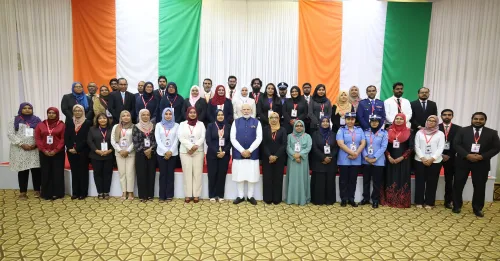
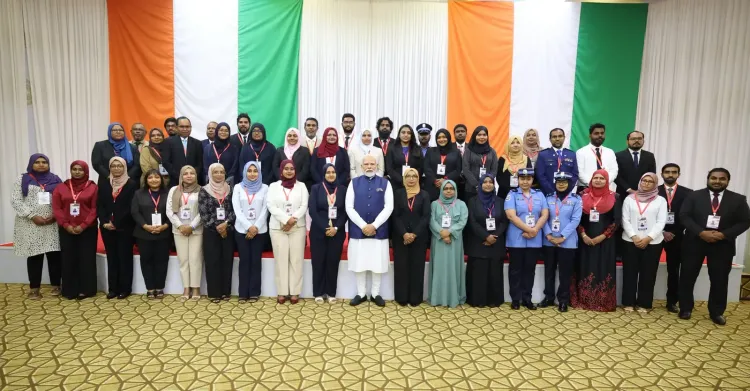
A total of 765 Maldivian candidates from diverse sectors have been trained under India's Indian Technical and Economic Cooperation (ITEC) programme over recent years, with 80 more candidates already enrolled for training in 2026, according to a detailed report. India has also raised the annual training slots allocated to the Maldives from 200 to 300 over the past two years, signalling growing demand and bilateral commitment.
Scope of the Programme
The ITEC initiative extends well beyond a single ministry or sector. Participants have been drawn from the Maldives Police Service, the Prosecutor General's Office, the Maldives Inland Revenue Authority (MIRA), the Maldives Customs Service, the People's Majlis Secretariat, the Elections Commission, and the Anti-Corruption Commission. Candidates from major Maldivian ministries covering health, labour, economic development, and homeland security have also participated.
Civil Service and Local Government Participation
Over 1,090 candidates have been trained under the Civil Service Commission over five years, with 139 enrolled in 2026 alone. Additionally, more than 248 candidates have completed training through the local government authority, with 86 participating this year, according to the report.
What Analysts Are Saying
Commentator Naail Hafeez, writing in Maldives-based Sun Online, described capacity building as among the most enduring forms of bilateral cooperation. 'Capacity building of this kind is among the most sustainable forms of bilateral cooperation. A bridge will serve a generation. A trained and capable workforce will shape several,' he wrote. He further noted that India's investment in Maldivian public servants amounts to 'investing in the long-term health of our institutions and by extension, in the wellbeing of every Maldivian those institutions exist to serve.'
Diplomatic Backdrop
The training milestones come amid active diplomatic engagement between the two countries. In September 2026, External Affairs Minister S. Jaishankar met his Maldivian counterpart Iruthisham Adam on the sidelines of the 81st session of the United Nations General Assembly (UNGA), where both sides reviewed bilateral ties and multilateral cooperation. The ITEC expansion is widely seen as complementing broader India-Maldives ties spanning infrastructure, trade, defence, and culture.
Why This Matters
The scale-up of ITEC slots for the Maldives reflects a deliberate Indian foreign policy push in the Indian Ocean Region, where geopolitical competition has intensified in recent years. Unlike infrastructure projects, workforce training embeds long-term institutional linkages — a distinction analysts argue makes such cooperation especially resilient to political shifts. With the 2026 cohort still underway, the programme's cumulative reach across Maldivian public institutions is set to grow further.
Point of View
Workforce training quietly creates institutional dependency — Maldivian public servants trained in India carry procedural and professional norms shaped by that exposure for decades. Raising slots to 300 during a period of diplomatic turbulence in India-Maldives ties is a signal that New Delhi is playing a longer game than bilateral friction suggests. The real question is whether India can sustain and deepen this model across the broader Indian Ocean neighbourhood, where China has been equally systematic in building educational and institutional ties.
NationPress
12 Oct 2026
Frequently Asked Questions
What is the ITEC programme and how does it benefit the Maldives?
The Indian Technical and Economic Cooperation (ITEC) programme is a bilateral initiative through which India provides free training to professionals from partner countries. For the Maldives, it has trained 765 candidates across public institutions including the police, revenue authority, elections commission, and key ministries, at no cost to Maldivian participants.
How many ITEC slots does India offer the Maldives annually?
India has raised the annual ITEC slots for the Maldives from 200 to 300 over the past two years. In 2026, 80 candidates have already been enrolled under the programme.
Which Maldivian institutions have participated in ITEC training?
Participants have come from the Maldives Police Service, Prosecutor General's Office, Maldives Inland Revenue Authority (MIRA), Maldives Customs Service, People's Majlis Secretariat, Elections Commission, Anti-Corruption Commission, and ministries covering health, labour, economic development, and homeland security.
What did EAM Jaishankar and Maldives FM Iruthisham Adam discuss at UNGA?
External Affairs Minister S. Jaishankar met Maldivian Foreign Minister Iruthisham Adam on the sidelines of the 81st UNGA session in September 2026, where both sides reviewed bilateral ties and multilateral cooperation, including capacity-building initiatives like ITEC.
Why is capacity building considered a key part of India-Maldives ties?
Analysts, including commentator Naail Hafeez writing in Sun Online, argue that training public servants creates more durable bilateral linkages than physical infrastructure. A trained workforce shapes institutions across generations, embedding long-term cooperation into the functioning of Maldivian governance.