India bridging Africa's education and skills gap with ITEC, e-VBAB
Synopsis
India is not just talking about Africa's education crisis — it is building infrastructure to address it. With 15,000 scholarships planned under e-VBAB and ITEC training already running, India's model offers African learners university access without leaving home. Against an OECD finding that only 8% of aspiring African youth land high-skilled jobs, the stakes of this partnership could not be higher.
Key Takeaways
India's ITEC programme and the e-VBAB platform are actively delivering education and skills training across Africa .
The e-VBAB project plans to offer 15,000 scholarships to African students for Indian university courses.
According to OECD data, over 80% of African youth in school aspire to high-skilled jobs, but only 8% secure them.
Each additional year of education can increase individual earnings by up to 11.4% , per cited research.
Chukwudi Okeke , co-founder of the Nigeria Innovation Hub , described the India-Africa education partnership as potentially 'one of the most important development partnerships of this century.'
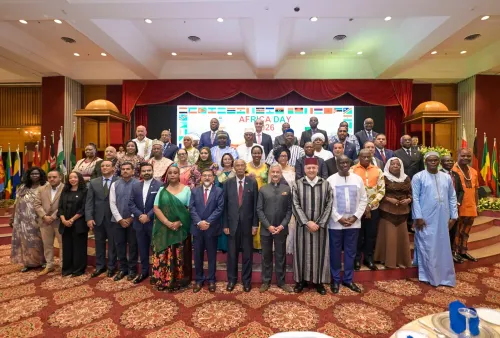
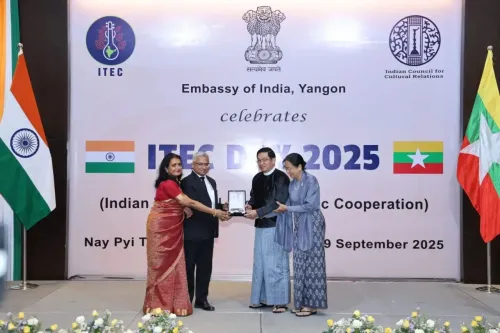
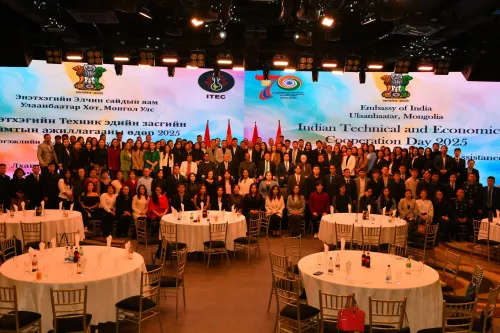
India has emerged as a substantive partner in Africa's education and skills development sector, backed by functioning institutions and active programmes rather than diplomatic declarations alone, according to a report published on Saturday, 16 May. Initiatives including the Indian Technical and Economic Cooperation (ITEC) programme and the e-VidyaBharati and e-ArogyaBharati (e-VBAB) platform are already operational across multiple African nations, offering online education, telemedicine, and professional training at scale.
What India's Programmes Offer
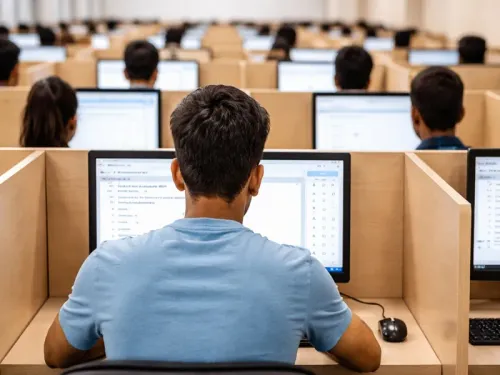
The ITEC programme has provided skills training to several African professionals across technical and economic domains. Complementing this, the e-VBAB initiative connects African learners directly to Indian universities, offering diploma and certificate courses, and is planning to extend 15,000 scholarships to students across the continent. The model allows students to access Indian courses without relocating, removing cost barriers and enabling participation among those balancing work or family responsibilities.
According to Chukwudi Okeke, co-founder of the Nigeria Innovation Hub in Lagos and the author of the analysis published in India Narrative, this remote-learning format can represent the difference between 'exclusion and advancement' in countries where higher education remains scarce or prohibitively expensive.
The Scale of Africa's Education Challenge
The urgency of India's engagement is underscored by stark data. Citing findings from the Organisation for Economic Co-operation and Development (OECD), Okeke noted that more than 80 per cent of African youths in school aspire to high-skilled employment, yet only 8 per cent eventually secure such jobs. He also highlighted that each additional year of education can raise individual earnings by up to 11.4 per cent.
UNESCO has separately stressed the need to transform learning and skills systems to make them more 'effective, equitable, and responsive to economic and social needs,' a framing Okeke cited to argue that Africa's education challenge goes well beyond enrolment numbers.
What Needs to Change on the Ground
'Africa's education and skills challenge is not a side issue; it is the hinge on which the continent's economic future turns,' Okeke wrote. He argued that policy must move beyond classroom access to improve teacher quality, expand technical and vocational education, deepen digital training, and align skills systems with sectors such as agrifood, mining, renewable energy, and digital services.
The core problem, he said, is not simply whether young Africans attend school, but whether their learning translates into employable skills connected to real jobs — a structural disconnect that India's cooperative programmes are positioned to help address.
India as a Long-Term Development Partner
Okeke framed the India-Africa education axis as a generational opportunity. 'If Africa supplies the ambition and India supplies practical cooperation, the result could be one of the most important development partnerships of this century,' he wrote. He emphasised that Africa's young population — one of the continent's most cited demographic advantages — can only become an economic asset if classrooms, training centres, and labour markets are more effectively linked.
This comes amid a broader push by India to deepen its development footprint in Africa through the India-Africa Forum Summit framework and bilateral technical assistance agreements. As competition for influence on the continent intensifies among global powers, India's education-first approach offers a differentiated, long-term engagement model. How quickly these programmes scale will determine whether the partnership delivers on its considerable promise.
Point of View
But the gap between programme design and ground-level impact remains underexamined. ITEC has existed for decades, yet its measurable outcomes in African labour markets are rarely independently audited. The e-VBAB model is promising precisely because it removes relocation costs, but 15,000 scholarships across a continent of 1.4 billion people is a pilot, not a solution. The OECD's 8% high-skilled jobs figure points to a structural failure that no single bilateral programme can fix — Africa needs systems reform alongside foreign partnerships. India's credibility as a development partner will ultimately rest on whether these programmes produce verifiable employment outcomes, not just enrolment numbers.
NationPress
2 Oct 2026
Frequently Asked Questions
What is India's e-VBAB programme and how does it help Africa?
The e-VidyaBharati and e-ArogyaBharati (e-VBAB) programme is an Indian government initiative that provides online education and telemedicine to African nations. It connects African learners to Indian universities and courses without requiring them to relocate, and plans to offer 15,000 scholarships to students across the continent.
What is the ITEC programme and what role does it play in Africa?
The Indian Technical and Economic Cooperation (ITEC) programme is a long-running Indian government initiative that provides technical and professional training to partner countries, including several in Africa. It forms a core part of India's skills-development outreach on the continent.
How serious is Africa's education and skills gap?
According to OECD findings cited in the report, more than 80% of African youth in school aspire to high-skilled jobs, but only 8% eventually obtain such positions. Research also indicates that each additional year of education can boost individual earnings by up to 11.4%.
Who wrote the analysis on India's education partnership with Africa?
The analysis was authored by Chukwudi Okeke, co-founder of the Nigeria Innovation Hub in Lagos, and published in India Narrative. Okeke argued that connecting African learners to skills systems aligned with real industries is critical to unlocking the continent's demographic dividend.
Why does India's remote-learning model matter for Africa specifically?
In many African countries, higher education is scarce or expensive, making relocation for study impractical for most learners. India's e-VBAB model allows students to access university-level courses from home, reducing cost barriers and enabling participation by those balancing work or family commitments.