PM Modi Highlights India's Training and Capacity Building Push in Africa

Synopsis
Prime Minister Narendra Modi on 16 June 2026 spotlighted India's Africa engagement, emphasising training, capacity building, water, agriculture and energy. The post reinforces India's South-South cooperation model, anchored by the ITEC programme and EXIM Bank credit lines, as a demand-driven alternative for African development.
Key Takeaways
PM Modi on 16 June 2026 publicly highlighted India's focus on training, capacity building, water resources, agriculture, and energy in Africa .
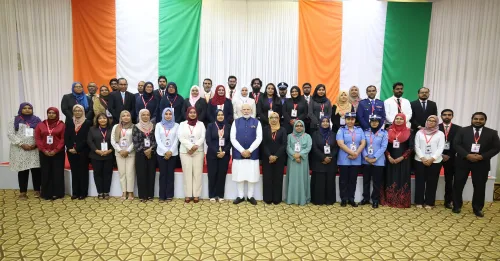
The ITEC Programme , running since 1964 , has trained tens of thousands of African professionals in technical and administrative fields.
The Third India-Africa Forum Summit (2015) committed $10 billion in lines of credit and 50,000 additional training slots over five years.
India frames its Africa engagement as demand-driven South-South cooperation aligned with the African Union's Agenda 2063 .
The EXIM Bank of India extends concessional credit for water, power, and agro-processing projects across the continent.
The next India-Africa Forum Summit cycle is the key event to watch for new financial and training commitments.
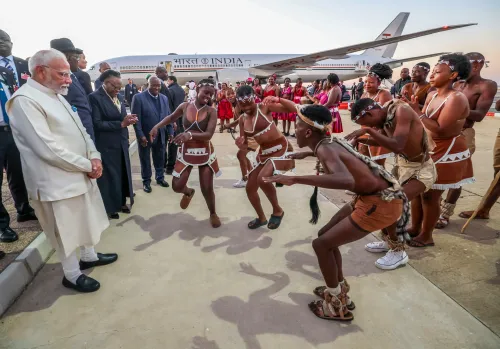
Prime Minister Narendra Modi on Tuesday, 16 June 2026, highlighted India's ongoing efforts in Africa, underscoring the country's focus on training, capacity building, water resources, agriculture, and energy as pillars of its engagement with the continent.
Posting on X, Prime Minister Modi stated that these initiatives are 'strengthening the capacities of African nations and helping them provide solutions to pressing global challenges.' The post signals continued Indian diplomatic emphasis on South-South cooperation as a framework for its Africa outreach.
Context
India's engagement with Africa has deepened steadily over the past two decades, with training and human-capital development consistently at its centre. The Indian Technical and Economic Cooperation (ITEC) Programme, operational since 1964, offers short-term training courses to African civil servants and professionals across sectors including agriculture, energy, and public administration. Tens of thousands of African professionals have passed through ITEC-affiliated institutions, making it one of the longest-running South-South cooperation instruments in the world. The India-Africa Forum Summit, a triennial high-level platform launched in 2008, has served as the primary architecture for announcing lines of credit and sector-specific cooperation. The Third India-Africa Forum Summit held in 2015 announced $10 billion in new lines of credit and 50,000 additional training slots over five years, setting a benchmark for the partnership's ambitions.Policy Backdrop
India frames its Africa engagement as demand-driven cooperation that prioritises human-capital formation over large-scale resource extraction — a distinction frequently cited by Indian officials when describing the partnership's character. This approach aligns with the African Union's Agenda 2063, which emphasises self-reliant development and technology transfer. The EXIM Bank of India, a government-owned institution, has extended concessional lines of credit to African governments for projects spanning water infrastructure, power generation, and agro-processing. Prime Minister Modi's 2016 multi-nation African tour, covering Mozambique, South Africa, Tanzania, and Kenya, further embedded maritime cooperation and capacity building as twin priorities. The focus on training and sector-specific projects has remained consistent across successive Indian governments, reflecting a bipartisan consensus on Africa's strategic importance.Stakeholders and Impact
The primary beneficiaries of India's Africa programmes are African governments, agricultural ministries, and the professionals who receive technical training through ITEC and allied schemes. For India, the partnerships offer diplomatic goodwill, expanded market access, and a stronger voice in multilateral forums where African nations collectively hold significant voting weight. In the domains specifically cited by Prime Minister Modi — water resources, agriculture, and energy — the stakes are particularly high. Africa is home to a large share of the world's arable land and faces acute water stress in several sub-regions, while energy access remains a defining development challenge. Indian expertise in irrigation technology, solar energy deployment, and agricultural extension services has been positioned as directly relevant to these needs.What's Next
Attention will now turn to the next cycle of the India-Africa Forum Summit and any new lines of credit or training commitments that may be announced in forthcoming bilateral visits or multilateral settings. Prime Minister Modi's post, while not announcing a specific initiative, reinforces that India intends to keep Africa engagement visible at the highest political level. As African nations continue to assert greater agency in choosing development partners, India's emphasis on skills, technology, and institutional capacity — rather than conditionality-laden financing — could prove a durable competitive advantage in the continent's evolving diplomatic landscape.Point of View
Keeping India's Africa narrative alive at the leadership level without announcing a specific new initiative. It reinforces a long-standing Indian foreign policy posture — positioning the country as a partner of choice through skills and institution-building rather than debt-heavy infrastructure financing. This framing is increasingly relevant as African governments diversify their external partnerships and demand greater agency in development cooperation. The consistency of this messaging across governments and decades suggests it reflects a structural Indian interest rather than a purely electoral calculation.
NationPress
15 Sept 2026
Frequently Asked Questions
What is India doing for Africa in 2026?
India is engaged in training, capacity building, water resources, agriculture, and energy cooperation with African nations, as highlighted by Prime Minister Modi on 16 June 2026. These efforts are channelled through programmes like ITEC and concessional credit lines extended by the EXIM Bank of India.
What is the ITEC programme and how does it help Africa?
The Indian Technical and Economic Cooperation (ITEC) programme, launched in 1964, offers short-term training courses to African civil servants and professionals in fields such as agriculture, energy, and public administration. It is one of India's oldest and most active South-South cooperation instruments.
What was announced at the India-Africa Forum Summit?
The Third India-Africa Forum Summit in 2015 announced $10 billion in new lines of credit and 50,000 additional training slots for African nations over five years. The summit, held triennially since 2008, is the primary platform for India-Africa cooperation announcements.
How is India's Africa policy different from China's?
India frames its Africa engagement as demand-driven South-South cooperation focused on human-capital formation, training, and technology transfer, rather than large-scale resource extraction or infrastructure financing with conditionalities. This approach is aligned with the African Union's Agenda 2063 goals.
When is the next India-Africa Forum Summit?
The exact date of the next India-Africa Forum Summit has not been officially confirmed. The summit follows a triennial cycle, and the next edition is being watched closely for new lines of credit and training commitments from India.