PM Modi Proposes IMEC-Style Connectivity for Africa, Latin America, Pacific
Synopsis
Prime Minister Narendra Modi on 17 June 2026 proposed replicating the IMEC connectivity model across Africa, Latin America and the Pacific Islands, envisioning a framework that pairs G7 capital with Indian expertise and Global South country ownership — potentially the most ambitious expansion of India's corridor diplomacy since the 2023 G20 summit.
Key Takeaways
PM Modi on 17 June 2026 proposed extending the IMEC connectivity model to Africa , Latin America , and the Pacific Islands .
The proposed framework would combine G7 capital, India's technical talent, and ownership by recipient Global South countries.
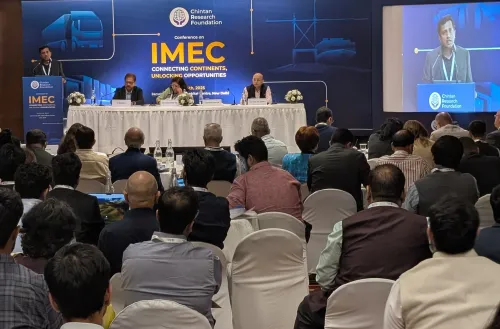
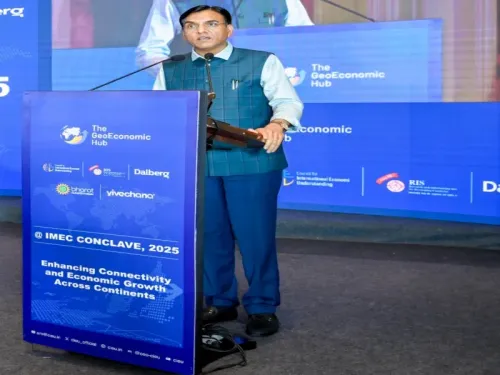
IMEC was launched at the G20 New Delhi Summit in September 2023 as a multi-modal corridor linking India to Europe via the Middle East.
India already has institutional platforms for these regions: FIPIC (Pacific, since 2014 ) and the India-Africa Forum Summit (since 2008 ).
The initiative positions India as an alternative architecture builder to China's Belt and Road Initiative , emphasising debt-free, country-owned connectivity.
Concrete institutional design and funding pledges for the proposed 'International Mobilisation' mechanism are yet to be announced.
Prime Minister Narendra Modi on Wednesday, 17 June 2026 floated the idea of expanding India's connectivity ambitions beyond the India-Middle East-Europe Economic Corridor (IMEC) model to cover Africa, Latin America, and the Pacific Islands, suggesting a new financing framework that blends G7 capital with India's technical talent and Global South ownership.
Context
In his post, Modi asked: 'Like the vision of IMEC, can we work on connectivity projects with countries in Africa, Latin America and the Pacific Islands?' He further proposed that 'by combining G7 capital, India's talent and the ownership of Global South countries, we may also consider establishing an International Mobilisation' framework — though the full institutional design of the proposed mechanism was not elaborated in the post.
The remarks signal that New Delhi is actively considering a structured, multi-regional extension of the connectivity model that underpins IMEC, applying it to the broader developing world rather than a single corridor.
Policy Backdrop
IMEC was formally launched at the G20 New Delhi Summit in September 2023 as a multi-modal corridor linking India with Europe via the Middle East, backed by G7 nations as an alternative to China's Belt and Road Initiative. The corridor was designed to reduce logistics costs and build resilient supply chains across participating nations.
India's engagement with the regions now being discussed has its own institutional history. The Forum for India-Pacific Islands Cooperation (FIPIC), launched in 2014, provides the framework for development and connectivity partnerships with Pacific Island nations. The India-Africa Forum Summit, initiated in 2008, has channelled lines of credit and capacity-building support across the African continent, with the third edition held in 2015 committing significant development finance.
For Latin America, India has engaged through multilateral platforms including the Community of Latin American and Caribbean States (CELAC) ministerial dialogue, though a dedicated corridor-style initiative has not yet been formalised.
Stakeholders and Impact
G7 development finance institutions — including those of the United States, European Union, Japan, and United Kingdom — would be the primary capital providers under the model Modi envisions. Indian engineering, infrastructure, and technology firms stand to benefit as implementation partners, consistent with the role Indian companies have played in projects financed through India's lines of credit to Africa.
For Global South recipient countries, the proposed framework explicitly emphasises 'ownership' — a direct counter-narrative to the debt-dependency criticisms levelled at China's Belt and Road Initiative. Governments across Africa, Latin America, and the Pacific Islands have increasingly sought infrastructure financing that does not come with sovereign debt risks or conditionalities that limit policy autonomy.
Indian diplomatic missions and multilateral forums such as the Voice of Global South Summit, which New Delhi has hosted multiple times, provide ready-made channels for consulting partner governments on such a framework.
What's Next
Concrete institutional design and any funding pledges attached to the proposed 'International Mobilisation' mechanism remain to be defined. Analysts will watch upcoming G20 and BRICS summits, as well as scheduled India-Africa and India-CELAC ministerial meetings, for follow-up announcements.
If formalised, the initiative would mark a significant expansion of India's post-2023 connectivity diplomacy — positioning New Delhi not merely as a corridor participant but as an architect of a parallel global infrastructure financing architecture rooted in Global South ownership and G7 capital.
Point of View
Multi-regional architecture rather than a single corridor. By explicitly invoking G7 capital alongside Global South ownership, New Delhi is threading a needle — reassuring Western partners that their financing will not be wasted while telling developing nations they will not be junior partners. The framing of an 'International Mobilisation' mechanism, however undefined, suggests India is seeking a permanent vehicle rather than ad hoc project-by-project engagement. Whether the proposal translates into a funded institution or remains an aspirational framework will depend on how quickly India can secure G7 buy-in at the next major multilateral summit.
NationPress
17 Sept 2026
Frequently Asked Questions
What is IMEC and why does Modi want to replicate it?
IMEC, the India-Middle East-Europe Economic Corridor, is a multi-modal connectivity initiative launched at the G20 New Delhi Summit in September 2023. PM Modi wants to use its model — combining G7 financing with Indian implementation capacity — to build similar connectivity projects in Africa, Latin America and the Pacific Islands.
Which countries or regions does Modi's new connectivity proposal cover?
The proposal covers Africa, Latin America and the Pacific Islands. India already has institutional engagement with these regions through the India-Africa Forum Summit and the Forum for India-Pacific Islands Cooperation (FIPIC), launched in 2008 and 2014 respectively.
How is India's connectivity model different from China's Belt and Road Initiative?
India's proposed model emphasises Global South country ownership and pairs G7 development capital with Indian technical expertise, explicitly avoiding the sovereign debt structures that have drawn criticism of China's Belt and Road Initiative.
What is the 'International Mobilisation' mechanism Modi mentioned?
PM Modi referred to potentially 'establishing an International Mobilisation' framework as part of the proposed connectivity push, but the full institutional design and any funding pledges have not yet been detailed.
When could India announce a formal connectivity framework for Africa and Latin America?
No formal announcement date has been set. Analysts expect possible follow-up at upcoming G20 or BRICS summits, or during scheduled India-Africa and India-CELAC ministerial meetings.