Modi turns 76: Key numbers behind India's GDP, infra and startup surge
Synopsis
As PM Modi turns 76, a string of official data points tells the story of his tenure: GDP up 7.8% in Q1 FY27, forex reserves at a record $785.7 billion, Jan Dhan accounts at 59.21 crore, national highways stretched by over 55,000 km, and DPIIT-recognised startups multiplying from 502 to more than 2.47 lakh in a decade.
Key Takeaways
PM Narendra Modi turned 76 on 17 September 2026 .
India's real GDP grew 7.8% in April–June FY2026-27 ; nominal GDP is estimated at $4.15 trillion .
Foreign exchange reserves hit a record $785.7 billion (week ending 4 September ), making India the world's fourth-largest holder.
Jan Dhan Yojana has 59.21 crore beneficiaries with deposits of ₹3.17 lakh crore and 41.39 crore RuPay cards issued.
National highway network expanded from 91,287 km to 1,46,572 km since fiscal 2013-14 .
DPIIT -recognised startups rose from 502 in 2016 to over 2.47 lakh as of August 2026 .
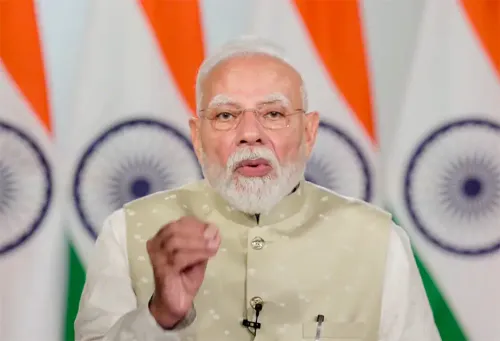
Prime Minister Narendra Modi turned 76 on 17 September 2026, marking another year of a tenure defined by measurable shifts across India's economy, financial inclusion, infrastructure network, and startup landscape. A set of headline figures drawn from government and central bank data captures the scale of that transformation.
GDP and Macroeconomic Momentum
India's real gross domestic product (GDP) expanded 7.8 per cent in the April–June quarter of fiscal 2026-27, with manufacturing and services as the twin engines of growth. Real gross value added rose 8.2 per cent, investment climbed 11.9 per cent, household consumption increased 7.1 per cent, and exports grew 12 per cent, according to government data. India's nominal GDP now stands at an estimated $4.15 trillion, cementing its position among the world's major emerging economies even as global trade tensions and geopolitical uncertainties persist.
Record Foreign Exchange Reserves
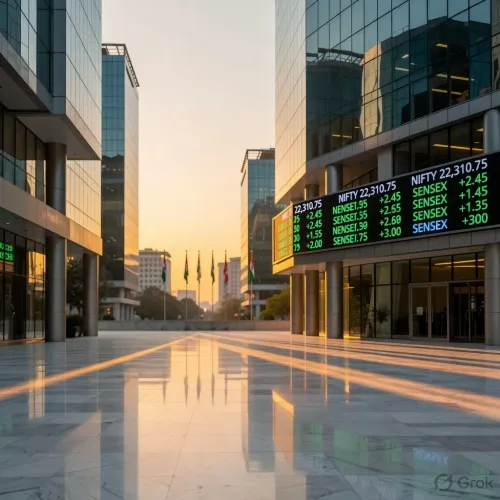
India's foreign exchange reserves touched a record $785.7 billion in the week ended 4 September, according to Reserve Bank of India (RBI) data. Reserves have risen for 10 consecutive weeks, surging nearly $120 billion over that stretch. The milestone makes India the world's fourth-largest holder of foreign exchange reserves, a buffer that analysts say provides insulation against external shocks and currency volatility.
Financial Inclusion: Jan Dhan's Reach
The Pradhan Mantri Jan Dhan Yojana (PMJDY), the flagship financial inclusion scheme, had 59.21 crore beneficiaries as of 2 September, with total deposits in these accounts reaching ₹3.17 lakh crore. A total of 41.39 crore RuPay debit cards had been issued under the scheme. Women account for 32.98 crore of all Jan Dhan accounts, while 46.03 crore beneficiaries are located in rural and semi-urban areas — underscoring the programme's reach beyond urban centres.
Highway Network Doubles Under Modi
On the infrastructure front, India's national highway network has expanded to 1,46,572 km from 91,287 km in fiscal 2013-14. The Economic Survey noted that average annual highway construction rose to 9,704 km during 2014–25, more than double the 4,174 km averaged annually during the preceding decade of 2004–14. The acceleration has shortened freight corridors and, according to planners, improved logistics competitiveness.
Startup Ecosystem: From 502 to 2.47 Lakh
The number of startups recognised by the Department for Promotion of Industry and Internal Trade (DPIIT) has surged to more than 2.47 lakh as of August 2026, up from just 502 in 2016. The Startup India framework has also revised the turnover threshold for recognition upward to ₹200 crore, while DeepTech startups enjoy a higher ceiling of ₹300 crore — a signal of the government's intent to graduate the ecosystem toward high-technology ventures. Together, these figures sketch a decade-long arc of structural economic change, though how much credit accrues to policy versus broader global tailwinds remains a matter of ongoing debate among economists.
Point of View
But context matters. India's GDP growth of 7.8% in Q1 FY27 is headline-worthy, yet investment at 11.9% growth and household consumption at 7.1% suggest uneven demand distribution. The forex reserve surge to $785.7 billion is a genuine buffer, though a significant portion reflects valuation gains rather than current-account surpluses. On startups, the leap from 502 to 2.47 lakh DPIIT-recognised entities is a volume story — the harder question is how many are generating sustainable employment and revenue at scale. Birthday data compilations are inevitably curated; the full ledger includes slower-moving indicators like rural wage growth and manufacturing's stubborn share of GDP that rarely make the headline count.
NationPress
17 Sept 2026
Frequently Asked Questions
How fast did India's GDP grow in the latest quarter?
India's real GDP grew 7.8 per cent in the April–June quarter of fiscal 2026-27 , supported by manufacturing and services. Real gross value added rose 8.2 per cent in the same period, according to government data.
What are India's current foreign exchange reserves?
India's foreign exchange reserves reached a record $785.7 billion in the week ended 4 September 2026 , according to RBI data. Reserves have climbed for 10 consecutive weeks , rising nearly $120 billion over that stretch, making India the world's fourth-largest holder.
How many people are covered under Jan Dhan Yojana?
As of 2 September 2026 , the Pradhan Mantri Jan Dhan Yojana had 59.21 crore beneficiaries, with deposits totalling ₹3.17 lakh crore and 41.39 crore RuPay debit cards issued. Women account for 32.98 crore of all accounts.
By how much has India's national highway network grown under Modi?
India's national highway network expanded from 91,287 km in fiscal 2013-14 to 1,46,572 km — an addition of over 55,000 km . Average annual construction rose to 9,704 km during 2014–25, more than double the 4,174 km per year averaged in the previous decade.
How many startups are recognised in India as of 2026?
The Department for Promotion of Industry and Internal Trade (DPIIT) has recognised more than 2.47 lakh startups as of August 2026 , up from just 502 in 2016. The turnover threshold for recognition has been raised to ₹200 crore , with DeepTech startups eligible up to ₹300 crore .