Modi at G7 Evian: India proposes IMPACT partnership for connectivity and trade
Synopsis
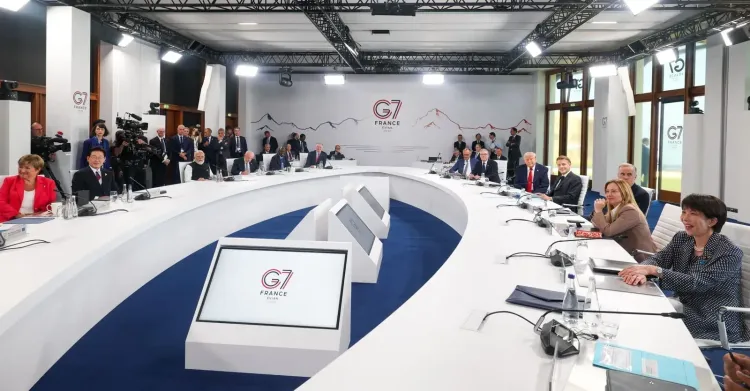
At the G7 in Evian, Modi didn't just attend — he pitched. The IMPACT proposal reframes India as an infrastructure broker for Africa, Latin America, and the Pacific Islands, blending G7 finance with Indian talent and Global South ownership. It is the most concrete institutional proposal to emerge from India's G7 outreach engagement in years.
Key Takeaways
PM Narendra Modi proposed IMPACT (International Mobilisation Partnership for Accelerating Connectivity and Trade) at the G7 Summit in Evian, France on 17 June .
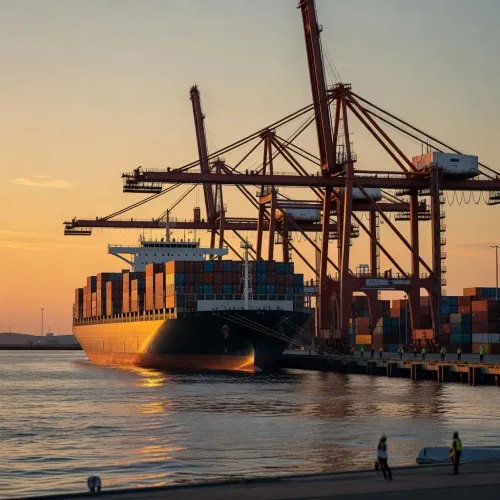
The model would combine G7 capital , India's talent , and Global South country ownership for connectivity projects in Africa , Latin America , and the Pacific Islands .
Modi warned that disruptions in fuel, fertiliser, and food supply chains from the West Asia crisis will continue to burden the Global South and called on international financial institutions to build shock-absorption mechanisms.
He also proposed a Global Skills Partnership to harness complementarity between ageing G7 societies and young Global South workforces.
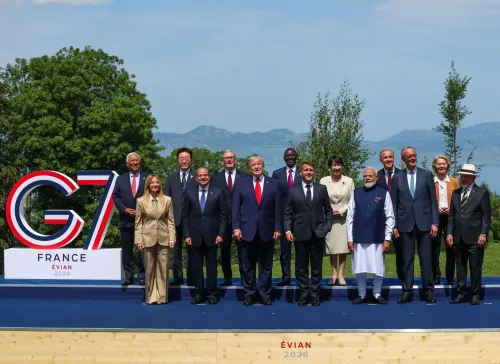
Modi held sideline meetings with leaders including UK PM Keir Starmer , Italian PM Giorgia Meloni , German Chancellor Friedrich Merz , Brazilian President Lula da Silva , and IMF Executive Director Kristalina Georgieva .
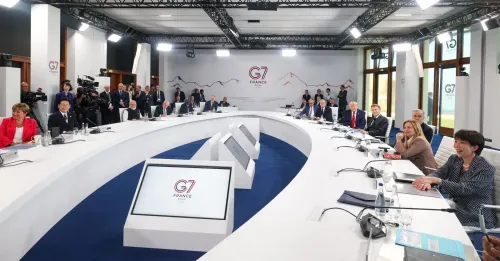
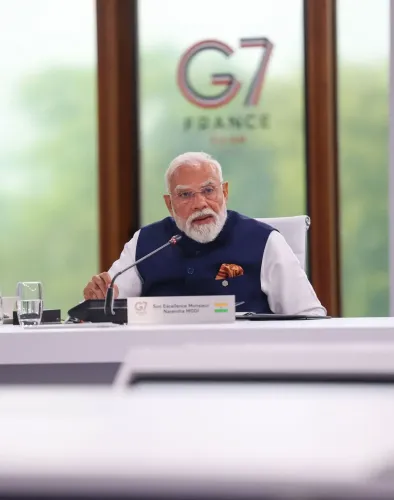
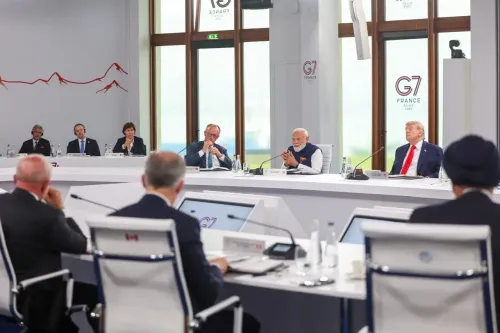
Prime Minister Narendra Modi on Wednesday, 17 June proposed the creation of an International Mobilisation Partnership for Accelerating Connectivity and Trade (IMPACT) at the G7 Summit in Evian, France, calling for a trilateral model combining G7 capital, India's talent, and the ownership of Global South nations to drive connectivity projects across Africa, Latin America, and the Pacific Islands.
What Modi Proposed at the G7 Outreach Session
Addressing the G7 Summit's Outreach Session on 'Reviving a Balanced, Shared and Sustainable Economic Growth for All', Modi argued that the central question for global growth is no longer one of GDP or trade figures. 'The real question is — Growth for whom, with whom and in what direction?' he said, according to his post on X.
Modi framed India's development model as one of inclusion and democratic empowerment, anchored in the guiding principle of 'Sabka Saath, Sabka Vikas, Sabka Vishwas, Sabka Prayas' — Together with all, Development for all, Trust of all, Efforts by all. He cited India's G20 Presidency and the launch of the India-Middle East-Europe Economic Corridor (IMEC) as concrete expressions of this philosophy.
West Asia Crisis and the Global South's Burden
Modi raised the ongoing disruptions in fuel, fertiliser, and food supply chains caused by the crisis in West Asia, warning that their impact on the Global South will persist for a considerable period. He called on international financial institutions to develop support mechanisms that help developing countries absorb economic shocks and maintain resilience, arguing that the most vulnerable nations should not be left to bear these burdens alone.
Global Skills Partnership: Tapping Young Talent
Noting that many advanced economies are ageing societies while India and other Global South nations hold an abundance of young talent, entrepreneurship, and skills, Modi called for a Global Skills Partnership. Under this framework, countries would collaborate on skill mapping and promote trusted skilled mobility — channelling the demographic complementarity between ageing G7 economies and younger developing nations into mutual economic advantage.
Bilateral Meetings on the Sidelines
Ahead of the Outreach Session, Modi held bilateral interactions with several world leaders. These included Italian Prime Minister Giorgia Meloni, UK Prime Minister Keir Starmer, Brazilian President Luiz Inácio Lula da Silva, German Chancellor Friedrich Merz, and International Monetary Fund (IMF) Executive Director Kristalina Georgieva. The sideline meetings signal India's active diplomatic positioning as it pitches itself as a bridge between the G7 and the Global South.
Significance and What Comes Next
The IMPACT proposal builds directly on the IMEC vision announced during India's G20 Presidency, extending the connectivity corridor model to regions that have historically been underserved by multilateral infrastructure finance. Whether the proposal translates into a formal multilateral framework will depend on G7 receptiveness and follow-through in subsequent diplomatic channels. The French G7 Presidency's decision to feature shared growth as a summit theme gave Modi a platform to advance India's case as a development partner of consequence.
Point of View
Given existing bilateral mobility frameworks India already operates. Modi's framing — 'Growth for whom, with whom' — is a deliberate counter-narrative to the G7's traditional GDP-centric lens, but whether it shifts the summit's actual outcomes or remains rhetorical positioning will become clear in the communiqué language.
NationPress
17 Sept 2026
Frequently Asked Questions
What is the IMPACT partnership proposed by PM Modi at the G7 Summit?
IMPACT stands for International Mobilisation Partnership for Accelerating Connectivity and Trade. Modi proposed it at the G7 Summit in Evian on 17 June as a framework combining G7 capital, India's talent, and Global South country ownership to develop connectivity projects in Africa, Latin America, and the Pacific Islands.
Why did Modi raise the West Asia crisis at the G7 Outreach Session?
Modi highlighted that disruptions in fuel, fertiliser, and food supply chains caused by the West Asia crisis will continue to burden Global South nations for a considerable period. He called on international financial institutions to create support mechanisms so the most vulnerable developing countries can absorb these economic shocks without being left to bear the costs alone.
What is the Global Skills Partnership that Modi proposed?
The Global Skills Partnership is a proposed multilateral framework for skill mapping and trusted skilled mobility between nations. Modi pitched it to address the demographic complementarity between ageing G7 societies and the young, skilled workforces of India and other Global South countries.
Which world leaders did PM Modi meet on the sidelines of the G7 Summit?
Ahead of the Outreach Session, Modi met Italian PM Giorgia Meloni, UK PM Keir Starmer, Brazilian President Luiz Inácio Lula da Silva, German Chancellor Friedrich Merz, and IMF Executive Director Kristalina Georgieva.
How does IMPACT relate to IMEC?
IMPACT builds on the vision behind IMEC (India-Middle East-Europe Economic Corridor), which was launched during India's G20 Presidency. While IMEC focuses on a specific corridor, IMPACT proposes extending the connectivity model to a broader set of regions including Africa, Latin America, and the Pacific Islands.