PM Modi at G7: 'Mutual trust is the most important strategic asset today'
Synopsis
At the G7 in Evian, Modi didn't just speak about partnerships — he challenged the architecture of global cooperation itself. His call to replace the donor-recipient model with dignity-based, equal partnerships is a direct pitch to the Global South, delivered in front of the world's wealthiest nations. The trust-deficit framing reframes India's multilateral role at a moment of deepening geopolitical fracture.
Key Takeaways
PM Narendra Modi addressed the G7 Outreach session on 16 June in Evian, France , calling mutual trust the world's most important strategic asset.
Modi said the world suffers not from a shortage of resources but a shortage of trust , urging nations to rebuild confidence in global partnerships.
He invoked Vasudhaiva Kutumbakam and India's 'humanity first' principle, citing initiatives like the International Solar Alliance and Global Biofuels Alliance .
Modi called for an end to the donor-recipient mindset , arguing that partnerships must be 'linked to dignity, not dependency' .
He highlighted India's development work in Africa across training, water, agriculture, and energy, and its role as a first responder in global disasters.
The Global South , he said, seeks equal partnership — not mere support — from the international community.
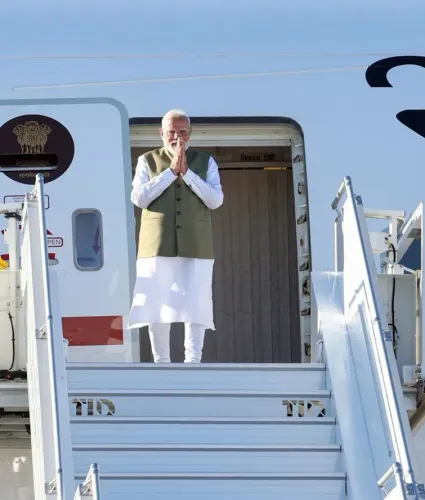
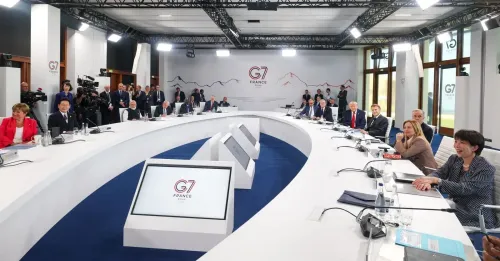
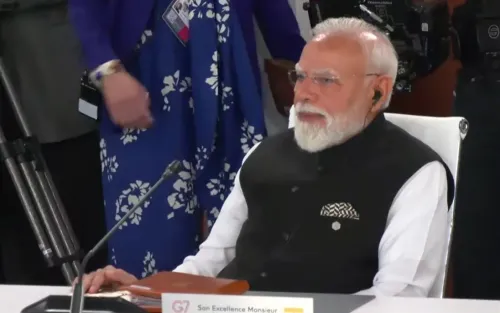
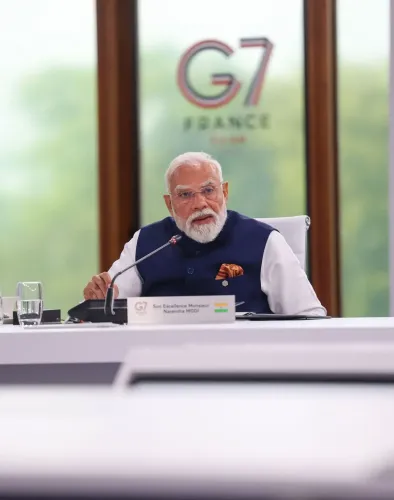
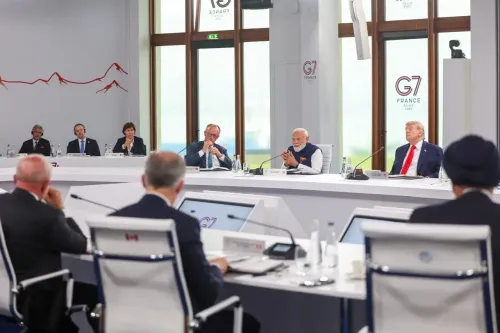
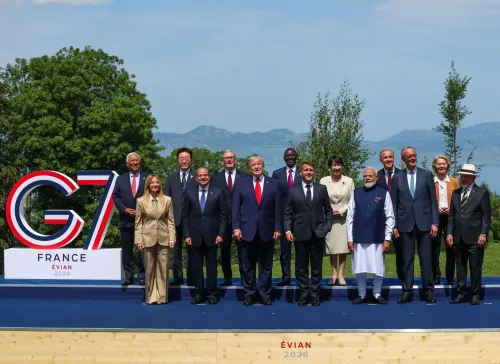
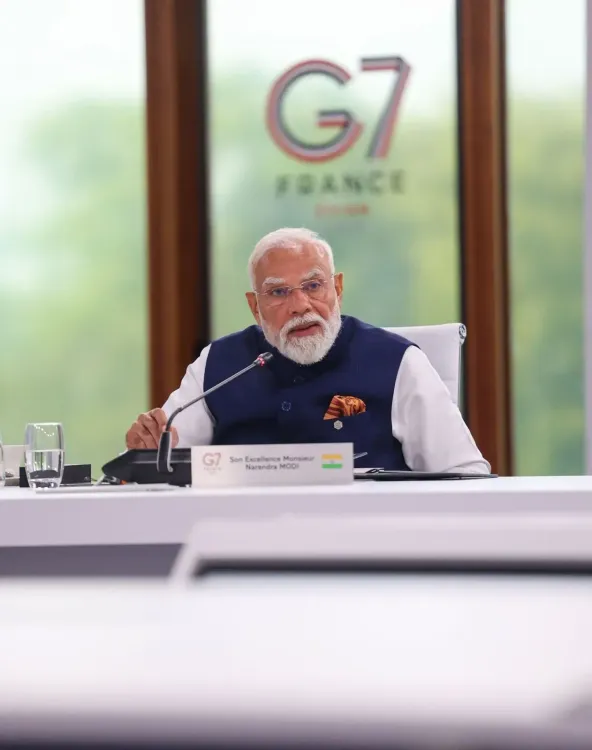
Prime Minister Narendra Modi on Tuesday, 16 June called mutual trust the most critical strategic asset in today's world, addressing the Outreach session titled 'Forging New Partnerships and Rebuilding International Solidarity' at the G7 Summit in Evian, France. The remarks, delivered before leaders of the world's most industrialised nations and invited partners, positioned India as a voice for equitable, trust-based global cooperation.
The Core Message on Trust
Speaking at the session, Modi argued that the world is not facing a resource crisis — it is facing a crisis of confidence. 'Mutual trust is the most important strategic asset today. But, sadly, today, the world does not suffer from a shortage of resources…it suffers from a shortage of trust. And the future of our partnerships depends on re-building this trust,' he said.
He noted that in an increasingly interconnected world, where energy, food, health, cyber, and economic security are deeply intertwined, forging international partnerships is no longer optional — it is a prerequisite for human progress. According to the Ministry of External Affairs (MEA), Modi underlined that such partnerships can only succeed when they are genuinely founded on trust.
India's Guiding Philosophy
Modi invoked the ancient Indian principle of Vasudhaiva Kutumbakam — the world as one family — as the philosophical anchor of India's foreign engagement. He said India has consistently followed a 'humanity first' approach, which he described as the centrepiece of its international partnerships.
He cited several multilateral initiatives that reflect this ethos: the International Solar Alliance, the Coalition for Disaster Resilient Infrastructure, the Global Biofuels Alliance, Mission LiFE, and the 'Ek Ped Maa Ke Naam' (A tree for mother) campaign. Modi also highlighted India's track record as a first responder during natural disasters — including a cyclone in Sri Lanka, an earthquake in Afghanistan, floods in Mozambique, and a hurricane in Jamaica.
Redefining the Donor-Recipient Dynamic
One of the sharpest edges of Modi's address was his call to dismantle the traditional donor-recipient model of international aid. 'We must move beyond the donor-recipient mindset and work as equal partners! We must walk together and not merely alongside one another. Partnerships must be linked to dignity, not dependency,' he said.
He argued that India's benchmark for meaningful partnership is not what it builds for others, but what it enables others to build for themselves — a framing that aligns with the aspirations of the Global South, which he said carries 'immense expectations' from the international community and seeks partnership, not patronage.
India's Development Record and Africa Focus
Modi elaborated on India's inclusive growth model, anchored in the mantra of 'Sarv Jan Hitaye, Sarv Jan Sukhaye' (welfare and happiness for all). He said this approach has driven measurable gains in financial inclusion, health security, digital identity, technology-led empowerment, and women-led development.
On Africa specifically, he highlighted India's focus on training, capacity building, water resources, agriculture, and energy — sectors he said are strengthening African nations' ability to address pressing global challenges. This comes amid growing competition among major powers for influence across the African continent, making India's framing of 'capacity over charity' a pointed diplomatic signal.
What This Signals
Modi's address at Evian reinforces India's consistent positioning at multilateral forums: a rising power that speaks for the Global South while engaging the G7 on equal terms. As geopolitical fault lines deepen — particularly around trade restrictions and technology decoupling — India's push to rebuild trust-based multilateralism is likely to gain further prominence in the months ahead.
Point of View
However, is whether India's own partnerships — particularly in Africa — live up to the equal-footing rhetoric, or whether they replicate the asymmetries Modi is publicly condemning. The trust-deficit argument resonates globally, but trust is also built through verifiable outcomes, not just compelling oratory at summit sessions.
NationPress
18 Sept 2026
Frequently Asked Questions
What did PM Modi say at the G7 Summit in Evian?
PM Modi addressed the G7 Outreach session on 16 June in Evian, France, stating that mutual trust is the most important strategic asset in today's world. He argued that the world faces a shortage of trust — not resources — and called for rebuilding international partnerships on the basis of dignity and equality.
What is the significance of Modi's 'donor-recipient mindset' remark?
Modi called on nations to move beyond the traditional donor-recipient model of international cooperation, urging equal partnerships instead. He said partnerships must be 'linked to dignity, not dependency' — a message directed at both the G7 and the broader Global South.
Which Indian initiatives did Modi highlight at the G7?
Modi cited the International Solar Alliance, Coalition for Disaster Resilient Infrastructure, Global Biofuels Alliance, Mission LiFE, and the 'Ek Ped Maa Ke Naam' campaign as examples of India's humanity-first approach to global partnerships.
What did Modi say about India's role in Africa?
Modi highlighted India's focus on training, capacity building, water resources, agriculture, and energy in Africa. He said these efforts are strengthening African nations' ability to address pressing global challenges, framing India's engagement as capacity-building rather than aid.
What is Vasudhaiva Kutumbakam and why did Modi invoke it at the G7?
Vasudhaiva Kutumbakam is an ancient Sanskrit phrase meaning 'the world is one family.' Modi invoked it at the G7 to articulate India's philosophical approach to international relations — one that prioritises inclusive, trust-based global cooperation over narrow national interests.