PM Modi at G7 Evian: Working session and talks with world leaders
Synopsis
At the G7 Summit in Evian, PM Modi didn't just attend a working session — he used the global stage to press for maritime safety, rebuilding international trust, and dialogue over conflict. His back-to-back meetings with leaders from Italy, UK, Brazil, Germany, and the IMF signal India's growing weight in shaping the multilateral agenda beyond its G7 membership.
Key Takeaways
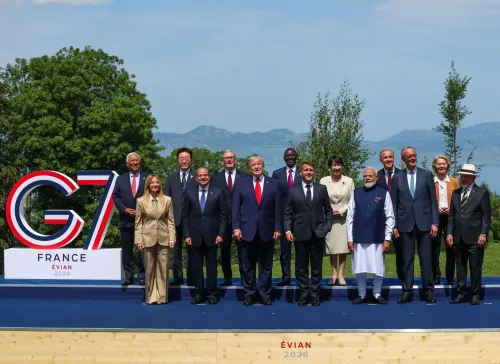
PM Narendra Modi attended a G7 working session on inclusive economic growth in Evian, France on 17 June .
He held sideline interactions with Italian PM Giorgia Meloni , UK PM Keir Starmer , Brazilian President Lula da Silva , German Chancellor Friedrich Merz , and IMF Executive Director Kristalina Georgieva .
On Tuesday, Modi welcomed progress in West Asia peace efforts and flagged disruption to maritime trade in the Strait of Hormuz .
He called for ensuring the safety of Indian seafarers and keeping global sea lanes open.
Modi warned of a global trust deficit , stating the world suffers not from a shortage of resources but of trust.
India invoked Vasudhaiva Kutumbakam and its 'humanity first' principle as the foundation of its global partnerships.
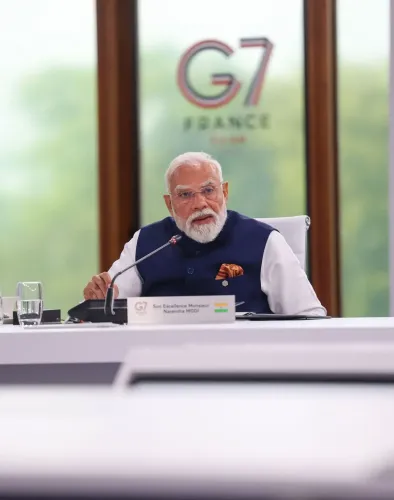
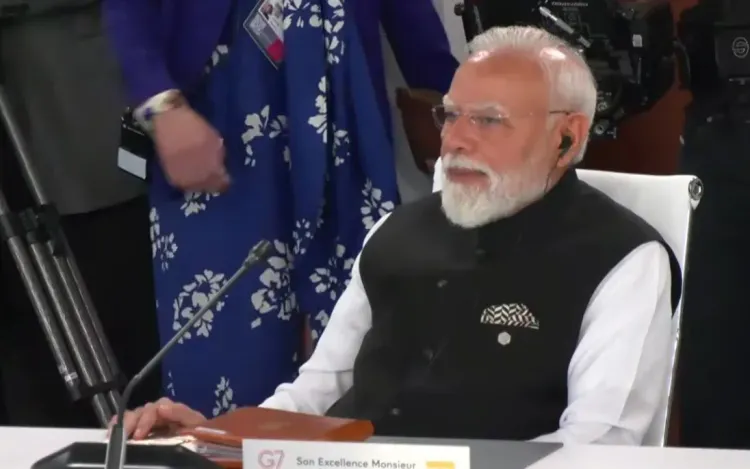
Prime Minister Narendra Modi on Wednesday, 17 June launched his engagements at the Group of Seven (G7) Summit in Evian, France, participating in a working session themed 'Reviving Balanced, Inclusive and Sustainable Economic Growth for the Benefit of All'. The session brought together leaders of the world's most advanced economies alongside invited partners to deliberate on shared economic challenges.
Key Bilateral Interactions
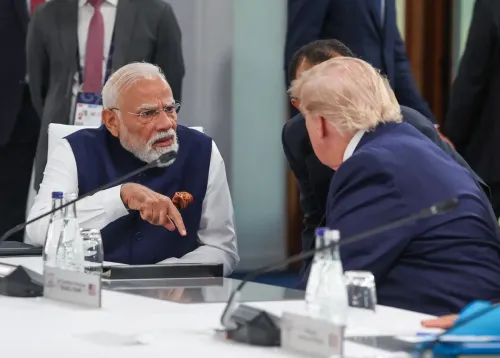
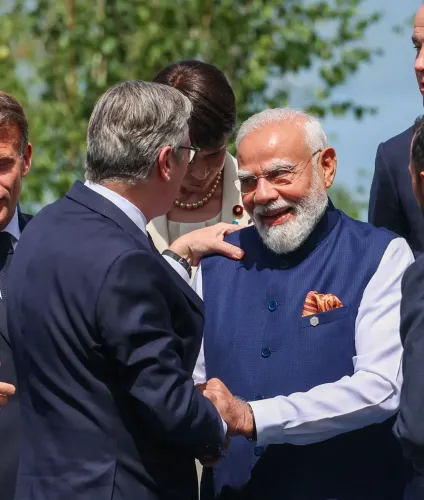
Ahead of the working session, Prime Minister Modi held interactions with several global leaders on the sidelines. Those he met included Italian Prime Minister Giorgia Meloni, UK Prime Minister Keir Starmer, Brazilian President Luiz Inácio Lula da Silva, German Chancellor Friedrich Merz, and International Monetary Fund (IMF) Executive Director Kristalina Georgieva. The flurry of engagements underscored India's positioning as a key voice among major economies, even as a non-G7 member.
Modi's Address on West Asia and Global Peace
On Tuesday, Prime Minister Modi addressed a separate G7 session on 'Forging New Partnerships and Rebuilding International Solidarity', where he welcomed progress in peace efforts in West Asia. 'We welcome the progress made in peace efforts in West Asia. This conflict has caused loss of life and property for our friendly countries in West Asia. The disruption of maritime trade in the Strait of Hormuz has harmed the global economy,' he said, according to the Prime Minister's Office (PMO).
Modi also underlined the human cost of the conflict, noting that Indian civilians had lost their lives. 'The safety of seafarers, who connect all countries through global maritime trade, is our responsibility. We must ensure that sea lanes remain safe, and seafarers can carry out their work without fear,' he stressed.
India's Call for Dialogue and Diplomacy
Prime Minister Modi reiterated India's longstanding position that lasting solutions to global tensions are achievable only through dialogue, diplomacy, and international cooperation. He stated that India is 'fully prepared to work together with all partners on these issues.' This aligns with India's broader foreign policy posture of strategic autonomy and multi-alignment, which has seen New Delhi maintain ties with both Western blocs and the Global South.
Trust Deficit in Global Order
In a pointed observation on the state of global affairs, Modi warned that trade and technology were being 'misused for narrow interests,' deepening a trust deficit in the international arena. 'Mutual trust is the most important strategic asset today. But, sadly, today, the world does not suffer from a shortage of resources… it suffers from a shortage of trust. And the future of our partnerships depends on rebuilding this trust,' he said.
He invoked India's civilisational philosophy of Vasudhaiva Kutumbakam — the world as one family — arguing that development is most effective when it is rooted in people's aspirations. This comes amid growing fractures in the multilateral order, with trade tensions and geopolitical rivalries straining institutions such as the WTO and the UN Security Council.
What Comes Next
India's active participation at Evian signals its intent to shape the G7's agenda on growth, peace, and global governance — areas where New Delhi has sought greater influence following its G20 presidency in 2023. Further bilateral meetings and a joint communiqué from G7 leaders are expected before the summit concludes.
Point of View
This is as much a domestic economic concern as a diplomatic one. India's G20 presidency gave it a taste of agenda-setting; Evian is an attempt to sustain that influence without a formal seat at the G7 table.
NationPress
16 Sept 2026
Frequently Asked Questions
Why is PM Modi attending the G7 Summit in Evian?
PM Modi is attending the G7 Summit in Evian, France as an invited partner nation, not as a G7 member. India participates to represent the Global South's interests and to engage with major economies on issues of growth, peace, and global governance.
Which world leaders did PM Modi meet at the G7 Summit?
On the sidelines of the G7 Summit on 17 June, PM Modi interacted with Italian PM Giorgia Meloni, UK PM Keir Starmer, Brazilian President Luiz Inácio Lula da Silva, German Chancellor Friedrich Merz, and IMF Executive Director Kristalina Georgieva.
What did PM Modi say about the West Asia conflict at the G7?
PM Modi welcomed progress in West Asia peace efforts and noted that the conflict had caused loss of life and disrupted maritime trade in the Strait of Hormuz, harming the global economy. He also highlighted the deaths of Indian civilians and called for the safety of seafarers.
What did PM Modi mean by a 'trust deficit' at the G7?
PM Modi warned that trade and technology are being misused for narrow national interests, eroding mutual trust among nations. He described mutual trust as 'the most important strategic asset today' and said rebuilding it is essential for meaningful global partnerships.
What is India's broader position on global conflicts as stated at the G7?
India's position, as articulated by PM Modi, is that lasting solutions to global tensions are possible only through dialogue, diplomacy, and international cooperation. Modi stated India is fully prepared to work with all partners and follows a 'humanity first' principle in its foreign engagements.