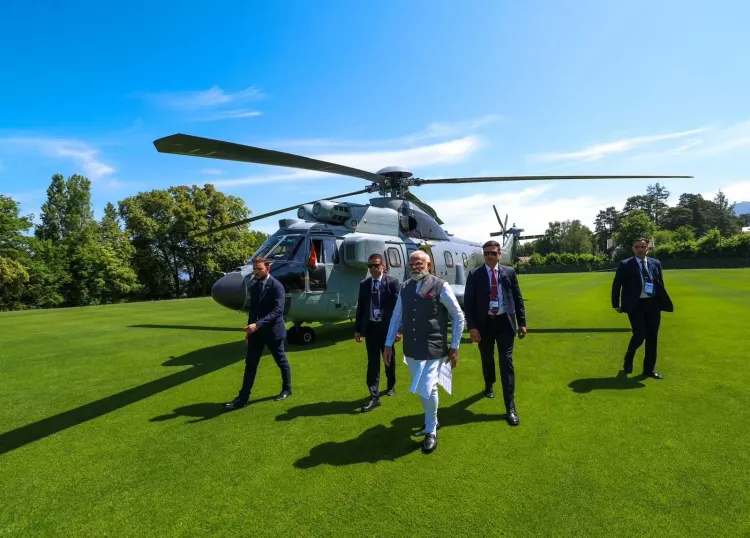
PM Modi arrives in Evian for G7 Summit, pledges sustainable future
Synopsis
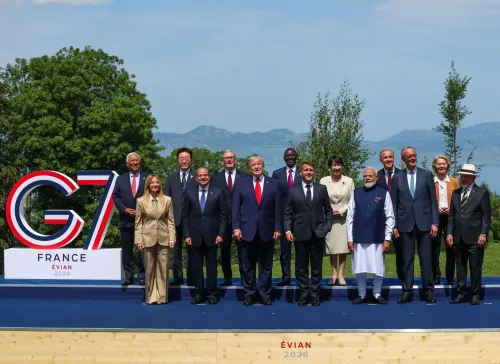
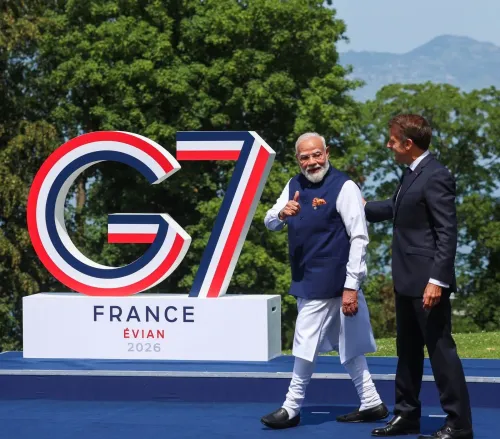
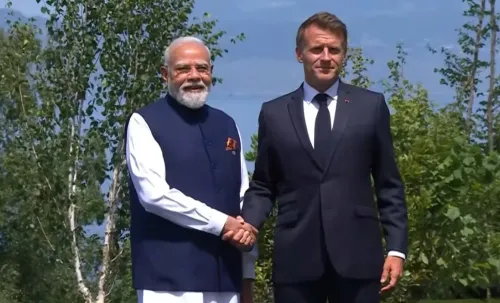
Prime Minister Narendra Modi arrived in Evian, France on June 16, 2026 for the G7 Summit. He reaffirmed India's commitment to collective global efforts for sustainability and prosperity, continuing New Delhi's dual-track diplomacy across Western and developing-world forums.
Key Takeaways
PM Narendra Modi arrived in Evian, France on June 16, 2026 for the annual G7 Summit .
India participates as a guest nation , a role it has held since the 2019 Biarritz G7 under a previous French presidency.
Modi pledged India's commitment to 'advancing collective efforts for a more sustainable and prosperous planet.' The G7 comprises Canada, France, Germany, Italy, Japan, the UK and the US ; India is not a formal member.
India chaired the G20 in 2023 and continues a dual-track diplomacy spanning G7, BRICS and SCO forums.
Bilateral side meetings and joint statements on sustainable development and critical minerals are being closely watched.
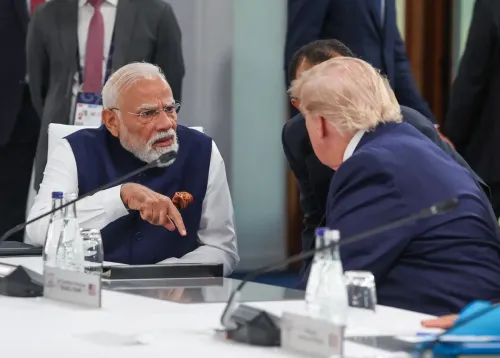
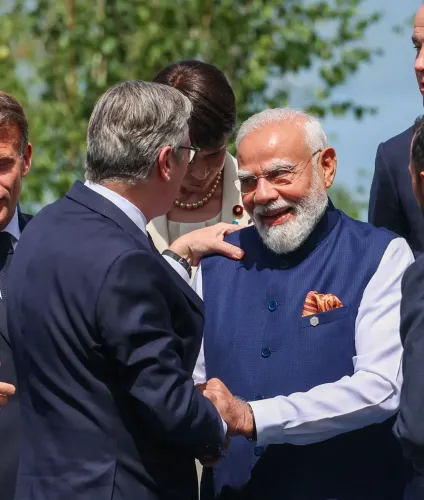
Prime Minister Narendra Modi arrived in Evian, France on Tuesday, June 16, 2026, for the annual G7 Summit, signalling India's continued engagement with the world's leading advanced economies on pressing global challenges. Modi announced his arrival on social media, expressing intent to exchange views with world leaders on key global issues and reaffirming India's commitment to 'advancing collective efforts for a more sustainable and prosperous planet.'
Context
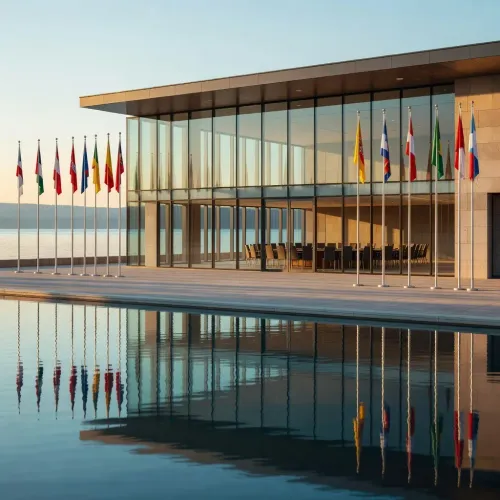
Evian, the French lakeside resort town on the shores of Lake Geneva, previously hosted a G7 summit in 2003. France, a long-standing strategic partner of India in defence and trade, holds the presidency for this cycle and has invited New Delhi as a guest nation. India has participated in G7 summits as a guest since the 2019 Biarritz meeting under a previous French presidency, underscoring the growing importance Paris and other G7 capitals attach to Indian engagement.
The G7 — comprising Canada, France, Germany, Italy, Japan, the United Kingdom and the United States — convenes annually to coordinate positions on global economic stability, security and climate action. India, while not a formal member, has been a recurring presence at the summit table.
Policy Backdrop
Modi's attendance fits a deliberate dual-track foreign-policy architecture that successive governments in New Delhi have refined over the past decade. India simultaneously deepens ties with Western-led forums such as the G7 while maintaining active roles in BRICS, the Shanghai Cooperation Organisation (SCO) and the G20, which India chaired in 2023. This positioning allows New Delhi to act as a bridge between industrialised nations and the developing world.
On the global stage, India has consistently pitched itself as a voice for the Global South — a bloc of developing and emerging economies that often feel underrepresented in decisions on climate finance, debt relief and supply-chain restructuring. Modi's reference to a 'sustainable and prosperous planet' signals that these themes will anchor India's interventions at Evian.
Stakeholders and Impact
The summit's outcomes carry direct implications for developing countries that look to G7 commitments on climate finance, critical minerals access and multilateral lending reform. India, as a large emerging economy and a self-described champion of the Global South, is well-placed to amplify those concerns inside the room. G7 partner nations also view India as a critical node in efforts to diversify supply chains away from single-source dependencies.
Bilateral side meetings on the margins of the summit — a standard feature of such gatherings — could yield progress on defence procurement, technology partnerships or clean-energy cooperation between India and individual G7 members. Any joint statements touching on sustainable development or critical minerals would be closely watched by industry and policymakers alike.
What's Next
The leaders' sessions at Evian are expected to address global economic resilience, climate commitments and geopolitical stability. Modi's participation positions India to shape, or at minimum influence, the summit's communiqué language on issues central to its national interest. The visit also provides an opportunity to hold bilateral talks with counterparts from France, the United States, Japan and other G7 nations on the sidelines. Outcomes from Evian will feed into India's broader multilateral calendar for the remainder of 2026, as New Delhi continues to balance its relationships across competing global blocs.
Point of View
' the Prime Minister signals that India intends to push climate-finance and Global South priorities into a forum historically dominated by wealthy northern economies. France's decision to invite New Delhi — for the second time as G7 host — reflects how indispensable Indian participation has become to the summit's legitimacy. The visit also offers Modi a compact opportunity to advance bilateral agendas with multiple major powers in a single location, compressing weeks of diplomatic travel into days.
NationPress
16 Sept 2026
Frequently Asked Questions
Why is PM Modi attending the G7 Summit if India is not a G7 member?
India attends as a guest nation at the invitation of the host country. France extended this invitation, continuing a practice that began at the 2019 Biarritz G7 . Guest nations participate in select sessions but do not sign the formal communiqué as members.
Where is the 2026 G7 Summit being held?
The 2026 G7 Summit is being held in Evian, France , a lakeside resort town on the shores of Lake Geneva. Evian previously hosted a G7 summit in 2003 .
What issues will India raise at the G7 Summit 2026?
Based on Modi's statement, India is expected to focus on sustainable development and collective global prosperity. India has historically used G7 appearances to advocate for climate finance reform and the interests of developing nations in the Global South.
Which countries are in the G7?
The G7 comprises Canada, France, Germany, Italy, Japan, the United Kingdom and the United States . The European Union also participates. India is not a member but attends as a guest.
Has Modi attended G7 summits before?
Yes. Prime Minister Modi has attended multiple G7 summits as a guest, beginning with the 2019 Biarritz summit hosted by France. India's repeated inclusion reflects its growing weight in global economic and diplomatic affairs.