PM Modi to Attend G7 Summit in Evian on June 16-17
Synopsis
Prime Minister Narendra Modi will participate in the G7 Summit in Evian, France, on 16-17 June 2026, engaging world leaders on key global issues while reaffirming India's commitment to amplifying the voice of the Global South in multilateral forums.
Key Takeaways
PM Narendra Modi will attend the G7 Summit in Evian, France on 16 and 17 June 2026 .
He announced plans to interact with 'various world leaders' on 'a wide range of subjects'.
India will use the platform to advocate for the aspirations of the Global South .
India has been a guest participant at G7 summits since the 2019 Biarritz meeting.
The visit builds on India's 'Voice of Global South' initiative launched during its 2023 G20 presidency .
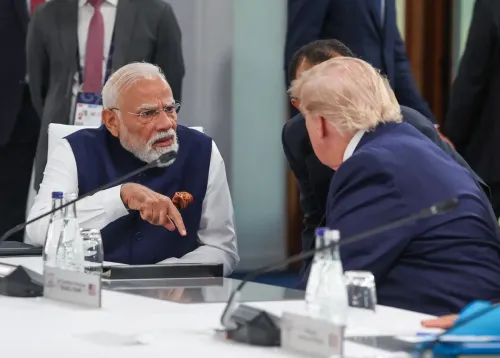
Sideline bilaterals on critical minerals, technology and development finance are expected.
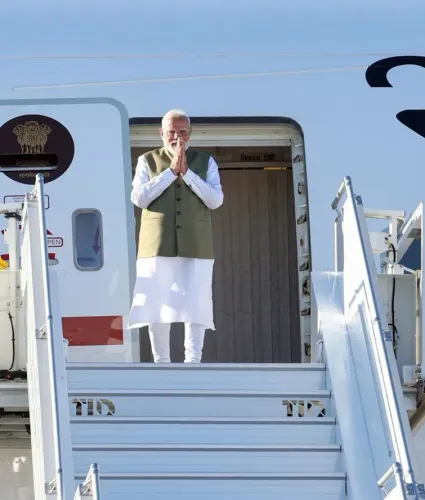
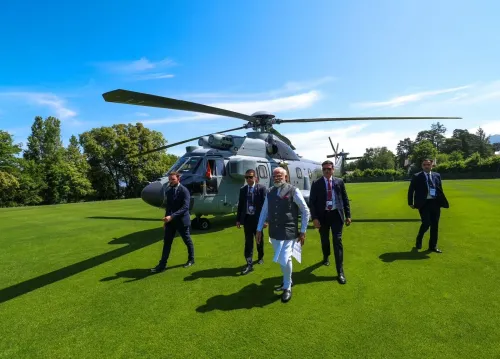
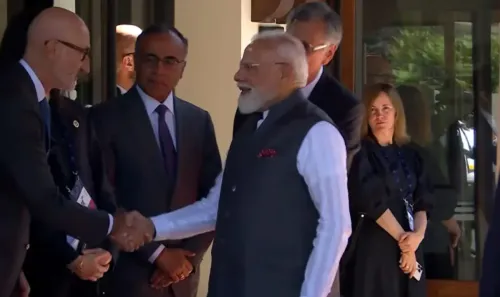
Prime Minister Narendra Modi announced on Saturday, 13 June 2026, that he will travel to Evian, France, to participate in the G7 Summit on 16 and 17 June, where he intends to engage with world leaders on a broad range of global issues and champion the aspirations of the Global South.
Context
In his post on X, Modi stated: 'On 16th and 17th June I will be in Evian to participate in the G7 Summit. I will be interacting with various world leaders and discussing a wide range of subjects. India will always focus on giving voice to the aspirations of the Global South.' The announcement signals India's continued engagement with the grouping of the world's most advanced economies despite not being a formal member.
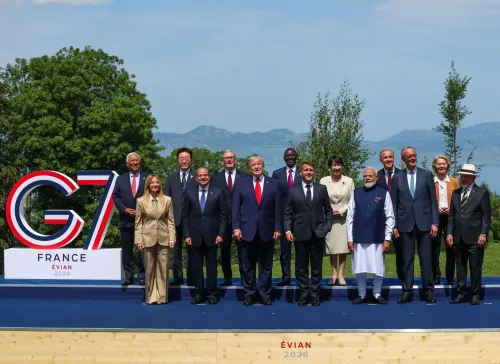
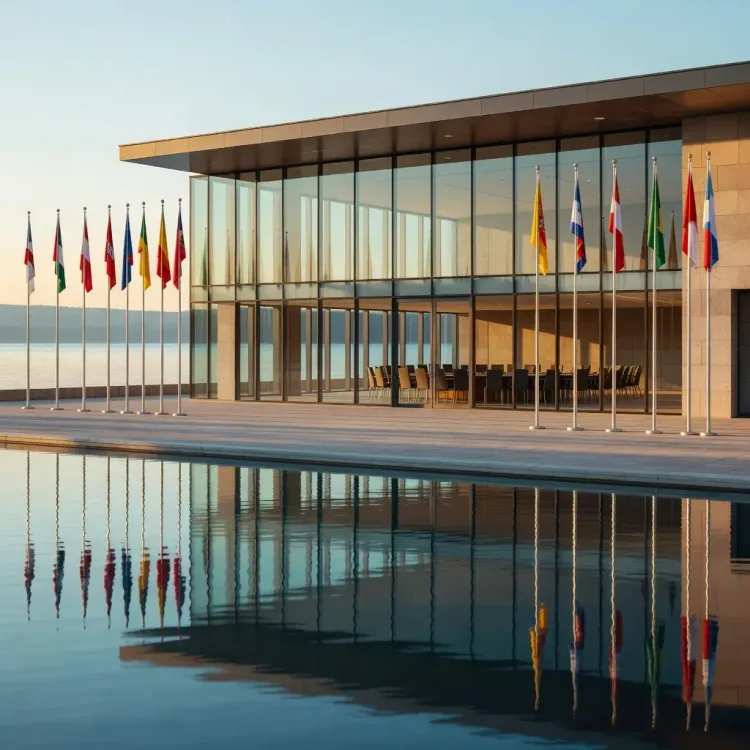
The G7 — comprising Canada, France, Germany, Italy, Japan, the United Kingdom and the United States, along with the European Union — holds annual summits and regularly invites select partner nations. Evian, the French lakeside town that previously hosted the 2003 G8 summit, serves as this year's venue.
Policy Backdrop
India has been a recurring guest at G7 summits since the 2019 Biarritz meeting under the French presidency. At the 2023 Hiroshima Summit, Modi used the platform to spotlight Global South concerns around food, fuel and fertiliser security — themes that have defined New Delhi's multilateral posture since its own G20 presidency that year.
That G20 presidency introduced a formal 'Voice of Global South' outreach, convening developing nations from Africa, Asia and Latin America to consolidate shared priorities. India's participation in G7 meetings has become a pillar of its multi-alignment strategy — engaging Western economies while retaining its traditional role as a bridge to the developing world through forums such as BRICS and the SCO.
Stakeholders and Impact
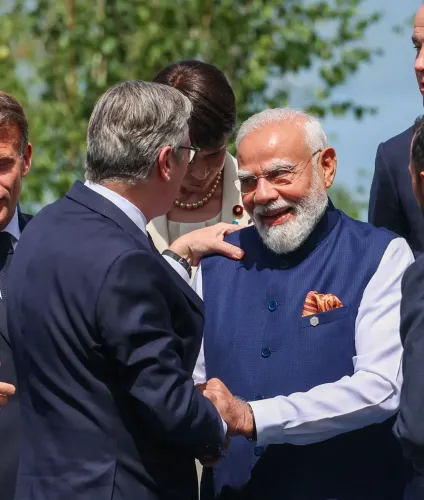
For Global South nations, India's presence at Evian offers a channel to raise issues — from development finance to technology access and climate adaptation — that often receive less traction in OECD-dominated settings. New Delhi positions itself not as a supplicant seeking entry into the club, but as a representative voice for the broader developing world.
For India's foreign policy establishment, the summit is an opportunity to advance bilateral relationships on the sidelines. Potential areas of engagement include critical minerals supply chains, digital infrastructure partnerships and development finance frameworks — all of which have seen growing convergence between India and G7 members in recent years.
What's Next
The Evian meeting on 16-17 June will be closely watched for any sideline bilateral meetings Modi holds with G7 leaders and for follow-up announcements on technology, critical minerals or multilateral development initiatives. Any joint statements or outcomes referencing the Global South will be seen as a measure of how effectively India has leveraged its outreach role.
As India deepens its engagement across competing multilateral platforms, the Evian summit offers a fresh opportunity to consolidate New Delhi's standing as an indispensable interlocutor between the developed and developing worlds — a positioning that carries increasing strategic weight in a fragmented global order.
Point of View
A role that gained institutional form during the 2023 G20 presidency. By publicly framing the visit around the 'Global South' rather than bilateral asks from G7 members, New Delhi signals that its engagement with Western-led forums is conditional and purposive. This posture simultaneously reassures developing country partners and gives India leverage in negotiations over technology, finance and trade rules. The Evian summit will test whether that positioning translates into concrete deliverables or remains largely rhetorical.
NationPress
29 Jul 2026
Frequently Asked Questions
Why is PM Modi attending the G7 Summit in 2026?
PM Modi is attending the G7 Summit in Evian on 16-17 June 2026 as an invited partner nation, a role India has held since 2019 , to engage world leaders and advocate for Global South priorities.
Where is the G7 Summit 2026 being held?
The 2026 G7 Summit is being held in Evian , a lakeside town in France that previously hosted the 2003 G8 summit .
What is India's role at the G7 Summit?
India is not a formal G7 member but participates as an invited outreach partner, using the platform to raise issues important to Global South nations across Africa, Asia and Latin America .
What is the Global South and why does India champion it?
The Global South refers broadly to developing countries across Africa, Asia and Latin America . India has sought to represent their interests in multilateral forums since at least its 2023 G20 presidency , which launched a formal 'Voice of Global South' initiative.
Has Modi attended G7 summits before?
Yes. PM Modi has attended multiple G7 summits, including the 2019 Biarritz and 2023 Hiroshima meetings, where he highlighted food, fuel and fertiliser security concerns of developing nations.