Jaishankar in Abidjan: India's Africa ties guided by partners' needs, Kampala principles
Synopsis
Speaking in Abidjan, EAM Jaishankar reaffirmed that India's Africa strategy runs on its partners' terms — not donor dictates. With ITEC now covering 160+ countries and 10,000 annual training slots at 62 years old, and Cote d'Ivoire alone drawing 800 slots over 12 years, New Delhi is making a pointed case that its development model — knowledge-first, debt-free — is the continent's most reliable alternative.
Key Takeaways
Jaishankar addressed ITEC alumni in Abidjan, Cote d'Ivoire on 8 October 2026 , reaffirming India's demand-driven Africa engagement.
He cited the Kampala principles , articulated by PM Modi eight years ago, as the guiding framework for India-Africa development cooperation.
The ITEC programme , now in its 62nd year , covers more than 160 partner countries and offers nearly 10,000 fully funded training slots annually.
Cote d'Ivoire has utilised around 800 ITEC slots over 12 years ; current commitments stand at 123 defence slots and 100 civilian slots .
Jaishankar described Cote d'Ivoire as 'one of the key partners in West Africa' and pledged India's continued support for its economic, governance, and security goals.
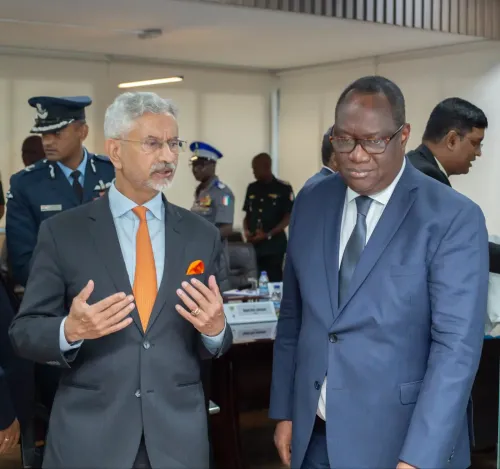
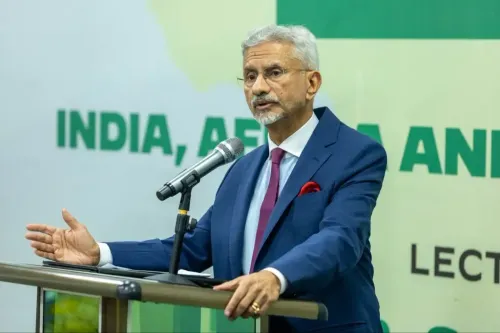
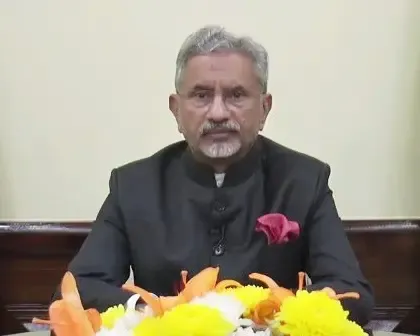
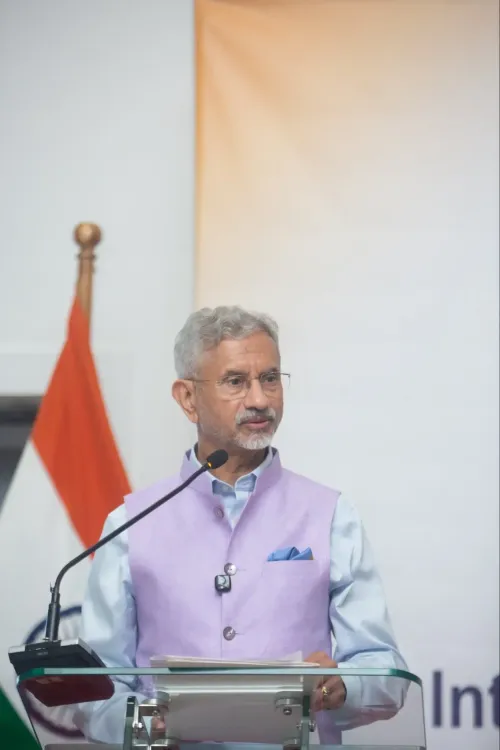
External Affairs Minister S. Jaishankar on 8 October 2026 reaffirmed that India's development cooperation with Africa is driven entirely by the needs and priorities of its African partners, not by donor-centric agendas. Speaking at an alumni event of the Indian Technical and Economic Cooperation (ITEC) programme in Abidjan, Cote d'Ivoire, Jaishankar invoked the Kampala principles — articulated by Prime Minister Narendra Modi eight years ago — as the philosophical bedrock of New Delhi's Africa engagement.
The Kampala Principles at the Core
'Where Africa is concerned, development partnership has always been central to our engagement, and we have taken a view that what we do in India should respond to the demands and priorities of our African partners,' Jaishankar said. He noted that the Kampala principles, first outlined by Prime Minister Modi, formalised this demand-driven approach and continue to shape every dimension of India-Africa cooperation. This comes as India deepens its strategic footprint across the continent, competing with Chinese and Western development models that critics have argued are supply-driven rather than partner-responsive.
ITEC at 62: Scale and Scope
Jaishankar highlighted that 2026 marks the 62nd year of the ITEC programme, which was launched in 1964 and has grown into one of India's foremost platforms for capacity building. The programme now covers more than 160 partner countries and offers nearly 10,000 fully funded training opportunities annually across a wide range of disciplines. 'ITEC today encompasses a very wide range of domains from ICT and digital governance, public administration, banking, finance, agriculture, energy, skill development, but also to defence, to security, to countering terrorism,' he said, describing the programme as a 'comprehensive package' designed to address the full spectrum of partner-country requirements.
Notably, the EAM underscored that ITEC is not a one-way transfer — 'every institution that you have gone to has also benefited from your presence up there,' he told ITEC alumni, framing the programme as a mutual exchange of expertise rather than a conventional technical-assistance arrangement.
India-Cote d'Ivoire: A Key West Africa Partnership
Jaishankar described Cote d'Ivoire as 'one of the key partners in West Africa' and pointed to the 800 ITEC slots utilised by the country over the last 12 years as evidence of a substantial and sustained investment in bilateral human capital. On the current commitment, he said: 'On the defence side, there are 123 slots which are committed and on the civilian side, 100.' He characterised these regular exchanges as the true capital of the relationship — 'the human connection, the emotions, the experiences, the memories, the connect which we build through these courses.'
India has expressed strong support for Cote d'Ivoire's economic growth, governance transformation, and security and defence goals. The EAM stressed that India sees itself as a reliable, long-term partner in the African nation's development journey.
Broader Strategic Context
The visit to Abidjan is part of a wider diplomatic push by India to consolidate its presence in West Africa, a region where geopolitical competition — particularly involving China, France, and increasingly Russia — has intensified in recent years. India's development model, centred on knowledge transfer, institution building, and human resource development rather than large infrastructure loans, is increasingly positioned as an alternative to debt-heavy development financing. Jaishankar's emphasis on ITEC's breadth — spanning digital governance, counter-terrorism, and agricultural development — signals that New Delhi views soft-power capacity building as a strategic asset, not merely a diplomatic courtesy.
All eyes will now be on whether the renewed emphasis on the Kampala principles translates into expanded ITEC allocations and deeper economic engagement with West African economies in the coming years.
Point of View
Now eight years old, are being actively refreshed as a brand, signalling that New Delhi sees Africa not as a recipient market but as a strategic theatre where soft-power depth translates into long-term influence. The real question is whether the programme's scale — 10,000 annual slots across 160 countries — is sufficient to build durable loyalty, or whether it risks being spread too thin to create the concentrated bilateral depth that geopolitical competition in West Africa now demands.
NationPress
8 Oct 2026
Frequently Asked Questions
What are the Kampala principles guiding India's Africa engagement?
The Kampala principles are a set of guidelines articulated by Prime Minister Narendra Modi approximately eight years ago that establish India's Africa engagement as demand-driven — meaning New Delhi's development cooperation responds to the needs and priorities of African partners rather than imposing its own agenda. They remain the foundational framework for India-Africa development partnerships.
What is the ITEC programme and how large is it?
The Indian Technical and Economic Cooperation (ITEC) programme is India's flagship capacity-building initiative, launched in 1964 and now in its 62nd year. It covers more than 160 partner countries and offers nearly 10,000 fully funded training opportunities annually across domains ranging from digital governance and agriculture to defence and counter-terrorism.
Why did Jaishankar visit Cote d'Ivoire?
Jaishankar visited Abidjan to address alumni of the ITEC programme in Cote d'Ivoire, underscoring India's development ties with the country and broader West Africa. The visit also served to reaffirm Cote d'Ivoire's status as a key Indian partner in the region, with 800 ITEC slots utilised over 12 years and fresh commitments of 123 defence and 100 civilian training slots.
How does India's development model in Africa differ from China's?
India's approach, as articulated through the Kampala principles and the ITEC programme, emphasises knowledge transfer, human resource development, and capacity building rather than large infrastructure loans or debt financing. Critics and analysts have noted this positions India as an alternative to what they describe as debt-heavy development models. Jaishankar framed ITEC as a mutual exchange of expertise rather than one-directional aid.
What areas does ITEC training cover for African partners?
ITEC training spans a wide range of disciplines including ICT, digital governance, public administration, banking, finance, agriculture, energy, skill development, defence, security, and counter-terrorism. Jaishankar described it as a 'comprehensive package' designed to address the full spectrum of partner-country requirements.