PM Modi Outlines India's Capacity-Building Development Philosophy

Synopsis
Prime Minister Narendra Modi on June 16, 2026, outlined India's development-partnership philosophy, saying the true measure of partnership is enabling partner nations to build for themselves through capacity building and skill development — a model rooted in the six-decade-old ITEC programme.
Key Takeaways
PM Modi stated on June 16, 2026 , that India's development partnerships prioritise enabling self-reliance in partner nations over direct construction.
India's ITEC programme , launched in 1964 , has institutionalised technical assistance through training rather than grants for over six decades.
At the 2015 India-Africa Forum Summit , India pledged 50,000 additional training slots and scholarships over five years.
India's EXIM Bank extends Lines of Credit that include skill-development components alongside project financing.
The approach aligns with South-South cooperation principles and spans Africa, ASEAN, and the Indian Ocean region.
Future benchmarks include expanded ITEC quotas and new skill-development centres in partner countries.
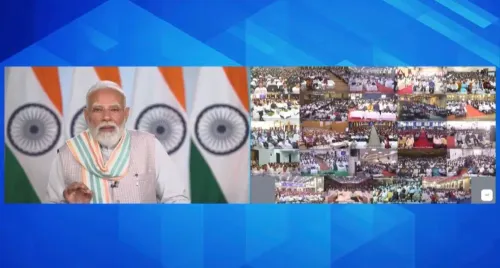
Prime Minister Narendra Modi on Tuesday, June 16, 2026, articulated India's core philosophy on development partnerships, stating that the country measures the success of its global engagements by the self-reliance it enables in partner nations rather than by what it builds on their behalf.
Context
In a post on X, Prime Minister Modi wrote: 'India believes that the true test of partnership is not what we build for others, but what we enable others to build for themselves.' He added that India's development partnerships reflect 'the same spirit,' with efforts focused on capacity building and skill development in partner countries. The statement frames India's international assistance as an investment in human capital rather than a transfer of infrastructure or aid.
The remarks come against the backdrop of India's expanding footprint as a development partner across Africa, South-East Asia, and the Indian Ocean region, where New Delhi has increasingly positioned itself as a practitioner of South-South cooperation.
Policy Backdrop
India's approach to development cooperation has deep institutional roots. The Indian Technical and Economic Cooperation (ITEC) programme, launched in 1964, has for over six decades provided training slots to civil servants, technicians, and professionals from developing countries — institutionalising technical assistance through knowledge transfer rather than direct grants.
At the third India-Africa Forum Summit in 2015, India committed 50,000 additional training slots and scholarships over five years, underscoring the primacy of capacity building in its partnership model. India's EXIM Bank has complemented this by extending Lines of Credit to partner nations that often carry skill-development and project-execution components alongside financing.
Since the mid-2000s, New Delhi has steadily reframed its external assistance narrative — from being a traditional aid recipient to positioning itself as a demand-driven development partner, a shift that aligns with globally recognised South-South cooperation principles.
Stakeholders and Impact
The primary beneficiaries of India's capacity-building model are professionals, civil servants, and institutions in developing nations across Africa, ASEAN, and the broader Global South. By prioritising skill development, India's partnerships aim to leave behind durable human and institutional capacity rather than dependency on external project management.
For partner governments, the approach offers training infrastructure and technical expertise calibrated to their own development priorities. For India, it reinforces soft-power influence and deepens bilateral ties through people-to-people and institution-to-institution linkages that outlast individual projects.
What's Next
Observers will watch for concrete announcements tied to the philosophy Prime Minister Modi has articulated — particularly any expansion of ITEC quotas, new skill-development centres in partner countries, or fresh commitments at the next India-Africa Forum Summit. As India's global profile grows, translating this stated philosophy into measurable new commitments will be the benchmark against which its development-partnership credentials are assessed.
Point of View
' New Delhi signals a deliberate contrast with infrastructure-heavy external assistance models associated with other major powers. The framing also serves a domestic narrative: India as a responsible, knowledge-sharing power rather than a donor seeking leverage. Whether the rhetoric translates into expanded ITEC slots or new skill-development centres will determine how seriously partner nations and global observers take the commitment.
NationPress
15 Sept 2026
Frequently Asked Questions
What is India's development partnership philosophy according to PM Modi?
PM Modi stated that India believes the true test of partnership is enabling other nations to build for themselves, with a focus on capacity building and skill development rather than constructing projects on their behalf.
What is the ITEC programme and how does it relate to India's development partnerships?
The Indian Technical and Economic Cooperation (ITEC) programme, launched in 1964, provides training slots to civil servants and professionals from developing countries. It is the primary institutional vehicle for India's capacity-building approach to development cooperation.
How many training slots did India pledge at the India-Africa Forum Summit?
At the third India-Africa Forum Summit in 2015, India committed 50,000 additional training slots and scholarships over five years for African nations.
What is South-South cooperation and how does India's approach fit into it?
South-South cooperation refers to technical and development collaboration among developing nations. India's demand-driven, training-focused model of external assistance is widely regarded as a practical expression of South-South cooperation principles.
What should we watch for next in India's development partnership agenda?
Key developments to monitor include any expansion of ITEC training quotas, announcements of new skill-development centres in partner countries, and fresh commitments at the next India-Africa Forum Summit.