PM Modi Calls for Global Skills Partnership to Tap Youth Talent
Synopsis
Prime Minister Narendra Modi on 17 June 2026 proposed a Global Skills Partnership to channel India's abundant youth talent toward ageing economies in the Global North, framing demographic complementarity as a cornerstone of India's development diplomacy and Global South leadership.
Key Takeaways
PM Modi on 17 June 2026 called for a Global Skills Partnership to address the demographic divide between ageing and youth-rich societies.
India's median age of approximately 28 years is central to its pitch as a global supplier of skilled labour.
The proposal extends the Skill India Mission (launched 2015 ) which already carries an international mobility mandate.
India's approach favours regulated skill mobility over permanent migration, distinguishing it from conventional immigration debates.
The initiative aligns with priorities set at the G20 New Delhi Summit 2023 , where skilling and demographic complementarity featured in the Leaders' Declaration.
Follow-up announcements are expected at future G20 , BRICS , or UN General Assembly forums on labour and skills.
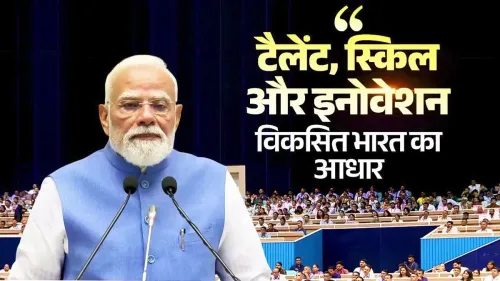
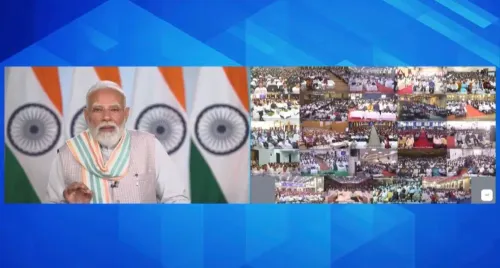
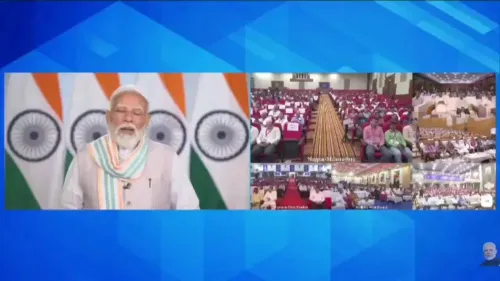
Prime Minister Narendra Modi on Wednesday, 17 June 2026, called for the creation of a Global Skills Partnership to bridge the demographic divide between ageing societies in the Global North and the youth-rich nations of the Global South, including India. The proposal frames India's vast pool of young talent, entrepreneurship, and skills as a strategic complement to labour shortages facing older economies worldwide.
Context
In his post, Modi observed that 'many societies are becoming ageing societies while India and other countries of the Global South have abundance of young talent, entrepreneurship and skills.' He described this as a 'natural complementarity' and called for a structured multilateral mechanism — a Global Skills Partnership — to harness it. The proposal signals India's intent to move beyond bilateral labour agreements toward a broader, institutionalised framework for skill mobility.
India's median age stands at approximately 28 years, placing it among the world's youngest large economies. This demographic profile has long been central to India's positioning in global economic diplomacy, with successive governments framing the country's youth as a potential engine of growth — both domestically and for labour-short partners abroad.
Policy Backdrop
The proposal builds on a well-established policy lineage. The Skill India Mission, launched in 2015, set out to train hundreds of millions of workers with an explicit international mobility component, creating a pipeline of certified, job-ready talent for global markets. At the G20 New Delhi Summit in 2023, India had already prioritised skilling and demographic complementarity in the Leaders' Declaration, launching working groups on the future of work.
India has consistently advocated regulated skill mobility — as distinct from permanent migration — as the preferred model for exporting its demographic dividend. This approach aligns with Modi's broader framework of 'development diplomacy' and South-South cooperation, positioning New Delhi as a champion of Global South interests in multilateral forums.
Stakeholders and Impact
The primary beneficiaries of a Global Skills Partnership, if formalised, would be young workers across the Global South seeking structured pathways into economies facing acute labour shortages — particularly in sectors such as healthcare, construction, technology, and elder care. For receiving countries, the arrangement offers a managed, skills-verified talent pipeline without the political friction of open-ended immigration.
For India specifically, such a framework could accelerate remittance inflows, reduce domestic unemployment pressure, and elevate the country's standing as a responsible supplier of skilled labour. Existing bilateral mobility agreements with several countries in Europe, the Gulf, and East Asia would likely serve as templates for any broader multilateral architecture.
What's Next
The proposal is likely to be elaborated at upcoming multilateral platforms, including future G20 or BRICS ministerial meetings on labour and skills, or at the United Nations General Assembly. Whether the call translates into a formal negotiating process will depend on uptake from key partner economies and the appetite of multilateral bodies to host such a framework.
As ageing demographics intensify fiscal and workforce pressures across the developed world, India's pitch for a structured skills bridge positions New Delhi at the centre of one of the defining economic conversations of the coming decade.
Point of View
New Delhi sidesteps the political minefield of immigration debates in the Global North while still securing market access for Indian workers. The proposal also consolidates India's self-appointed role as the voice of the Global South, bundling economic self-interest with solidarity rhetoric in a way that has become a signature of Modi-era multilateralism. Whether the idea gains institutional traction will be the real test — India has floated skill-mobility frameworks before, but a binding multilateral mechanism remains elusive.
NationPress
19 Sept 2026
Frequently Asked Questions
What is the Global Skills Partnership proposed by PM Modi?
It is a proposed multilateral framework called for by Prime Minister Narendra Modi on 17 June 2026 to connect the youth talent and skills of India and other Global South nations with ageing economies that face labour shortages, creating structured and regulated pathways for skill mobility.
Why is India pushing for a Global Skills Partnership?
India has one of the world's youngest populations, with a median age of around 28 years , giving it a large pool of skilled and trainable workers. A formal partnership would open regulated overseas employment channels, boost remittances, and strengthen India's diplomatic standing as a champion of Global South interests.
How does this relate to the Skill India Mission?
The Skill India Mission , launched in 2015 , already includes an international mobility component aimed at certifying workers for global markets. The Global Skills Partnership proposal would build on this foundation by creating a multilateral institutional framework rather than relying solely on bilateral agreements.
Which countries would benefit from a Global Skills Partnership?
Labour-short economies — particularly in Europe , the Gulf , and East Asia — stand to benefit as receiving nations, while youth-rich countries across the Global South , including India , would gain structured and dignified overseas employment pathways for their workers.
Where is PM Modi expected to formally push this proposal?
Follow-up announcements are anticipated at upcoming multilateral platforms such as G20 or BRICS ministerial meetings on labour and skills, and potentially at the United Nations General Assembly , though no specific venue has been confirmed yet.