Shivraj shares PM Modi's vision on global youth partnerships
Synopsis
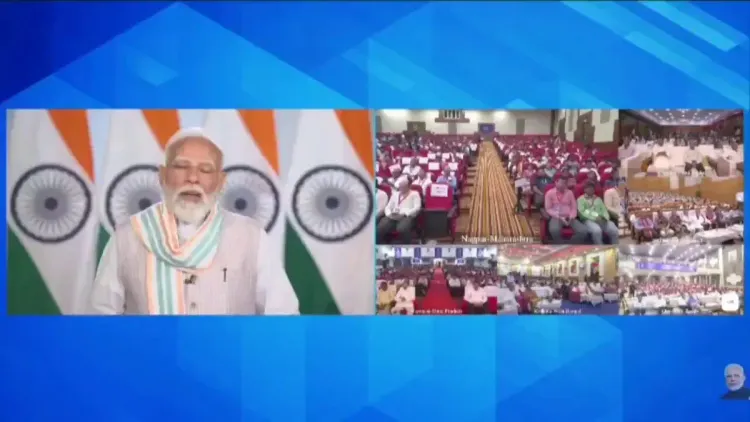
Union Agriculture Minister Shivraj Singh Chouhan amplified PM Narendra Modi's statement on India's bilateral partnerships with countries worldwide, highlighting the government's goal of creating jobs, opportunities, and global exposure for Indian youth as a core foreign-policy objective.
Key Takeaways
Union Agriculture Minister Shivraj Singh Chouhan shared PM Narendra Modi 's remarks on India's international partnerships on 23 May 2026 .
PM Modi's statement, as quoted, identifies three goals for these partnerships: opportunity, employment, and realising the potential of Indian youth.
Global exposure for young Indians is explicitly cited as a personal priority of the Prime Minister.
India has signed bilateral skill and education MOUs with countries including Germany, Japan, France, and the UAE since 2014.
The Skill India Mission , launched in 2015 , forms the domestic backbone of this international skilling strategy.
Upcoming bilateral visits and G20 follow-ups may yield further youth exchange or apprenticeship agreements .
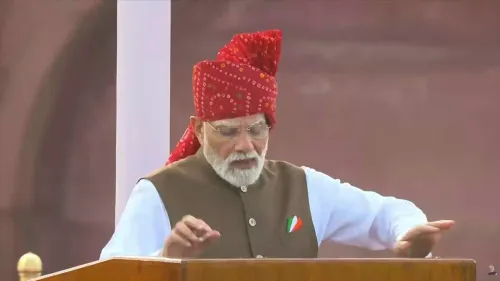
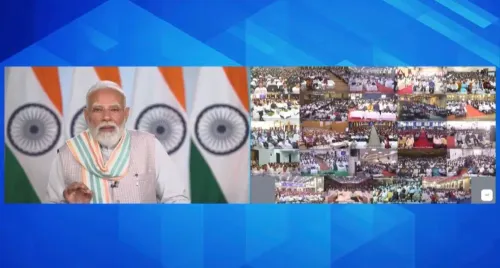
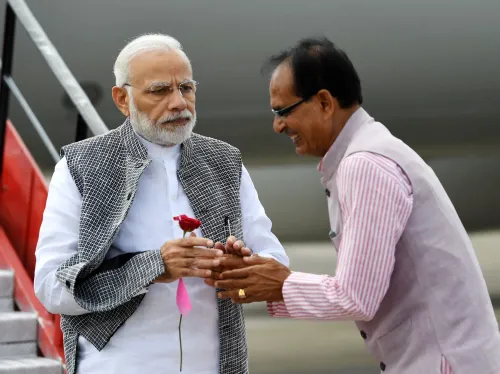
Union Agriculture Minister Shivraj Singh Chouhan on Saturday, 23 May 2026, shared remarks attributed to Prime Minister Narendra Modi on India's expanding international partnerships, underlining the government's intent to open global opportunities, employment, and exposure for Indian youth.
Context
Quoting PM Modi directly, Chouhan posted: 'भारत भी दुनिया के अलग अलग देशों के साथ पार्टनरशिप कर रहा है' ['India too is partnering with different countries across the world']. The Prime Minister's statement, as shared by Chouhan, frames these partnerships around three goals: opportunity, employment, and the flowering of potential among India's youth. A further aspiration cited is ensuring that the country's young people gain 'global exposure.'
Chouhan's decision to amplify the Prime Minister's words signals the BJP government's effort to communicate its foreign-policy rationale directly to a domestic audience, linking diplomacy to everyday concerns such as jobs and skills.
Policy Backdrop
India's outward-looking approach to youth employment has deepened considerably since 2014. The Skill India Mission, launched in 2015, set out to train hundreds of millions of citizens in vocational skills and improve their employability both at home and abroad. Alongside this, the government has signed bilateral education and skill development memoranda of understanding with countries including Germany, Japan, France, and the UAE, embedding youth mobility and training provisions into diplomatic agreements.
This approach treats foreign policy not merely as statecraft but as an instrument of domestic economic delivery — channelling international partnerships into tangible benefits such as apprenticeships, technology transfer, and market access for Indian workers and graduates.
Stakeholders and Impact
The primary beneficiaries of these partnerships, as articulated in the post, are Indian youth — a demographic that represents one of the country's most significant economic assets. India's large working-age population makes international skill and employment linkages a strategic priority, with millions entering the labour market each year.
For partner countries, agreements with India offer access to a skilled, English-proficient workforce. For Indian families, the prospect of structured global exposure — through exchange programmes, apprenticeships, or bilateral employment corridors — represents a meaningful upgrade in economic mobility. Senior ministers amplifying such messaging also serves to build public confidence in the diplomatic track record of the current administration.
What's Next
Upcoming bilateral visits and multilateral forums — including follow-up engagements from recent G20 commitments — are expected to be watched for concrete announcements on youth exchange or apprenticeship pacts. The government's sustained emphasis on linking foreign policy to domestic employment goals suggests that further bilateral agreements, particularly with skill-hungry economies in Europe and the Gulf, remain a live policy priority. How these partnerships translate into measurable employment outcomes for Indian youth will be the key test of the strategy's effectiveness.
Point of View
Particularly for youth. The framing connects India's diplomatic activity directly to kitchen-table concerns like employment, a narrative the BJP has consistently cultivated since 2014. Amplifying the Prime Minister's words rather than speaking in his own voice also signals institutional loyalty and message discipline within the party. The post fits a broader pattern of using bilateral partnership announcements as proof-points for the government's economic governance credentials ahead of any electoral or policy cycle.
NationPress
14 Sept 2026
Frequently Asked Questions
What did PM Modi say about India's global partnerships for youth?
PM Modi, as quoted by Shivraj Singh Chouhan, said India is partnering with different countries worldwide with the aim of giving Indian youth opportunities, employment, and global exposure so their potential can fully flourish.
Which countries has India signed skill development agreements with?
India has signed bilateral education and skill development agreements with countries including Germany, Japan, France, and the UAE since 2014, embedding youth mobility and training provisions into diplomatic ties.
What is the Skill India Mission?
The Skill India Mission was launched in 2015 to train hundreds of millions of Indian citizens in vocational skills, improving their employability both domestically and in international markets.
Why is Shivraj Singh Chouhan sharing PM Modi's quotes on foreign policy?
As a senior BJP minister and former Chief Minister of Madhya Pradesh, Chouhan regularly amplifies the Prime Minister's policy positions on social media, reinforcing the government's messaging on employment and economic opportunity for youth.
How does India's foreign policy connect to youth employment?
The current government has made bilateral partnerships a vehicle for securing jobs, apprenticeships, and skill-training opportunities abroad for Indian youth, treating diplomacy as a direct instrument of domestic economic delivery.