Shivraj hails Modi's 12 years: PM-KISAN, Ayushman, housing gains

Synopsis
Union Agriculture Minister Shivraj Singh Chouhan marked 12 years of the Modi government on June 9, 2026, citing welfare milestones including PM-KISAN disbursals of Rs 4.3 lakh crore, housing for 4 crore families, Ayushman Bharat coverage for 60 crore citizens, and 3 crore Lakhpati Didis.
Key Takeaways
Union Agriculture Minister Shivraj Singh Chouhan posted on June 9, 2026 marking 12 years of the Modi government.
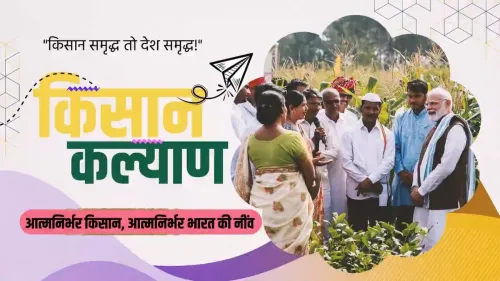
He cited Rs 4.3 lakh crore in cumulative support disbursed under PM-KISAN to farmer families (figure requires official verification).
Over 25 crore people are claimed to have exited poverty and 4 crore families to have received pucca homes under PMAY .
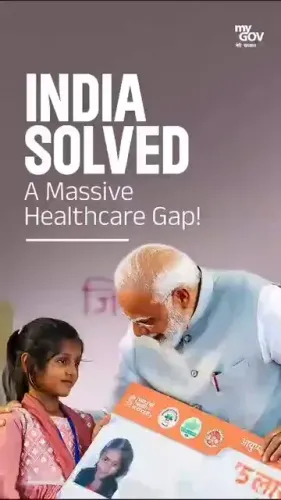
60 crore citizens are stated to be covered under Ayushman Bharat , the government-funded health assurance scheme.
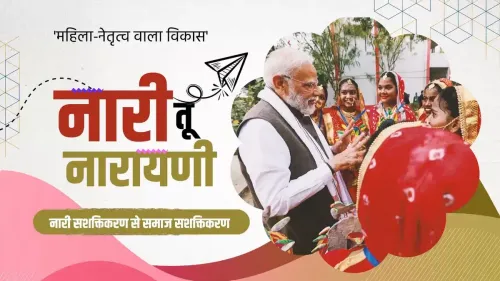
More than 3 crore women have reportedly become Lakhpati Didis through the DAY-NRLM self-help group framework.
Chouhan also highlighted UPI , Vande Bharat trains and record agricultural exports as markers of an Aatmanirbhar Bharat .
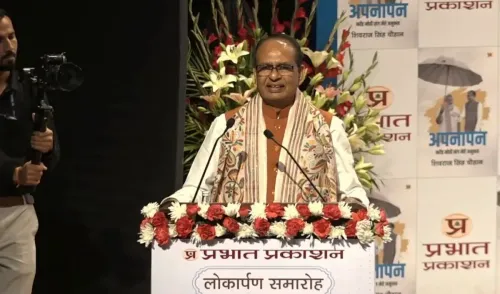
Union Agriculture Minister Shivraj Singh Chouhan on Tuesday, June 9, 2026, took to X to mark 12 years of the Narendra Modi-led government, calling the period an 'inspiring saga of service, dedication and nation-building' and citing flagship welfare milestones across health, housing, agriculture and women's empowerment.
Context
Chouhan's post, written in Hindi, frames the last 12 years as a journey of seva, sushashan aur garib kalyan (service, good governance and welfare of the poor). He credits Prime Minister Narendra Modi with dedicating 'every moment of his life to the country and its people,' and lists several large-scale welfare outcomes as evidence of a transforming India.
Among the figures cited: more than 25 crore people lifted out of poverty, over 4 crore families receiving pucca (permanent) homes, 60 crore citizens brought under the Ayushman Bharat health cover, and more than 3 crore women becoming Lakhpati Didis — women in self-help groups who now earn at least Rs 1 lakh annually. The government has not independently released a consolidated verification of all these figures as of this writing.
Policy Backdrop
PM-KISAN, the central scheme providing Rs 6,000 per year in direct cash transfers to landholding farmer families, was announced in the February 2019 interim budget and rolled out from December 2018. Chouhan states that cumulative support under the scheme has crossed Rs 4.3 lakh crore — a figure that would require official verification against the latest government releases.
Ayushman Bharat Pradhan Mantri Jan Arogya Yojana, launched in September 2018, offers up to Rs 5 lakh health coverage per family to economically weaker sections and is billed as the world's largest government-funded health assurance scheme. The Pradhan Mantri Awas Yojana (Gramin), approved in 2016, set a target of pucca housing for rural households. The Lakhpati Didi initiative operates under the Deendayal Antyodaya Yojana – National Rural Livelihoods Mission (DAY-NRLM) framework, with a sharper national push from 2023 onwards.
Chouhan also points to infrastructure and digital milestones — UPI adoption, the Vande Bharat train network, record agricultural exports and a strengthened social security architecture — as markers of what he calls an Aatmanirbhar Bharat (self-reliant India).
Stakeholders and Impact
The schemes cited directly touch three large constituencies: small and marginal farmers who receive PM-KISAN instalments, rural households covered under Ayushman Bharat and the housing mission, and women in self-help groups targeted by the Lakhpati Didi programme. Together these represent hundreds of millions of beneficiaries across India's rural heartland.
As Agriculture and Rural Development Minister, Chouhan sits at the intersection of all three policy streams. His post signals continued political ownership of welfare delivery metrics ahead of what analysts expect will be a budget cycle scrutinising revised outlays for PM-KISAN and Ayushman Bharat expansion. State-level rollout data on Lakhpati Didi targets will be a key indicator of implementation pace.
What's Next
Chouhan closes with a personal note of resolve, writing that working alongside Prime Minister Modi is 'a privilege and a constant source of inspiration,' and that his own commitment remains to contribute to the rashtra seva ke is mahayagya — 'this great endeavour of national service' — with full sincerity and dedication.
With the next Union Budget on the horizon, parliamentary debates are expected to test the government's welfare numbers against ground-level data. The scale of claims made in posts such as this one will likely feed into both political messaging and opposition scrutiny in the months ahead, making independent verification of beneficiary counts and disbursement totals increasingly consequential.
Point of View
Positioning the BJP's post-2014 policy architecture as a coherent, citizen-first narrative ahead of what promises to be a scrutiny-heavy budget season. By anchoring praise in specific scheme metrics — PM-KISAN disbursals, Ayushman coverage, Lakhpati Didi numbers — the Agriculture Minister shifts the frame from political loyalty to governance outcomes, a tactic that tends to resonate with rural and semi-urban audiences who are direct beneficiaries. The invocation of 'Viksit Bharat' (Developed India by 2047) situates these milestones within a longer arc, insulating the government from near-term criticism by emphasising trajectory over completion. As a four-term former Chief Minister now stewarding two of the government's most politically sensitive portfolios, Chouhan's endorsement carries weight with the BJP's core agrarian base and signals internal party cohesion at the 12-year mark.
NationPress
24 Oct 2026
Frequently Asked Questions
What is PM-KISAN and how much has been disbursed under it?
PM-KISAN is a central government scheme that provides Rs 6,000 per year in three equal instalments directly to landholding farmer families via direct benefit transfer. It was launched in December 2018 and announced formally in the February 2019 interim budget. Agriculture Minister Shivraj Singh Chouhan stated on June 9, 2026, that cumulative disbursals have crossed Rs 4.3 lakh crore , though this figure requires verification against the latest official government releases.
How many people have been covered under Ayushman Bharat?
Chouhan's post claims 60 crore citizens have been brought under the Ayushman Bharat Pradhan Mantri Jan Arogya Yojana , which offers up to Rs 5 lakh annual health coverage per family for economically weaker sections. The scheme was launched in September 2018 . The specific beneficiary figure cited in the post has not been independently verified as of this report.
What is the Lakhpati Didi scheme?
Lakhpati Didi is an initiative under the Deendayal Antyodaya Yojana – National Rural Livelihoods Mission (DAY-NRLM) that aims to enable women in self-help groups to earn a sustained annual income of at least Rs 1 lakh . The programme received a sharper national push from 2023 . Chouhan's post states that more than 3 crore women have become Lakhpati Didis.
Why is Shivraj Singh Chouhan posting about Modi's 12 years?
June 2026 marks 12 years since Narendra Modi first became Prime Minister in May 2014 . As a senior BJP leader, former four-term Chief Minister of Madhya Pradesh , and current Union Minister for Agriculture and Rural Development, Chouhan used the occasion to highlight welfare and governance milestones, reinforcing the party's development narrative.
What is Viksit Bharat and when is it targeted?
Viksit Bharat , or 'Developed India,' is the Modi government's stated goal of making India a fully developed nation by 2047 — the centenary of Indian independence. It serves as the overarching policy vision under which schemes such as PM-KISAN, Ayushman Bharat, PMAY and Lakhpati Didi are presented as foundational steps.