Shivraj hails 12 years of Modi govt's health reforms
Synopsis
Union Agriculture Minister Shivraj Singh Chouhan marked twelve years of the Modi government's health agenda on June 14, 2026, spotlighting Ayushman Bharat, Jan Aushadhi Kendras and e-Sanjeevani as instruments that have shifted healthcare from a privilege to a right for crores of Indian families.
Key Takeaways
Shivraj Singh Chouhan posted on June 14, 2026 under #12YearsOfSwasthBharat to mark a dozen years of Modi government health initiatives.
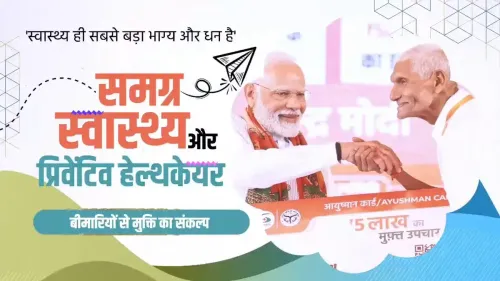
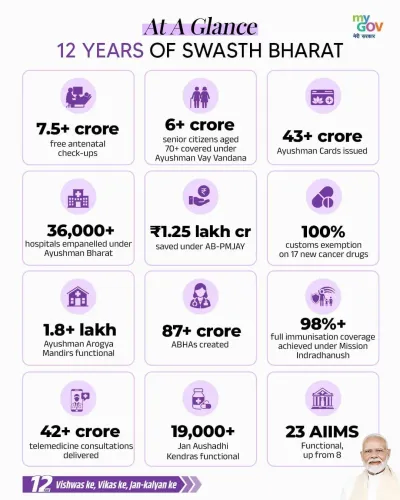
Ayushman Bharat PM-JAY , launched in September 2018 , provides up to Rs 5 lakh annual health cover to poor and vulnerable families, framed as financial security against catastrophic illness.
Jan Aushadhi Kendras under the Pradhan Mantri Bharatiya Janaushadhi Pariyojana sell generic medicines at 50–90 per cent lower prices than branded drugs. e-Sanjeevani , rolled out in 2020 , enables free telemedicine consultations for patients in remote areas, integrated with the Ayushman Bharat Digital Mission .
The post is part of a wider BJP campaign marking twelve years of the Modi government across welfare sectors, with health framed as economic empowerment.
The National Health Policy 2017 targeted raising public health expenditure to 2.5 per cent of GDP , providing the fiscal backdrop for these schemes.
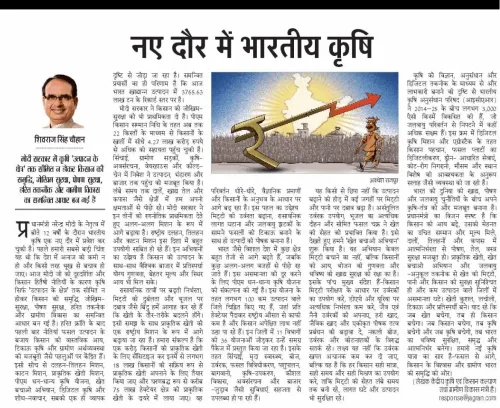
Union Agriculture Minister Shivraj Singh Chouhan on Sunday, June 14, 2026, took to X to mark twelve years of health-sector transformation under Prime Minister Narendra Modi, highlighting Ayushman Bharat, Jan Aushadhi Kendras, and the e-Sanjeevani telemedicine platform as pillars of a new era in accessible and affordable healthcare for ordinary Indians.
Context
Chouhan's post, tagged #12YearsOfSwasthBharat, uses a recurring rhetorical device — 'ek samay tha' (there was a time) — to contrast pre-2014 healthcare realities with the present. He argues that where a serious illness once meant 'a family's years of savings wiped out,' today Ayushman Bharat acts as 'a shield of financial security for crores of families.' The post is part of a coordinated BJP communication campaign marking a dozen years of the Modi government across multiple welfare sectors.
Chouhan, a senior BJP leader and former four-term Chief Minister of Madhya Pradesh, currently holds the portfolio of Union Minister of Agriculture and Farmers Welfare and Rural Development. His intervention on health underscores the party's broader effort to have its senior leadership amplify welfare milestones beyond their own ministerial domains.
Policy Backdrop
Ayushman Bharat Pradhan Mantri Jan Arogya Yojana (PM-JAY) was launched in September 2018, offering health cover of up to Rs 5 lakh per year to poor and vulnerable families — one of the largest government-funded health insurance programmes in the world by intended beneficiary count. The scheme targets low-income households and has been a central plank of the government's social-protection messaging.
The Pradhan Mantri Bharatiya Janaushadhi Pariyojana, relaunched and aggressively expanded from 2014 onwards, operates a network of Jan Aushadhi Kendras selling quality generic medicines at 50 to 90 per cent lower prices than branded equivalents, directly easing out-of-pocket expenditure for common citizens. The e-Sanjeevani telemedicine platform, rolled out in 2020 and subsequently integrated with the Ayushman Bharat Digital Mission, enables free video consultations between patients in remote and rural areas and doctors at government hospitals, addressing the long-standing urban-rural divide in specialist medical access.
These three schemes collectively represent the government's three-pronged approach to healthcare: financial risk protection, medicine affordability, and digital delivery of consultations. The National Health Policy 2017 had set a target of raising public health expenditure to 2.5 per cent of GDP, providing the fiscal framework within which these programmes operate.
Stakeholders and Impact
The primary beneficiaries of the initiatives Chouhan cites are low-income families, rural households, and residents of remote areas who historically lacked access to specialist care or affordable medicines. For such families, catastrophic health expenditure has been a leading driver of poverty, making insurance-linked and subsidy-linked interventions structurally significant beyond their headline numbers.
The post-COVID period accelerated the uptake of digital health tools such as e-Sanjeevani, normalising telemedicine across states and creating a foundation for further integration of health data under the Ayushman Bharat Digital Mission. Jan Aushadhi Kendras have similarly expanded their footprint in tier-two and tier-three towns, where branded-medicine pricing was previously the only option available.
What's Next
The #12YearsOfSwasthBharat campaign is likely to be sustained through the coming weeks with data releases and events from the Ministry of Health and Family Welfare on scheme utilisation, beneficiary enrolment, and Jan Aushadhi sales. Parliamentary scrutiny of health budget allocations in the next session is expected to revisit the GDP-expenditure target set by the National Health Policy 2017. Chouhan's amplification of health messaging signals that the BJP's welfare narrative ahead of future electoral cycles will continue to foreground universal health coverage as a defining achievement of the Modi government's twelve-year tenure.
Point of View
Generic medicines, telemedicine — represent distinct but complementary pillars of the government's healthcare architecture, and bundling them into a single message projects comprehensiveness rather than fragmentation. The 'ek samay tha' framing is a deliberate before-and-after construct that has become a signature of BJP welfare communication, designed to make abstract policy gains feel personally relatable to voters. With health expenditure targets and scheme utilisation data likely to come under parliamentary scrutiny, this messaging also pre-emptively stakes a positive narrative ahead of potential criticism.
NationPress
24 Sept 2026
Frequently Asked Questions
What is Ayushman Bharat and who benefits from it?
Ayushman Bharat Pradhan Mantri Jan Arogya Yojana (PM-JAY) is a government health insurance scheme launched in September 2018 that provides up to Rs 5 lakh per year in coverage to poor and vulnerable families, protecting them from catastrophic out-of-pocket medical expenses.
What are Jan Aushadhi Kendras and how do they reduce medicine costs?
Jan Aushadhi Kendras are government-backed pharmacies under the Pradhan Mantri Bharatiya Janaushadhi Pariyojana that sell quality generic medicines at 50 to 90 per cent lower prices than branded equivalents, making essential drugs affordable for common citizens.
What is e-Sanjeevani and how does it help rural patients?
e-Sanjeevani is India's national telemedicine platform, launched in 2020, that allows patients in remote and rural areas to have free video consultations with doctors at government hospitals, bridging the urban-rural gap in specialist medical access.
Why is Shivraj Singh Chouhan, an Agriculture Minister, posting about health?
As a senior BJP leader and former four-term Chief Minister of Madhya Pradesh, Chouhan is participating in a coordinated party campaign — #12YearsOfSwasthBharat — where senior leaders amplify welfare milestones of the Modi government across portfolios.
What does #12YearsOfSwasthBharat mean?
#12YearsOfSwasthBharat is a BJP social media campaign hashtag marking twelve years of the Modi government's health-sector reforms, with 'Swasth Bharat' meaning 'Healthy India' in Hindi.