Shivraj highlights 12 years of Modi govt farm reforms

Synopsis
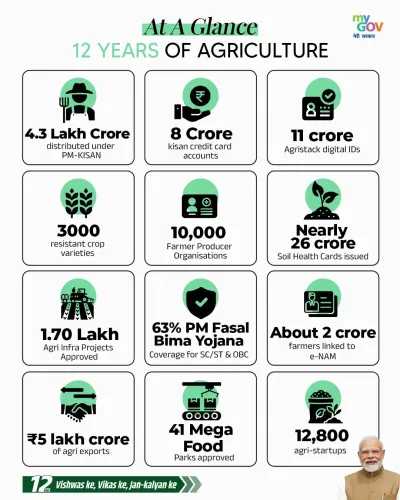
Union Agriculture Minister Shivraj Singh Chouhan has outlined a sweeping 12-year record of the Modi government's farm policies on X, citing PM-KISAN transfers exceeding ₹4.3 lakh crore, MSP procurement above ₹26 lakh crore, 8 crore Kisan Credit Cards, and a claimed 71% rise in foodgrain production.
Key Takeaways
Union Agriculture Minister Shivraj Singh Chouhan posted a comprehensive review of 12 years of Modi government farm policy on June 11, 2026 .
The minister stated more than ₹4.3 lakh crore has been transferred directly to farmers' accounts under PM-KISAN .
MSP-based procurement has reportedly crossed ₹26 lakh crore over the same period.
8 crore Kisan Credit Cards and 26 crore Soil Health Cards have been issued, according to the minister.
Chouhan cited a 71% increase in foodgrain production as a cumulative outcome; this figure is as stated by the minister.
The post highlights newer initiatives including Shree Anna (millet) promotion, climate-resilient crop varieties, and AI-based agricultural services reaching villages.
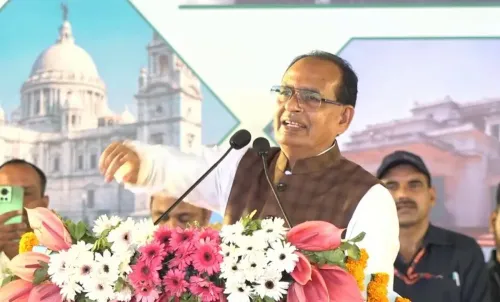
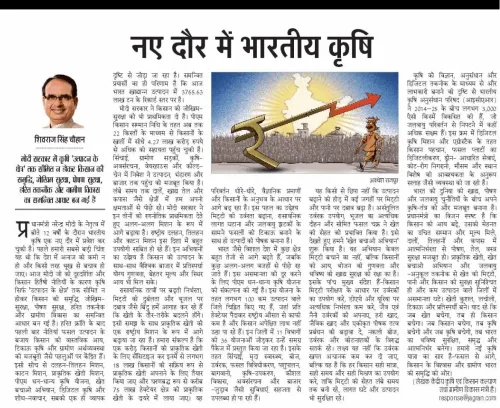
Union Agriculture Minister Shivraj Singh Chouhan on Thursday, June 11, 2026, posted a detailed account on X crediting Prime Minister Narendra Modi's government with transforming Indian agriculture over the past 12 years, citing sweeping gains in farmer welfare, market access, and foodgrain output.
Context
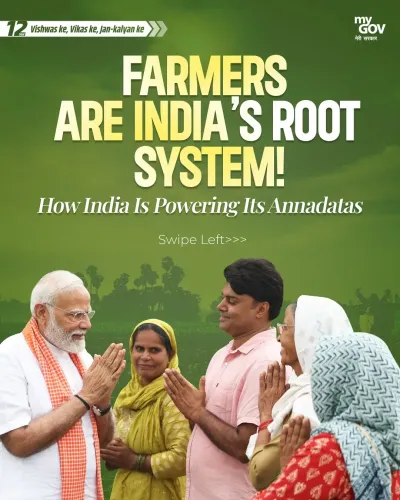
Chouhan's post, tagged #12YearsOfKisanSamriddhi (12 Years of Farmer Prosperity), frames the period since May 2014 as one of structural change in Indian farming. Translating his remarks: 'Beete 12 varshon mein krishi kshetra mein abhutpurva parivartan hue hain' — 'Unprecedented transformation has occurred in the agriculture sector over the past 12 years.' He argues that farmer welfare was placed at the centre of policymaking, pulling farming 'beyond traditional limits' toward a modern, developed and self-reliant footing.
The minister listed six flagship interventions and three thematic advances, presenting them as collective evidence of the government's agricultural record ahead of what observers expect to be a period of heightened political stocktaking around the ruling party's decade-plus in power.
Policy Backdrop
The schemes Chouhan cited span the full tenure of the Modi government. The Soil Health Card scheme was launched nationwide in February 2015, issuing nutrient-status cards to help farmers calibrate fertiliser use. e-NAM — the Electronic National Agriculture Market — was rolled out in April 2016 to integrate mandis across states and improve price discovery for farmers. Pradhan Mantri Fasal Bima Yojana, a revamped crop-insurance framework, was also introduced in 2016 to cushion cultivators against losses from natural calamities.
PM-KISAN, launched in February 2019, provides ₹6,000 annual direct income support per landholding farmer family through direct benefit transfer. Chouhan stated that more than ₹4.3 lakh crore has been credited directly to farmers' accounts through the scheme over 12 years. He further stated that procurement at Minimum Support Price (MSP) has crossed ₹26 lakh crore, that 8 crore Kisan Credit Cards have been issued, and that 26 crore Soil Health Cards have been distributed. Note: These figures are as stated by the minister; independent verification of the exact totals is pending.
Beyond these schemes, Chouhan highlighted three additional dimensions: the promotion of Shree Anna (millets) to global recognition, the development of climate-resilient crop varieties, and the extension of AI-based agricultural advisory services to villages.
Stakeholders and Impact
The primary beneficiaries of the programmes cited are small and marginal farmers, who constitute the majority of India's agricultural households. Direct benefit transfers under PM-KISAN and subsidised credit through Kisan Credit Cards are specifically designed to reduce their dependence on informal moneylenders and provide income certainty.
Chouhan quoted the minister's own words to capture the political messaging: 'Aaj kisan ke chehre par muskaan hai, kyonki uski mehnat ko samman mila hai' — 'Today there is a smile on the farmer's face, because his hard work has been honoured.' He added that the government has stood with farmers 'from seed to market' — beej se bazaar tak — a phrase that encapsulates the supply-chain ambition of the policy suite.
The minister also cited a 71 per cent increase in foodgrain production as a cumulative outcome of these efforts, positioning India's output growth as a marker of food security and agricultural self-sufficiency under the Atmanirbhar Bharat framework. This figure is as stated by the minister and has not been independently verified.
What's Next
Parliamentary scrutiny of the Agriculture Ministry's demands for grants is expected to test these claims in a formal legislative setting, where opposition members are likely to press for granular data on scheme coverage and actual farmer income gains. The expansion of AI-based advisory services to more states is also being watched as a marker of whether digital agriculture initiatives move beyond pilots to systemic scale.
The post signals that the BJP intends to make the 12-year agricultural record a central plank of its political communication, with Chouhan — a former four-term Chief Minister of Madhya Pradesh and one of the party's most prominent farmer-facing voices — serving as the primary narrator of that story.
Point of View
Timed to anchor the BJP's narrative around a symbolic 12-year milestone in government. By aggregating scheme-level data — direct transfers, MSP procurement, credit cards — into a single post, the Agriculture Ministry is attempting to shift the public conversation from farm distress narratives to a record of measurable delivery. The invocation of 'seed to market' continuity and AI-led modernisation signals that the party is also trying to project forward-looking credibility, not just retrospective achievement. Whether opposition and farmer groups accept the framing will depend on scrutiny of the underlying data in parliamentary and public forums.
NationPress
22 Sept 2026
Frequently Asked Questions
What is PM-KISAN and how much has been disbursed under it?
PM-KISAN is a central government scheme that provides ₹6,000 per year in direct income support to landholding farmer families. Agriculture Minister Shivraj Singh Chouhan stated on June 11, 2026, that more than ₹4.3 lakh crore has been transferred directly to farmers' accounts since the scheme's launch in February 2019.
What did Shivraj Singh Chouhan post about agriculture on June 11, 2026?
Chouhan posted a detailed review on X crediting PM Modi's government with unprecedented agricultural transformation over 12 years, listing achievements under PM-KISAN, MSP procurement, Kisan Credit Cards, Soil Health Cards, e-NAM, and Pradhan Mantri Fasal Bima Yojana, and citing a 71% rise in foodgrain production.
What is e-NAM and when was it launched?
e-NAM, or the Electronic National Agriculture Market, is a digital trading portal that integrates agricultural mandis across states to enable transparent price discovery for farmers. It was rolled out in April 2016 by the Modi government.
What is Shree Anna and why is it significant?
Shree Anna is the government's term for millets, a group of nutritious, climate-resilient crops. The Modi government championed millets globally, coinciding with India's push during its G20 presidency, leading to international recognition of their nutritional and environmental value.
Has foodgrain production really increased by 71% under the Modi government?
Agriculture Minister Shivraj Singh Chouhan has claimed a 71% increase in foodgrain production over 12 years of the Modi government. This figure is as stated by the minister in his June 11, 2026 post; independent verification of the exact percentage is pending.