Annapurna Circuit trekking rebounds as 150-200 visitors arrive daily post-floods

Synopsis
Nepal's Annapurna Circuit is back — barely. After floods crashed daily trekker arrivals to single digits, Dharapani is now seeing 150–200 visitors a day. But with tourism earnings already down 2.2% before the August glacier disaster, and peak-season benchmarks of 400–500 trekkers a day still a long way off, the recovery is as fragile as the mountain trails themselves.
Key Takeaways
Daily trekker arrivals at Dharapani on the Annapurna Circuit have recovered to 150–200 per day , up from a low of just one or two at the peak of the flood disruption.
Trail-clearing operations have reopened the critical Thorong La Pass at 5,416 metres , restoring the circuit's key high-altitude crossing.
The 26 August 2026 glacier collapse triggered flash floods across districts along the Nepal-Tibet border , compounding damage from earlier monsoon floods and landslides.
Nepal's tourism earnings fell 2.2% to Rs 74.18 billion in the first 10 months of fiscal year 2025-26 , even before the August disaster, according to the Nepal Rastra Bank .
Peak-season footfall on the circuit typically reaches 400–500 trekkers per day ; current arrivals remain well below that benchmark.
The World Bank flagged tourism as one of four primary channels through which the August floods are expected to impact Nepal's broader economy.
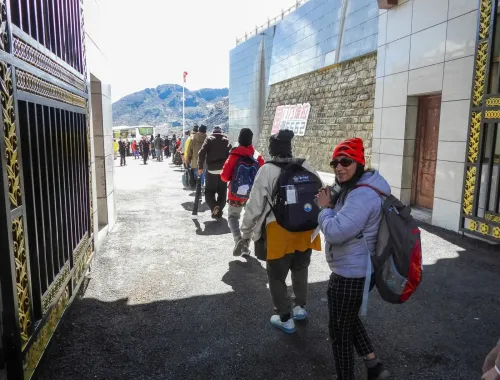
Nepal's iconic Annapurna Circuit is recording a steady recovery in trekker footfall, with 150 to 200 visitors now arriving daily at the tourist check and information centre in Dharapani, after weeks of near-total disruption caused by floods, landslides, and heavy rain and snowfall. The rebound, reported on Monday, 12 October 2026, signals cautious optimism for a trekking corridor that had seen arrivals crash to just one or two visitors per day at the height of the crisis.
How the Recovery Unfolded
Trail-clearing operations along the Annapurna Circuit reopened access across the route, including the critical Thorong La Pass at 5,416 metres — the highest point on the circuit and a non-negotiable crossing for most trekkers. The reopening restored connectivity through the Manang region, which had been effectively cut off when floods washed away road sections and blocked trekking paths.
Dharapani, situated at roughly 1,900 metres in northern Nepal, serves as a key permit checkpoint for both the Annapurna Circuit and the adjacent Manaslu Circuit. Its daily arrival count is widely used as a barometer for broader trekking activity across the region. The surge from single digits back to the 150–200 range represents a meaningful directional shift, even as it remains well below the 400 to 500 trekkers per day that the area attracts during peak season.
The Scale of Disruption
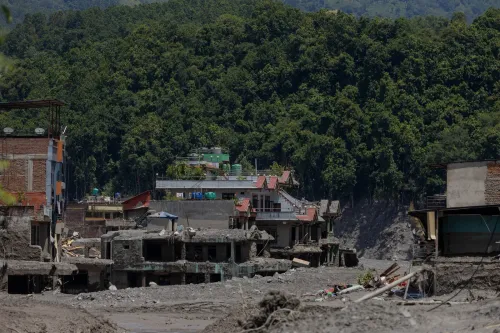
The recovery follows one of the most damaging weather periods in recent memory for Nepal's highland tourism corridor. Floods and landslides stranded hundreds of visitors in Manang, forcing many trekkers to abandon or postpone journeys mid-route. Sections of roads were washed away, cutting off transportation links and delaying both rescue and restoration efforts, according to on-ground reports citing authorities.
The damage was compounded by the 26 August glacier collapse disaster, which triggered catastrophic flash floods across multiple districts, largely along the Nepal-Tibet border. The World Bank's 'Nepal Development Update (October 2026)' noted that the August flood is expected to affect Nepal's economy through four primary channels: energy, transportation, trade, and tourism.
The Economic Toll on Nepal's Tourism Sector
Tourism is a cornerstone of Nepal's mountain economy, with guides, transport operators, accommodation providers, and hospitality businesses all dependent on trekker volumes. Even before the August disaster, the sector was under pressure. The Nepal Rastra Bank (NRB) reported that tourism earnings stood at Rs 74.18 billion during the first 10 months of fiscal year 2025-26 (July 17, 2025, to May 14, 2026), down from Rs 75.83 billion in the same period of the previous year — a decline of 2.2 percent.
Meanwhile, travel-related expenditure fell 3.4 percent to Rs 177.87 billion from Rs 184.22 billion a year earlier. Notably, spending continued to far exceed tourism income, perpetuating a deficit in Nepal's service account, the NRB noted. The back-to-back impact of pre-existing revenue erosion and the August floods represents a compounded stress on communities whose livelihoods are almost entirely tied to the trekking calendar.
What Tourism Entrepreneurs Are Saying
Tourism entrepreneurs quoted in reports from Kathmandu expressed optimism that improving trail conditions and restored transportation links will attract more visitors during the peak trekking season ahead. Local businesses are banking on a strong October–November window — historically the busiest period on the circuit — to offset losses accumulated during the disruption.
Officials and industry stakeholders share the hope that the Annapurna region can rebuild visitor numbers toward its peak-season benchmarks as weather conditions stabilise and road access improves further.
About the Annapurna Circuit
The Annapurna Circuit is among Nepal's most celebrated long-distance trekking routes, winding from Besisahar in Lamjung District through the high-altitude landscapes of Manang, cresting the Thorong La Pass before descending into Mustang. Renowned for its dramatic Himalayan scenery, diverse ecosystems, and rich cultural heritage, the circuit draws thousands of adventure travellers from around the world each year, cementing its status as one of the world's premier long-distance treks.
With the trail now reopening and early arrivals resuming, the coming weeks will be crucial for mountain communities hoping to recover the economic ground lost to this season's natural disasters.
Point of View
But they mask a deeper structural fragility. Nepal's tourism service account was already in deficit before the August disaster, with earnings declining even during a globally buoyant travel cycle — a warning sign that the sector's recovery curve was already flattening. The Annapurna Circuit's dependence on a narrow October–November peak window means a single disruptive season can erase years of community-level income accumulation. What is missing from the optimistic framing is a policy conversation about climate-resilient trail infrastructure and insurance mechanisms for mountain communities — the glacier that collapsed in August will not be the last.
NationPress
12 Oct 2026
Frequently Asked Questions
How many trekkers are arriving daily on the Annapurna Circuit after the floods?
Around 150 to 200 trekkers are now arriving daily at the Dharapani tourist check and information centre on the Annapurna Circuit, according to reports from Kathmandu. This is a significant recovery from the disruption period, when arrivals had fallen to just one or two visitors per day.
What caused the disruption to trekking on the Annapurna Circuit?
Severe floods, landslides, and heavy rain and snowfall blocked roads and trekking trails across the Manang region, stranding hundreds of visitors. The situation was worsened by a glacier collapse on 26 August 2026 that triggered catastrophic flash floods along the Nepal-Tibet border.
Is the Thorong La Pass open for trekkers again?
Yes, trail-clearing operations have reopened the Thorong La Pass at 5,416 metres, which is the highest and most critical crossing on the Annapurna Circuit. Its reopening was a key factor in the rebound of daily trekker arrivals at Dharapani.
How has Nepal's tourism economy been affected by the floods?
Nepal's tourism earnings had already declined 2.2% to Rs 74.18 billion in the first 10 months of fiscal year 2025-26 before the August disaster, according to the Nepal Rastra Bank. The World Bank's October 2026 Nepal Development Update identified tourism as one of four primary channels through which the August floods are expected to affect the country's economy.
When is peak trekking season on the Annapurna Circuit?
The peak trekking season on the Annapurna Circuit runs through October and November, when daily visitor counts at key checkpoints can reach 400 to 500 trekkers. Current arrivals of 150–200 per day remain well below that benchmark, but local businesses and officials are hopeful the season will bring a fuller recovery.