Khalistani groups exploit Alberta referendum to push Khalistan agenda in Canada
Synopsis
As Alberta heads to a historic independence referendum on October 19, Khalistani outfit Sikhs for Justice has scheduled a parallel 'Punjab referendum' in Edmonton a day earlier — and plastered billboards near Airdrie to blur the two. The report warns this is not coincidence but strategy: a four-decade-old foreign separatist campaign borrowing legitimacy from Canada's most serious unity vote in a generation.
Key Takeaways
Sikhs for Justice , a US-based Khalistani terror-designated group, is promoting a 'Punjab independence referendum' in Edmonton on 18 October — one day before Alberta's own independence vote on 19 October .
Billboards near Airdrie , Alberta, are advertising the parallel Punjab referendum, drawing attention to the deliberate scheduling overlap.
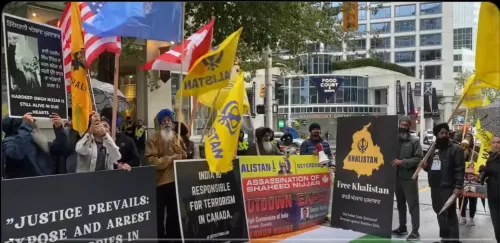
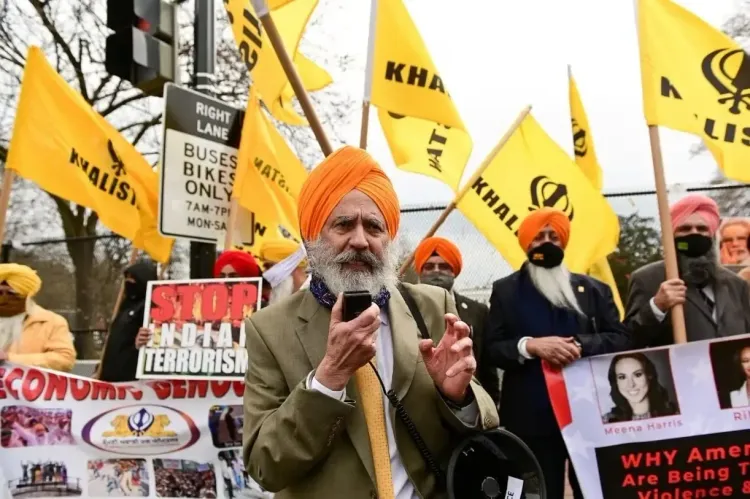
The group framed a Khalistan convoy in Calgary as a vehicle for both causes and reportedly praised Canada for allowing Albertan 'self-determination.' An Alberta independence speaker reportedly addressed a Khalistan rally, stating the event inspired his own cause — signalling growing cross-movement linkages.
A Khalsa Vox report warns the tactic poses a sovereignty risk to Canada , urging enforcement of terror designations and denial of platforms to groups glorifying the Air India bombing perpetrators.
The report distinguishes between protecting Sikh religious and political rights and legitimising a foreign separatist agenda on Canadian soil.
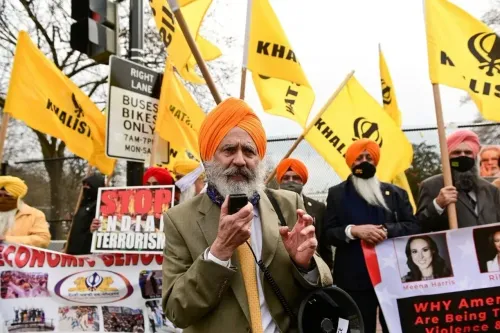
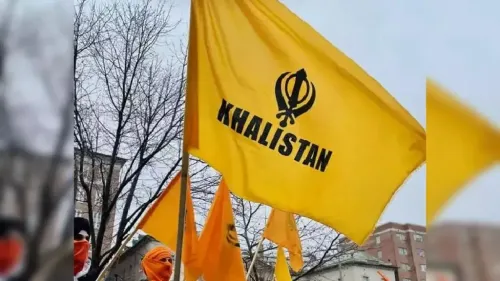
A report by Khalsa Vox has warned that Khalistani extremist groups are seeking to exploit Alberta's October 19 independence referendum to advance a foreign separatist agenda inside Canada, raising serious questions about the country's ability to protect its own sovereignty while accommodating diaspora political activity.
The Billboard Strategy Near Airdrie
As Alberta prepares for a 19 October vote on whether to begin the constitutional process for a binding independence referendum, billboards near Airdrie have been promoting an 'Alberta Referendum on Independence of Punjab' — reportedly planned in Edmonton a day earlier, on 18 October. The deliberate proximity of the two events, analysts note, is not coincidental. The confusion, the report argues, is the tactic.
Sikhs for Justice: The Group Behind the Push
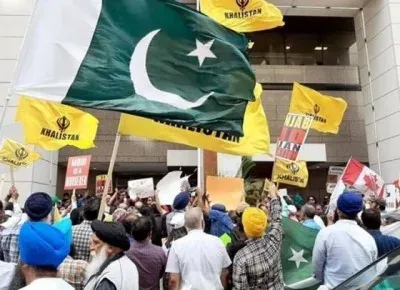
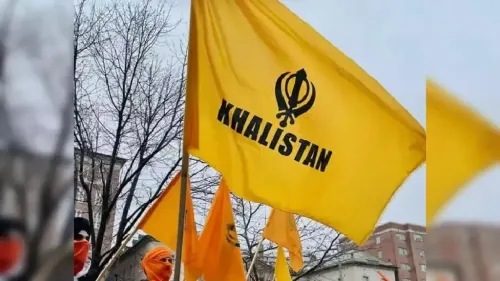
The report identifies Sikhs for Justice — a US-based Khalistani outfit designated as a terror group — as the entity behind the billboards. The organisation has publicly framed a Khalistan convoy in Calgary as a vehicle for both the Punjab referendum and Alberta independence. It has also reportedly praised the Canadian government for allowing Albertans to 'exercise their right to self-determination', drawing a deliberate rhetorical parallel between Alberta's constitutional process and its own push for Khalistan.
According to the report, an Alberta independence speaker reportedly addressed a Khalistan rally, stating that the event inspired his own cause — underscoring what the report describes as a calculated conflation of two distinct political movements.
Why Canada's Sovereignty Is at Stake
The report makes a pointed argument: the votes staged by Sikhs for Justice are unofficial, non-binding, and of no legal relevance to the Government of India. But they are, the report contends, deeply relevant to Canada. 'A movement that has spent four decades using Canadian streets, gurdwaras, and ballot-theatre to prosecute a foreign territorial claim is now hitching that claim to the most serious unity vote this federation has faced in a generation,' the report states.
It further warns that 'separatism is contagious precisely because it is procedural. Once you grant that any motivated diaspora may stage a referendum on someone else's map, you have conceded the premise Alberta's own hardliners need: that borders are a campaign, not a settlement.'
Wider Security Implications
Beyond the constitutional dimension, the report flags broader security consequences. It argues that fringe secessionists pose a danger not only to the nations they target — in this case, India — but also to their host countries. The risks cited include importing a doctrine that treats the nation as provisional, laundering foreign intelligence rivalries into domestic law enforcement, and intimidating co-ethnic dissenters — described as 'a sovereignty problem in any country that claims a monopoly on coercion.'
The report recommends a clear policy response: enforcing existing terror designations, denying platforms to groups that glorify the perpetrators of the Air India bombing, and ensuring that a foreign referendum does not share the news cycle with a constitutional vote on Canadian Confederation.
What the Report Recommends
The report draws a sharp distinction between legitimate protections — for Sikh religious life, free speech, and political participation — and the legitimisation of a separatist agenda. It asserts that Canada can uphold the former without conceding the latter. The Alberta vote on 19 October is, it emphasises, a purely Canadian constitutional argument conducted under Canadian law among Canadian voters. A parallel Punjab referendum staged in Edmonton the day before is, in its assessment, an attempt to borrow legitimacy for 'a cause that has already killed hundreds of Canadians.' How Ottawa responds in the coming days will signal how seriously it takes that distinction.
Point of View
And Canada has repeatedly taught that lesson by inaction. The deeper danger here is not India-facing but Canada-facing: a movement that normalises diaspora referendums on foreign borders provides the ideological scaffolding that domestic hardliners need to argue that Alberta's own separation is merely another campaign. Ottawa's failure to enforce terror designations consistently has left it with a sovereignty problem it cannot now resolve without political cost — and the clock is running.
NationPress
10 Oct 2026
Frequently Asked Questions
What is the 'Alberta Referendum on Independence of Punjab' planned in Edmonton?
It is an unofficial, non-binding vote staged by the US-based Khalistani outfit Sikhs for Justice in Edmonton on 18 October 2026 — one day before Alberta's own constitutional independence referendum. The event has no legal standing and is not recognised by the Government of India or Canadian authorities.
Who is behind the Khalistan referendum in Edmonton and what is their designation?
Sikhs for Justice, a US-based organisation, is behind the Edmonton Punjab referendum. The group has been designated a terror organisation and has promoted the event alongside a Khalistan convoy in Calgary, framing both Alberta independence and Khalistan as parallel self-determination causes.
Why does the report say this poses a danger to Canada's sovereignty?
The report argues that by staging a foreign-territory referendum alongside a genuine Canadian constitutional vote, the group borrows democratic legitimacy for a separatist agenda. It warns this 'imports a doctrine that the nation is provisional' and provides ideological cover for domestic hardliners within Canada itself.
What does the report recommend Canada do in response?
The report calls for enforcing existing terror designations against groups like Sikhs for Justice, denying them public platforms — particularly those that glorify Air India bombing perpetrators — and ensuring the Punjab referendum does not share the news cycle with Alberta's constitutional vote.
When is Alberta's independence referendum and what does it decide?
Alberta's referendum is scheduled for 19 October 2026. It asks voters whether the province should remain in Canada or begin the legal process toward a binding separation vote. It is a constitutional matter conducted under Canadian law and is entirely separate from any Khalistan-related events.