Rajnath Singh attends Badakhana with troops at Sukna
Synopsis
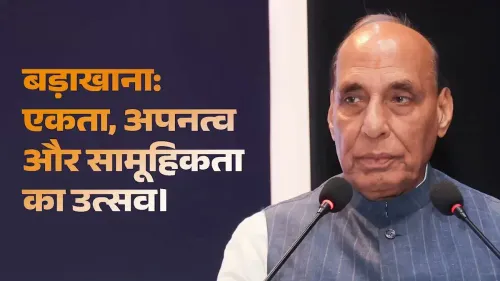
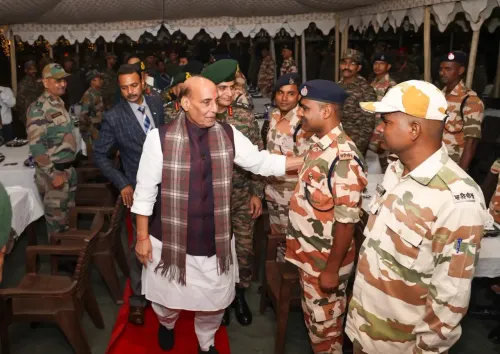
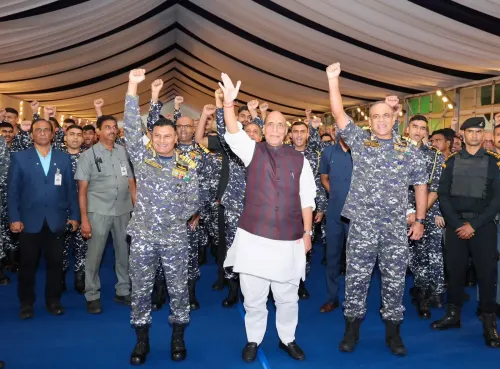
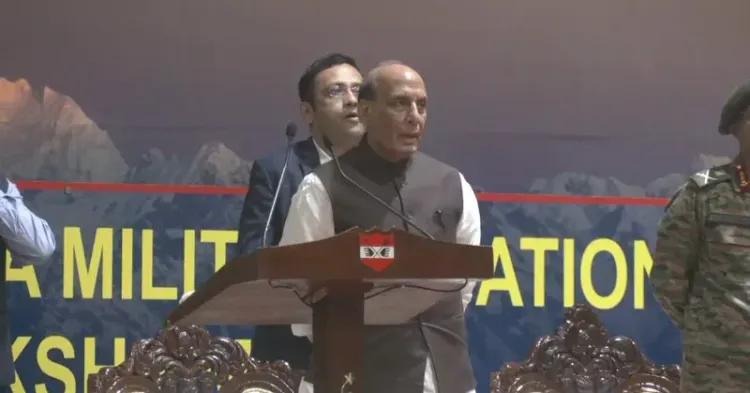
Union Defence Minister Rajnath Singh attended a Badakhana — the Indian Army's traditional regimental feast — with soldiers at Sukna military station in Darjeeling on 7 November 2026, underscoring government attention to troops guarding the strategically vital Siliguri Corridor.
Key Takeaways
Rajnath Singh attended a Badakhana at Sukna military station , Darjeeling, on 7 November 2026 .
A Badakhana is a traditional Indian Army communal feast symbolising regimental solidarity between officers and jawans.
Sukna is a key garrison near the Siliguri Corridor , the narrow land link connecting mainland India to the northeast.
The station falls under the Indian Army's Eastern Command , which oversees India's borders with China, Nepal and Bhutan .
Defence ministers visiting forward military stations is a standard practice for morale and operational oversight in sensitive sectors.
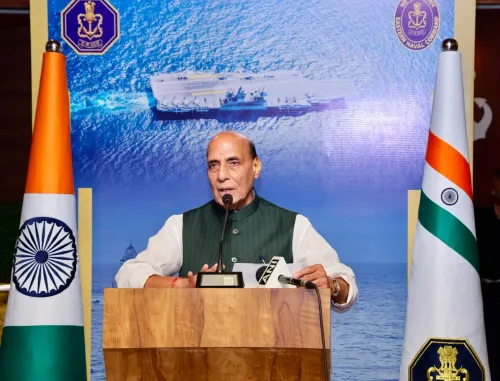
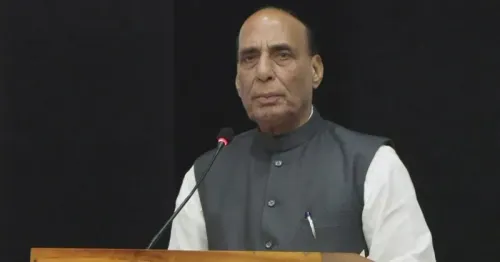
Amid the misty foothills of Darjeeling, Union Defence Minister Rajnath Singh sat down with Indian Army soldiers at a Badakhana — the military's time-honoured communal feast — at the Sukna military station on Saturday, 7 November 2026, signalling the government's attention to the men guarding one of India's most strategically sensitive corridors.
What a Badakhana means to the Indian Army
A Badakhana is far more than a meal. It is a regimental institution — a ceremonial banquet at which officers and jawans share the same table, often timed to festivals or unit anniversaries, designed explicitly to build cohesion and honour the bonds of service. For a Defence Minister to participate is a pointed gesture of solidarity: not a podium address, but a seat at the same table as the soldier.
Sukna, the garrison town on the edge of the Siliguri Corridor, hosts formations under the Indian Army's Eastern Command. Its location — close to the trijunction of Nepal, Bhutan and China — gives any ministerial visit here a weight that goes beyond ceremony.
Sukna and the Siliguri Corridor's strategic weight
The Siliguri Corridor — sometimes called the 'Chicken's Neck' — is the narrow strip of land, roughly 22 kilometres wide at its slimmest point, connecting mainland India to its northeastern states. Darjeeling district, where Sukna sits, flanks this corridor on its northern edge, with China's Chumbi Valley within striking geography to the northeast and Nepal to the west.
Eastern Command, headquartered in Kolkata, bears operational responsibility for this entire arc. Defence ministers routinely tour formations in the eastern sector, and each visit to a forward station like Sukna is read by both troops and observers as a signal of institutional attention to readiness along India's most complex border theatre.
A minister among soldiers
Rajnath Singh has made troop-level interactions a consistent thread of his tenure at South Block. Visiting military stations — particularly in forward areas — rather than restricting contact to headquarters briefings has become a recognisable feature of his style. A Badakhana at Sukna fits that pattern precisely: direct, personal, and anchored in the institution's own traditions rather than imposed from outside.
For the soldiers stationed here, far from home in terrain that shifts from tropical plains to high ridgelines, the presence of the country's Defence Minister at their feast carries a message no press release could deliver as efficiently.
The hills above Siliguri hold their watch. The minister broke bread with the men who keep it.
Point of View
Whose tenure has been marked by regular forward-area visits, this reinforces a pattern of direct soldier contact that serves both morale and political messaging. The absence of any announced policy statement keeps the focus squarely on the human dimension of defence stewardship.
NationPress
7 Nov 2026
Frequently Asked Questions
What is a Badakhana in the Indian Army?
A Badakhana is a traditional Indian Army regimental feast or communal banquet where officers and soldiers dine together, typically held during festivals or unit celebrations to build cohesion and honour the bonds of military service.
Where is Sukna military station located?
Sukna military station is located in Darjeeling district, West Bengal , near the Siliguri Corridor — the narrow land strip connecting mainland India to the northeastern states — close to the borders of Nepal, Bhutan and China.
Why did Rajnath Singh visit Sukna?
Union Defence Minister Rajnath Singh attended a Badakhana regimental feast with Indian Army troops at Sukna on 7 November 2026, as part of his practice of visiting military stations and interacting directly with soldiers, particularly in strategically sensitive sectors.
Which Army command is responsible for Sukna and Darjeeling?
Sukna falls under the Indian Army's Eastern Command , headquartered in Kolkata, which is responsible for India's eastern and northeastern sectors including borders with China, Nepal and Bhutan.
What is the Siliguri Corridor and why is it important?
The Siliguri Corridor, often called the 'Chicken's Neck', is a narrow strip of land — roughly 22 kilometres wide at its narrowest — that is the only land link between mainland India and its eight northeastern states, making it one of the country's most strategically critical geographic points.