Goyal hails UP's shift from 'One District, One Mafia' to ODOP
Synopsis
Commerce Minister Piyush Goyal invoked the sharp contrast between UP's past 'One District, One Mafia' image and the current ODOP scheme, framing the state's shift toward district level manufacturing as a defining transformation under the Yogi government.
Key Takeaways
Union Commerce Minister Piyush Goyal posted on 7 November 2026 praising Uttar Pradesh's reinvention through the ODOP scheme.
His post contrasts the old phrase 'One District, One Mafia' with the current 'One District, One Product' identity, coining UP as 'Uttam Pradesh' .
The One District One Product (ODOP) scheme was launched by the UP government in January 2018 under CM Yogi Adityanath.
The scheme identifies one signature product per district to boost local manufacturing, branding, and exports for MSME exporters and artisans .
The post aligns with the central government's Atmanirbhar Bharat decentralised manufacturing push, with UP serving as a key model state.
Export figures from ODOP districts and potential national expansion of the scheme remain the key metrics to watch.
From a phrase that once evoked lawlessness to a brand that now signals craftsmanship — Union Commerce and Industry Minister Piyush Goyal has captured Uttar Pradesh's transformation in a single, striking contrast, posting on X on Saturday, 7 November 2026 that the state has reinvented itself through the power of district level manufacturing.
Goyal's post reads: 'One District, One Mafia' se Uttar Pradesh 'Uttam Pradesh' bankar, 'One District, One Product' ki pehchaan bana raha hai — meaning, 'Moving away from "One District, One Mafia," Uttar Pradesh is becoming "Uttam Pradesh" [Best Pradesh] by building an identity around One District, One Product.'
What the ODOP scheme actually does for UP's districts
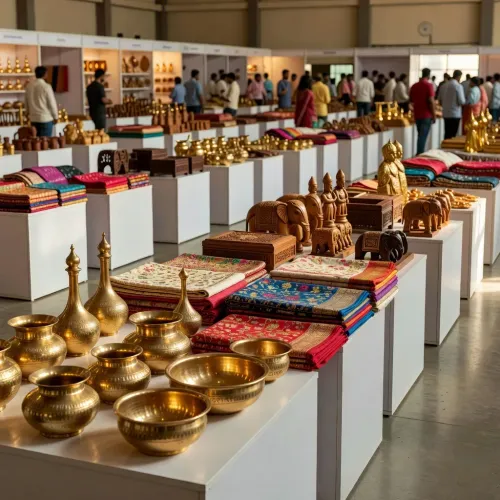
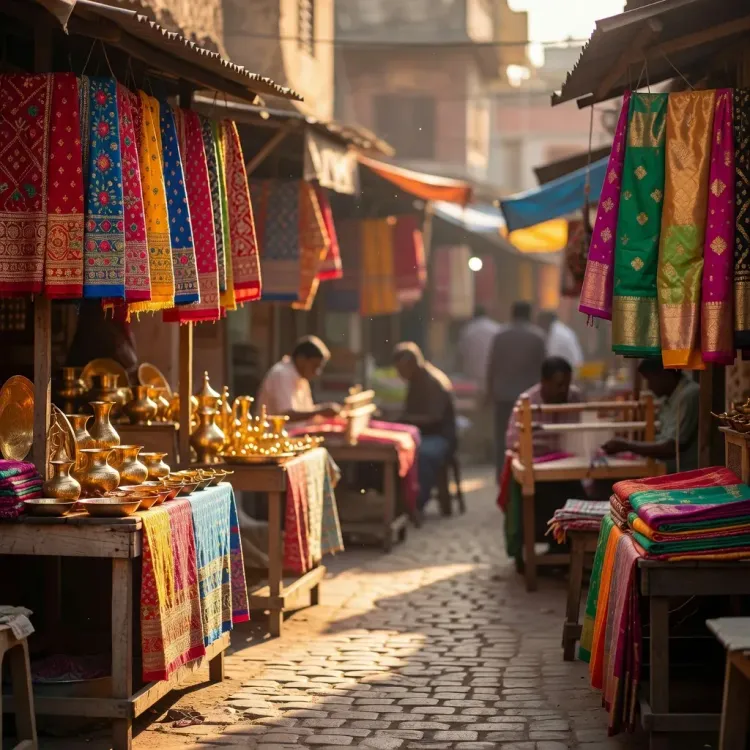
The One District One Product (ODOP) scheme was formally launched by the Uttar Pradesh government in January 2018 under Chief Minister Yogi Adityanath. Its design is straightforward but ambitious: identify one signature product per district — be it Lucknow's chikankari embroidery, Agra's leather footwear, Varanasi's Banarasi silk, or Moradabad's brassware — and build manufacturing, branding, and export infrastructure around it.
The scheme targets MSME exporters and district artisans, connecting traditional craft clusters to national and global supply chains. Each district, in effect, gets a commercial identity — a local economy with a name and a market.
The wordplay behind the politics
Goyal's post is built on a deliberate rhetorical arc. The phrase 'One District, One Mafia' is a sharp callback to the political narrative that depicted earlier UP administrations as tolerating entrenched organised crime networks tied to specific territories. The pivot to 'One District, One Product' — and the coinage Uttam Pradesh (literally 'best state') — frames the Yogi government's tenure as an economic and law and order reset in a single breath.
The post aligns squarely with the central government's broader Atmanirbhar Bharat manufacturing agenda, which pushes for decentralised production hubs across states rather than concentration in legacy industrial corridors. UP, as India's most populous state, is the flagship test case for whether that vision can scale.
What export watchers will track next
The real measure of ODOP's success lies in the numbers still being written. Analysts tracking the scheme are watching state level export figures from ODOP districts closely, as well as any central government announcements that might expand the model nationally — turning a UP originated playbook into a pan India template.
Goyal, as Leader of the House in the Rajya Sabha and the minister steering India's trade portfolio, is positioned to push precisely that kind of federal replication. His post is as much a signal to other state governments as it is a salute to UP.
India's most populous state is no longer content being a cautionary tale. It wants to be the blueprint.
Point of View
This narrative has real staying power; if the numbers lag, the wordplay risks looking like a slogan without a scorecard.
NationPress
8 Nov 2026
Frequently Asked Questions
What is the One District One Product scheme in Uttar Pradesh?
The One District One Product (ODOP) scheme was launched by the Uttar Pradesh government in January 2018 to identify one unique product per district — such as Lucknow's chikankari or Varanasi's Banarasi silk — and build manufacturing, branding, and export support around it, targeting MSME exporters and local artisans.
What did Piyush Goyal say about Uttar Pradesh?
On 7 November 2026, Union Commerce Minister Piyush Goyal posted that Uttar Pradesh has transformed from the old 'One District, One Mafia' image to become 'Uttam Pradesh' (Best Pradesh) by building an identity around the One District, One Product scheme.
What does 'Uttam Pradesh' mean?
'Uttam Pradesh' is a wordplay on 'Uttar Pradesh' using the Hindi word 'uttam,' meaning 'best' or 'excellent.' It is used by BJP leaders to signal the state's development driven transformation under Chief Minister Yogi Adityanath.
How does ODOP connect to Atmanirbhar Bharat?
The ODOP scheme supports the Atmanirbhar Bharat agenda by creating decentralised district level manufacturing clusters, reducing dependence on a few industrial hubs, and connecting traditional artisans to export markets — a model the central government is keen to scale nationally.
Which districts benefit most from the UP ODOP scheme?
Major ODOP clusters include Lucknow (chikankari embroidery), Agra (leather footwear), Varanasi (Banarasi silk), and Moradabad (brassware), though every district in Uttar Pradesh is assigned a designated product under the scheme.