CM Yogi's ODOP Drive Wins Praise From Defence Minister Rajnath Singh
Synopsis
Union Defence Minister Rajnath Singh publicly credited Chief Minister Yogi Adityanath's leadership for Uttar Pradesh becoming nationally recognised for its One District One Product scheme, calling the transformation a result of strong governance rather than coincidence.
Key Takeaways
Defence Minister Rajnath Singh praised CM Yogi Adityanath for the success of the One District One Product (ODOP) scheme in Uttar Pradesh.
ODOP was formally launched in 2018 across all 75 districts of Uttar Pradesh, identifying a signature product per district.
The scheme provides artisans and MSMEs with branding support, credit linkage, and access to national and international markets.
The central government later adopted a national ODOP framework modelled on the Uttar Pradesh initiative.
ODOP aligns with the Atmanirbhar Bharat supply-chain agenda, positioning district clusters as grassroots economic drivers.
Upcoming state budget allocations and new product additions to the ODOP roster remain key indicators of the scheme's next phase.
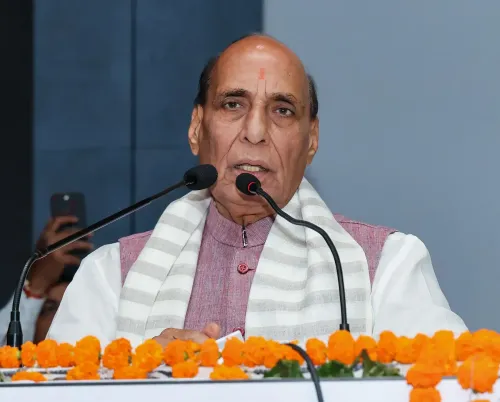
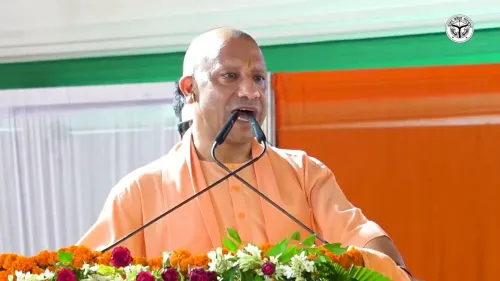
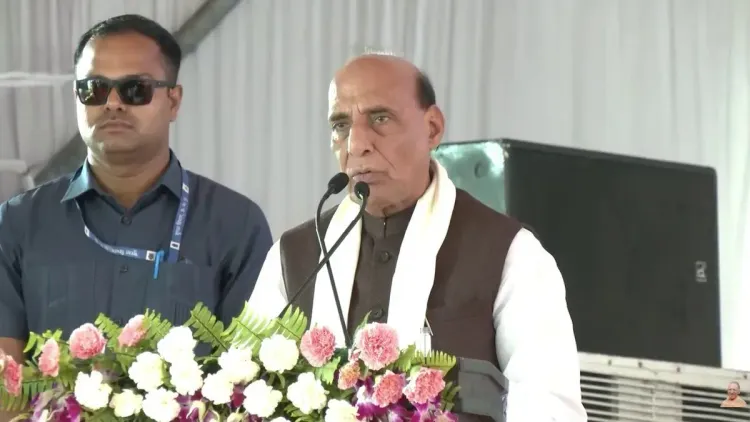
Uttar Pradesh Chief Minister Yogi Adityanath's flagship One District One Product (ODOP) scheme drew public appreciation from Union Defence Minister Rajnath Singh on Saturday, 30 May 2026, with the senior BJP leader attributing the programme's success directly to the Chief Minister's leadership.
In a post shared from the Chief Minister's official account, Rajnath Singh was quoted as saying: 'Uttar Pradesh aaj One District One Product ke liye jaana ja raha hai' ('Uttar Pradesh is today known for One District One Product'), adding that 'this transformation is not by chance but is the result of the strong leadership of the popular Chief Minister of Uttar Pradesh, Shri Yogi Adityanath.'
Context
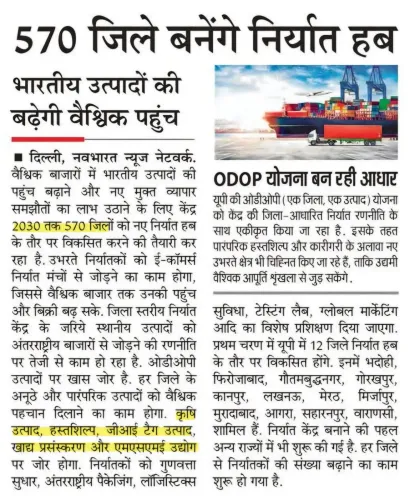
The One District One Product scheme was formally launched by the Uttar Pradesh government in 2018, identifying a signature product in each of the state's 75 districts to strengthen local value chains and generate employment. Each district's chosen product — ranging from Varanasi's silk weaves to Agra's leather goods and Moradabad's brassware — receives dedicated branding, credit linkage, and marketing support from the state government.
The programme has since become one of the most-cited examples of district-level manufacturing policy in India, and the central government later adopted a national ODOP framework that draws from the Uttar Pradesh model.
Policy Backdrop
ODOP sits within a broader state-level push to diversify manufacturing beyond traditional industrial clusters and raise per-district export contributions. The scheme dovetails with the central government's Atmanirbhar Bharat supply-chain goals, positioning local artisans and micro, small and medium enterprises (MSMEs) as engines of grassroots economic growth.
Since 2017, when Chief Minister Yogi Adityanath took office, Uttar Pradesh — India's most populous state — has seen sustained policy focus on district-level manufacturing, export promotion, and artisan welfare. Successive state budgets have allocated funds for ODOP branding, common facility centres, and buyer-seller meets to widen market access for district producers.
Stakeholders and Impact
The primary beneficiaries of ODOP are local artisans, weavers, craftspersons, and district-level MSMEs who gain access to formal credit, government procurement channels, and national and international trade fairs. The scheme has helped bring previously informal or fragmented clusters under a structured promotional umbrella.
Rajnath Singh's public endorsement carries political weight: as a senior Union minister and a BJP leader with deep roots in Uttar Pradesh, his remarks reinforce the party's governance narrative ahead of continued state-level policy cycles. Attribution of transformative outcomes to chief ministerial leadership is a recurring feature of BJP communications on Uttar Pradesh development.
What's Next
Attention will now turn to upcoming state budget allocations and whether new district-level products are added to the ODOP roster in the next policy round. Analysts tracking the programme will watch for fresh export targets, expanded credit linkage for artisans, and any convergence with central government schemes aimed at boosting MSME competitiveness. The Defence Minister's remarks are likely to amplify political focus on ODOP as a model for state-driven economic transformation.
Point of View
Tangible scheme to a named leader ahead of future electoral cycles. The endorsement from a Union minister of his stature elevates ODOP from a state-level programme to a national governance showcase, reinforcing the party's 'double-engine government' narrative. For policy watchers, the more substantive question is whether the next budget cycle will deepen ODOP's credit and export infrastructure or keep it largely promotional. The pattern of senior leaders publicly amplifying each other's governance record suggests the UP model will continue to be projected as a replicable template for other BJP-governed states.
NationPress
19 Sept 2026
Frequently Asked Questions
What is the One District One Product scheme in Uttar Pradesh?
The One District One Product (ODOP) scheme, launched in Uttar Pradesh in 2018, identifies a signature product in each of the state's 75 districts and provides artisans and MSMEs with branding, credit, and marketing support to strengthen local value chains.
Why did Rajnath Singh praise CM Yogi Adityanath?
Union Defence Minister Rajnath Singh stated that Uttar Pradesh's recognition for the ODOP scheme is not by chance but the direct result of Chief Minister Yogi Adityanath's strong leadership.
How does ODOP connect to Atmanirbhar Bharat?
ODOP supports the Atmanirbhar Bharat supply-chain goals by promoting locally manufactured district products, reducing dependence on external supply chains, and integrating artisans and small businesses into formal export channels.
Which districts and products are covered under UP's ODOP?
All 75 districts of Uttar Pradesh are covered, with products ranging from Varanasi's silk and Agra's leather goods to Moradabad's brassware and Lucknow's chikankari embroidery, among many others.
Did the central government adopt Uttar Pradesh's ODOP model?
Yes, the central government later introduced a national ODOP framework that draws from the Uttar Pradesh model, reflecting its influence on district-level manufacturing policy across India.