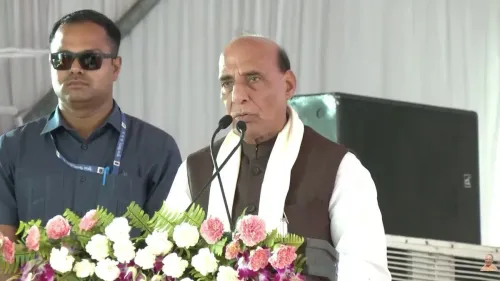
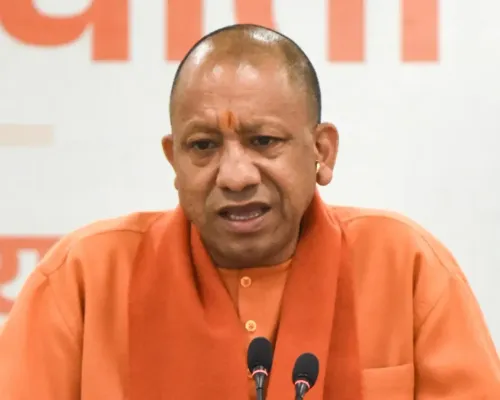
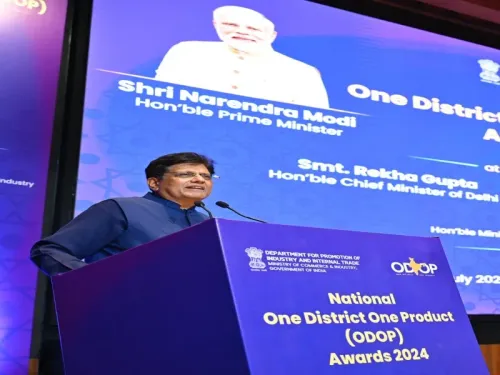
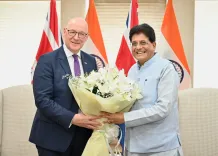
Giriraj Singh backs 570-district export hub plan under ODOP
Synopsis
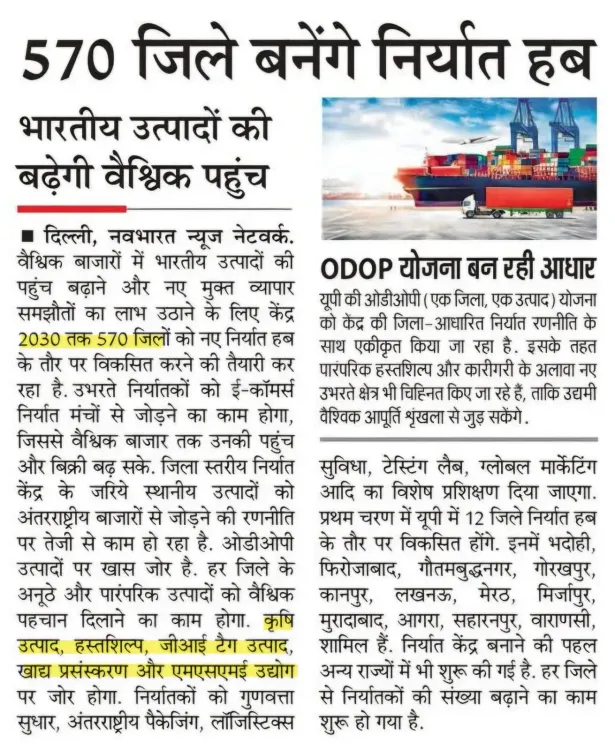
Union Textiles Minister Giriraj Singh has backed the initiative to develop 570 districts as export hubs under the ODOP scheme, saying better quality, packaging, logistics and global marketing will help Indian products reach new international markets and accelerate Make in India.
Key Takeaways
Union Textiles Minister Giriraj Singh publicly endorsed the plan to develop 570 districts as export hubs on 23 July 2026 .
The One District One Product (ODOP) scheme, originally launched by Uttar Pradesh in 2018 , aims to identify and promote one unique product per district for export.
The minister cited quality upgrades, packaging, logistics, and global marketing as the four key enablers for reaching new international markets.
The initiative is positioned as a pillar of the broader Make in India and Viksit Bharat policy frameworks.
Primary beneficiaries include MSME exporters, artisan clusters, and district-level producers currently underserved by metro-focused export infrastructure.
Implementation progress — including product identification, infrastructure upgrades, and export data — will be closely watched in upcoming parliamentary and budget discussions .
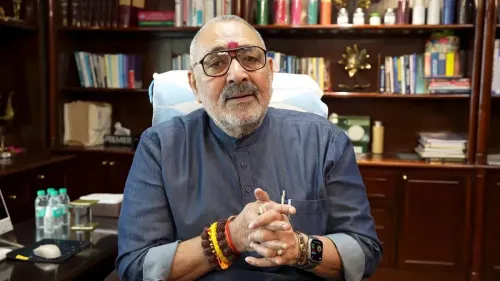
Union Textiles Minister Giriraj Singh on Thursday, 23 July 2026, voiced strong support for the initiative to develop 570 districts across India as export hubs, calling it a significant step toward giving local products global recognition through the One District One Product (ODOP) scheme.
Posting on X, the minister said the drive to develop 570 districts as export hubs is 'भारत के स्थानीय उत्पादों को वैश्विक पहचान देने की दिशा में एक महत्वपूर्ण कदम' — 'an important step toward giving India's local products global recognition.' He added that through ODOP, every district's speciality will gain a new identity, and Indian products will reach new global markets with better quality, packaging, logistics, and marketing support, giving fresh momentum to Make in India.
Context
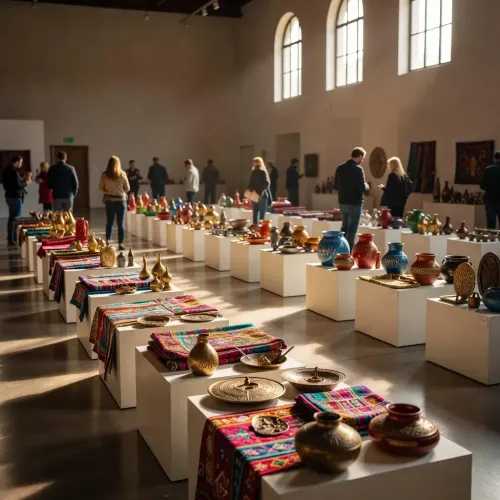
The One District One Product scheme was first launched by the Uttar Pradesh government in 2018 before being adopted at the national level to identify and promote one unique product from each district, boosting local manufacturing and exports. The initiative targets MSME exporters, local artisans, and district-level producers who have historically lacked the infrastructure and market access enjoyed by large urban manufacturers.
Giriraj Singh's post underscores the scheme's ambition to shift India's export growth model away from metro-centric production toward a decentralised, district-driven approach. The Ministry of Textiles, which he leads, is among the key central bodies with a stake in ODOP outcomes, given the significant role of handlooms, handicrafts, and textile clusters in district-level export potential.
Policy Backdrop
Make in India, announced in September 2014, set the broader framework for transforming India into a global manufacturing hub by attracting investment and expanding exports. ODOP fits within this architecture by adding a granular, geography-specific layer — ensuring that the manufacturing push reaches districts that might otherwise be bypassed by large-scale industrial policy.
The minister highlighted four specific enablers — quality upgrades, packaging improvements, logistics support, and global marketing — as the levers that will connect district producers to international buyers. These operational pillars reflect a recognition that product identification alone is insufficient; supply-chain and branding infrastructure must accompany it for exports to materialise.
Stakeholders and Impact
The primary beneficiaries of a successful 570-district export hub programme would be small and medium enterprises (SMEs), artisan clusters, and agri-produce units spread across India's non-metro districts. For many of these producers, direct access to global markets has been limited by fragmented logistics networks and low brand visibility abroad.
Improved packaging and quality standards under ODOP could also help Indian products meet the compliance requirements of export markets in Europe, the United States, and Southeast Asia, where non-tariff barriers around labelling and quality certification are significant. The scheme's success would therefore depend on coordinated action across the ministries of commerce, textiles, food processing, and micro, small and medium enterprises.
What's Next
Attention will now turn to the pace of product identification across all targeted districts, the roll-out of logistics and packaging infrastructure, and whether dedicated budget allocations follow the political signalling. Parliamentary discussions and budget sessions are likely venues where the scheme's funding and implementation roadmap will be scrutinised.
If district-level export data begins to reflect measurable growth, ODOP could become a central plank of India's broader Viksit Bharat economic narrative ahead of future electoral cycles — making the scheme's on-ground execution as politically significant as its policy ambition.
Point of View
The minister is knitting together two distinct policy generations — state-level product promotion and national manufacturing ambition — into a unified electoral and economic narrative. The reference to 570 districts is politically significant: it signals that the scheme's reach is designed to be pan-India rather than concentrated in a handful of states, broadening its appeal to a wide coalition of regional stakeholders. Whether the initiative delivers measurable export growth will ultimately determine whether it becomes a durable policy achievement or remains a well-branded aspiration.
NationPress
21 Oct 2026
Frequently Asked Questions
What is the ODOP scheme in India?
The One District One Product (ODOP) scheme identifies and promotes one unique product from each district to boost local manufacturing and exports. It was first launched by Uttar Pradesh in 2018 and was later adopted at the national level.
What did Giriraj Singh say about the 570-district export hub plan?
Union Textiles Minister Giriraj Singh said developing 570 districts as export hubs is an important step toward giving India's local products global recognition, and that ODOP will help Indian goods reach new markets through better quality, packaging, logistics and marketing.
How does ODOP connect to Make in India?
ODOP adds a district-level, product-specific layer to the broader Make in India initiative launched in 2014, ensuring that the national manufacturing push reaches smaller towns and rural clusters rather than being concentrated in major cities.
Who benefits from the ODOP export hub initiative?
The primary beneficiaries are MSME exporters, local artisans, and district-level producers who currently lack the infrastructure and market access available to large urban manufacturers.
What is Viksit Bharat and how does ODOP fit into it?
Viksit Bharat is India's overarching vision for becoming a developed nation. ODOP's goal of connecting district economies to global markets through quality and logistics upgrades is positioned as a building block of this larger development agenda.