CM Yogi Champions UP's Triple 'One District' Vision
Synopsis
Chief Minister Yogi Adityanath reaffirmed Uttar Pradesh's district-first governance model on 7 August 2026, highlighting three parallel schemes — One District-One Product, One District-One Medical College, and One District-One Cuisine — designed to drive economic, healthcare, and cultural growth from each of UP's 75 districts.
Key Takeaways
One District-One Product (ODOP) , launched in 2018 , promotes each UP district's signature local product to boost manufacturing, exports, and artisan livelihoods.
One District-One Medical College aims to place a government medical college in every district, addressing UP's chronic shortage of healthcare infrastructure outside major cities.
One District-One Cuisine is being scaled to identify and promote traditional local dishes from each district, linking cultural identity to tourism potential.
All three schemes follow a consistent district-first logic that UP has pursued since 2017 to reduce urban migration and leverage local strengths.
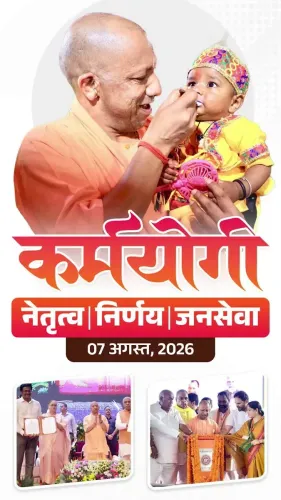
The Chief Minister's Office of Uttar Pradesh framed the three initiatives together on 7 August 2026 , signalling a unified policy narrative heading into the next cycle.
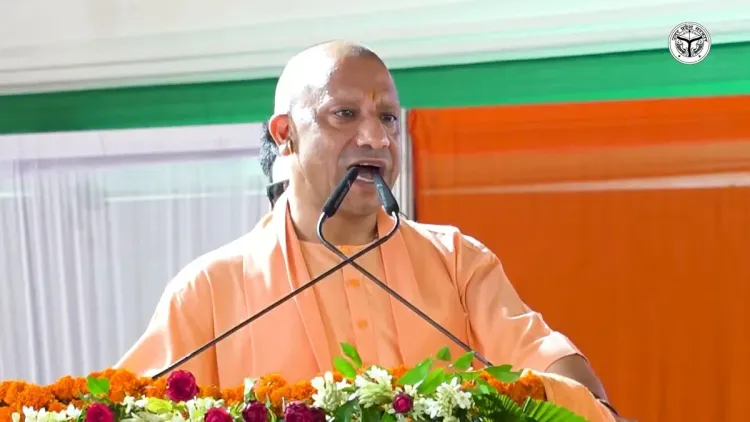
Three schemes, one ambition: Uttar Pradesh Chief Minister Yogi Adityanath is weaving economy, healthcare, and culture into a single district-first blueprint — and on 7 August 2026, his office put all three pillars on record in a single post.
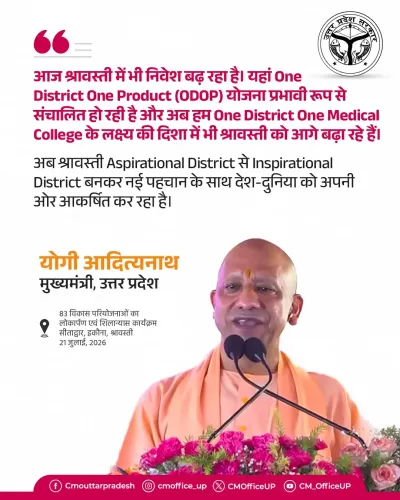
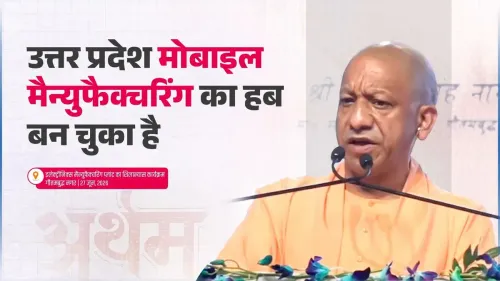
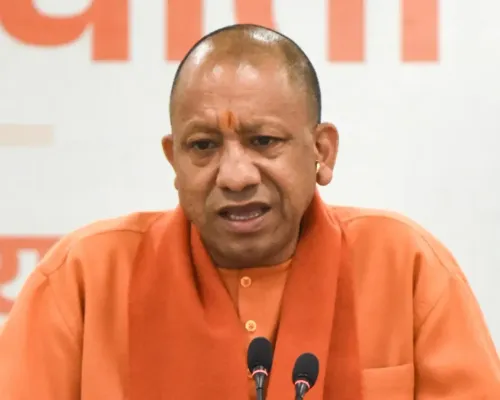
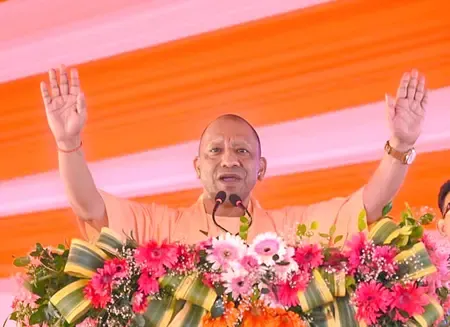
Speaking through the Chief Minister's Office of Uttar Pradesh, CM Yogi Adityanath declared that every district in the state now operates under the 'One District-One Product' and 'One District-One Medical College' frameworks, while a third initiative — 'One District-One Cuisine' — is actively being scaled to give each district's traditional dishes a new, lasting identity.
ODOP: Eight Years of Turning Local Craft Into Export Power
The One District-One Product (ODOP) scheme, formally launched in 2018, is the anchor of this district-centric architecture. The logic was simple and surgical: identify the one product each district already does best — Varanasi's silk, Agra's leather, Moradabad's brassware — and pour training, credit, and market access behind it. Local artisans and small manufacturers, not distant industrial hubs, become the engine. The scheme has since been cited nationally as a model for reducing urban migration pressure by creating livelihoods at the source.
A Medical College in Every District — Closing the Doctor Gap
Running in parallel is the One District-One Medical College push, a statewide infrastructure drive that began taking shape from 2017 onward, with successive state budgets approving new institutions district by district. Uttar Pradesh, with its vast rural population and historically thin medical infrastructure outside Lucknow and Varanasi, has long faced acute shortages of trained doctors and hospital beds. A government medical college in every district changes that arithmetic — and creates a pipeline of locally-rooted healthcare professionals less likely to migrate to metros.
One District-One Cuisine: Putting the Thali on the Tourism Map
The newest and most culturally textured of the three is One District-One Cuisine. The initiative sets out to document, promote, and elevate the traditional dishes that define each district's food identity — recipes that often exist only in home kitchens or at local fairs, invisible to the wider tourism economy. By institutionalising these culinary identities, the state is signalling that cultural preservation and economic opportunity are the same bet. District-level cuisine festivals and integration with UP's broader tourism campaigns are the natural next step.
Three schemes, three domains — but one consistent governing instinct: that Uttar Pradesh's 75 districts are not problems to be managed from Lucknow, but assets to be unlocked from within.
Point of View
District-by-district transformation rather than isolated interventions. ODOP has genuine national visibility and export data behind it; the medical college drive addresses a real electoral pressure point in rural UP; One District-One Cuisine is the softest of the three but carries cultural-nationalist appeal. Together, they allow the BJP government in Lucknow to argue that its development model is both broad and deep. The question analysts will ask is whether execution on the ground — particularly on medical colleges and cuisine promotion — matches the ambition of the framing.
NationPress
22 Sept 2026
Frequently Asked Questions
What is the One District-One Product scheme in Uttar Pradesh?
The One District-One Product (ODOP) scheme was launched by the Uttar Pradesh government in 2018 to identify and promote each district's signature local product — such as Varanasi's silk or Moradabad's brassware — by providing artisans and manufacturers with training, credit, and market access.
What is the One District-One Medical College initiative in UP?
The One District-One Medical College initiative aims to establish a government medical college in every district of Uttar Pradesh to expand healthcare infrastructure and medical education, with approvals rolling out progressively since 2017 .
What is One District-One Cuisine in Uttar Pradesh?
One District-One Cuisine is a Uttar Pradesh government effort to identify, document, and promote the traditional local dishes of each district, with the goal of boosting cultural identity and linking local food heritage to tourism and economic opportunity.
When did CM Yogi Adityanath announce the One District schemes?
The Chief Minister's Office of Uttar Pradesh highlighted all three 'One District' schemes — Product, Medical College, and Cuisine — together on 7 August 2026 , quoting CM Yogi Adityanath directly.
How does UP's district-first model aim to reduce migration?
By building economic specialisation (ODOP), local healthcare capacity (One District-One Medical College), and cultural tourism (One District-One Cuisine) at the district level, the Uttar Pradesh government aims to create livelihoods and services close to home, reducing the pressure on residents to migrate to larger cities.