CM Yogi Champions ODOC as Voice of UP's Artisans
Synopsis
Chief Minister Yogi Adityanath positioned the One District One Cuisine (ODOC) initiative as a governance philosophy rooted in public sentiment, calling it a powerful medium to honour the labour of UP's artisans, women, and traditional food custodians.
Key Takeaways
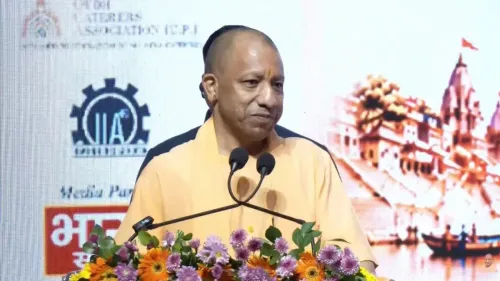
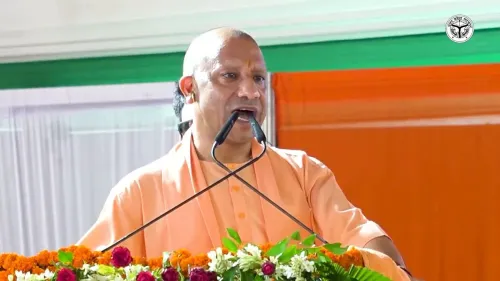
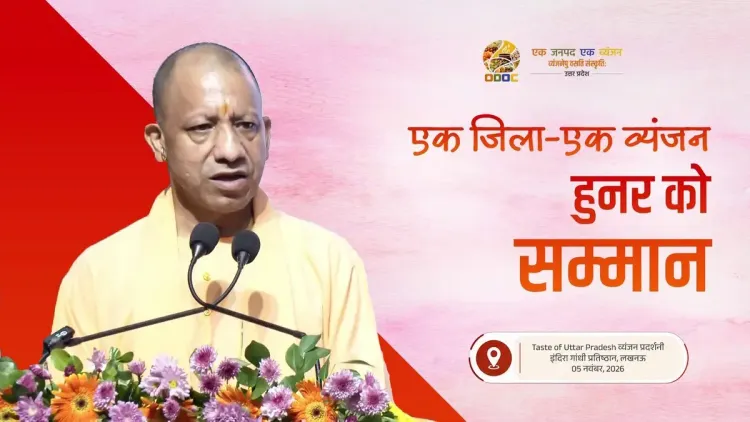
CM Yogi Adityanath publicly championed the One District One Cuisine (ODOC) scheme on 5 November 2026 , framing it as governance that mirrors public sentiment.
ODOC extends the logic of the One District One Product (ODOP) scheme launched in 2018 , applying district-first policy to traditional cuisines.
The scheme explicitly targets artisans and women — particularly mothers and sisters — as primary beneficiaries whose cultural labour deserves formal recognition and income.
Uttar Pradesh's 75 districts each carry distinct culinary traditions that the scheme seeks to map, brand, and potentially integrate with tourism circuits.
The CM framed reading 'the pulse of the people' and honouring their sentiments as the defining quality of forward-looking governance.
In Uttar Pradesh, governance is increasingly speaking the language of the kitchen — and Chief Minister Yogi Adityanath wants the world to know why. On Thursday, 5 November 2026, the Chief Minister's Office of Uttar Pradesh shared a pointed observation from the CM that reframed food policy as a philosophy of respect: the leader who reads public sentiment and honours it, he said, is the one who moves forward.
The CM's statement, shared by the official CMOfficeUP handle, placed the One District One Cuisine (ODOC) initiative at the centre of that philosophy. 'यह हमारे कारीगरों और माताओं-बहनों के श्रम को सम्मान देने का एक सशक्त माध्यम है' — 'This is a powerful medium to honour the labour of our artisans and mothers and sisters' — the statement read. Stripped of jargon, the message is direct: district-specific food traditions are not nostalgia. They are an economic instrument and a dignity statement.
From ODOP to the Dining Table: The Logic Behind ODOC
ODOC extends the architecture of the state's landmark One District One Product (ODOP) scheme, launched in 2018, which mapped each of Uttar Pradesh's 75 districts to a signature product — from Lucknow's chikankari embroidery to Agra's leather goods — and channelled policy support, branding, and e-commerce linkages toward those items. ODOP became a widely cited model for decentralised rural employment, eventually drawing national replication. ODOC applies the same district-first logic to traditional cuisines, recognising that the women and artisans who keep these recipes alive have rarely seen that knowledge translate into income or formal recognition.
The political framing is deliberate. By invoking 'जनता की नब्ज' — 'the pulse of the people' — CM Yogi positions the scheme not merely as a cultural programme but as a governance principle: policy earns legitimacy when it mirrors lived experience. That framing resonates in a state where grassroots cultural identity — regional food, craft, festival — carries enormous electoral and social weight.
Women and Artisans at the Core
The specific mention of 'माताओं-बहनों' — mothers and sisters — alongside artisans is significant. It signals that ODOC is designed with women's economic participation as a primary outcome, not an afterthought. Across Uttar Pradesh's rural districts, women are the primary custodians of traditional recipes, home-style preparation techniques, and food-based cottage industries. A scheme that formally maps and promotes those traditions creates a pathway — through branding, tourism integration, and potential e-commerce linkages — for that unpaid cultural labour to generate income.
The broader pattern across the state's last several years of governance points consistently in this direction: identify a district-level asset, give it institutional recognition, and connect it to markets. ODOC is the latest node in that network — one that happens to sit at the intersection of culture, tourism, and women's self-reliance.
Watch for district-level rollout announcements and any formal integration of ODOC into UP Tourism's circuits or the existing ODOP e-commerce infrastructure. If the cuisine map follows the product map, the next chapter will be about who gets to sell — and how far their reach goes.
Point of View
A model that began with ODOP in 2018 and has since become a governance signature. By centring women and artisans in the framing, CM Yogi is simultaneously making a development argument and a political one: that the state's most valuable assets are its grassroots producers, not its urban centres. The invocation of 'public sentiment' as a governance compass reflects a broader shift in Indian state-level politics toward cultural legitimacy as the foundation for policy mandate. If ODOC achieves integration with ODOP's existing marketing and e-commerce infrastructure, it could represent a meaningful expansion of rural women's access to formal markets — and a template other states will study.
NationPress
5 Nov 2026
Frequently Asked Questions
What is the One District One Cuisine (ODOC) scheme in Uttar Pradesh?
ODOC is a Uttar Pradesh government initiative that promotes each district's traditional cuisine as a vehicle for honouring artisans and women, generating rural livelihoods, and preserving food heritage. It extends the logic of the successful One District One Product (ODOP) scheme from crafts to cuisine.
How is ODOC different from ODOP?
While ODOP (launched 2018) maps each of UP's 75 districts to a signature craft or product — such as Lucknow's chikankari or Agra's leather — ODOC applies the same district-first framework specifically to traditional cuisines, recognising women and local food artisans as the primary custodians of that knowledge.
Who are the main beneficiaries of the ODOC scheme?
CM Yogi specifically identified artisans and women — referred to as 'mothers and sisters' — as the core beneficiaries, recognising that women in UP's rural districts are the primary keepers of traditional recipes and food-based cottage industries.
What did CM Yogi say about ODOC on 5 November 2026?
CM Yogi said that only those who read the pulse of the people and make decisions accordingly will progress, calling ODOC 'a powerful medium to honour the labour of our artisans and mothers and sisters.'
Will ODOC be linked to UP Tourism or e-commerce platforms?
No formal integration has been announced yet, but the scheme's logic — mirroring ODOP's approach — points toward potential linkages with tourism circuits and e-commerce platforms. District-level rollout announcements are what to watch for next.