Will Uttar Pradesh's ‘One District, One Cuisine’ Elevate Local Culinary Traditions?
Synopsis
Uttar Pradesh is set to launch its 'One District, One Cuisine' initiative, aiming to elevate local food traditions into global brands. This move follows the success of ODOP and is designed to showcase the state's diverse culinary heritage while boosting local economies and exports.
Key Takeaways
Launch of 'One District, One Cuisine' to promote local culinary traditions.
Each district will have a unique identity based on its signature dish.
Focus on improving quality, hygiene, and marketing of local cuisines.
ODOP and ODOC initiatives aim to elevate local economies and exports.
Integration of ODOP products into major retail networks is planned.
Lucknow, Dec 5 (NationPress) Following the remarkable achievement of 'One District, One Product' (ODOP), the government of Uttar Pradesh is poised to introduce 'One District, One Cuisine' (ODOC), aimed at promoting the state’s rich culinary diversity.
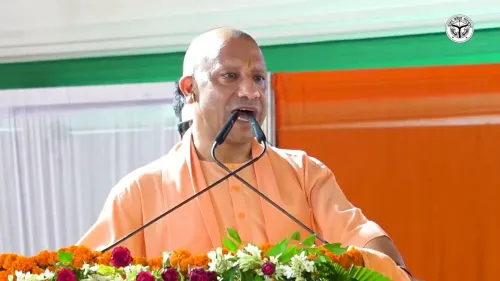
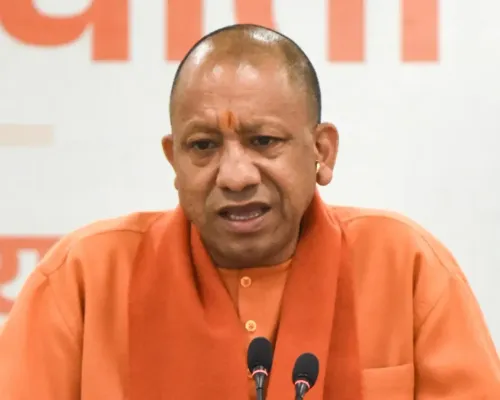
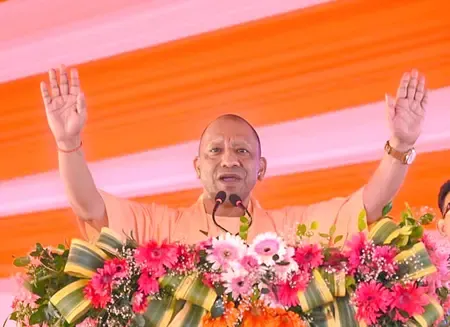
On Friday, Chief Minister Yogi Adityanath revealed that this ODOC initiative will bestow each district with a distinct identity linked to its renowned dish.
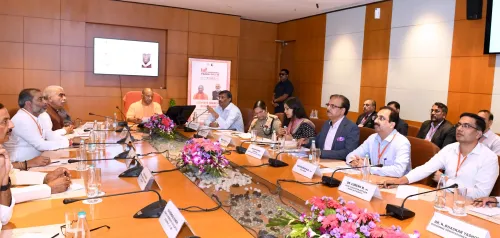
During a high-level meeting, the Chief Minister noted that the food traditions of Uttar Pradesh—from the halwa of one locale to the dalmoth of another—embody the cultural essence of the state.
He emphasized that each district's signature dish must be enhanced through improvements in quality, hygiene, packaging, branding, and marketing, facilitating the transformation of local cuisines into robust marketable brands.
According to Yogi Adityanath, the combination of ODOP and ODOC will propel Uttar Pradesh “from local to global.”
The successful ODOP program, which has come to symbolize Brand UP, is now transitioning into its next phase as ODOP 2.0, which is intended to elevate local industries, self-employment, and exports significantly.
He pointed out that in light of evolving global market dynamics, consumer preferences, and technological advancements, ODOP must advance into a more inclusive, professional, and results-driven framework.
Officials reported that since its inception in 2018, ODOP has become the cornerstone of the state’s export framework. The initiative has provided over 1.25 lakh toolkits, sanctioned loans exceeding Rs 6,000 crore, and offered direct marketing assistance to more than 8,000 entrepreneurs.
They noted that 30 Common Facility Centres (CFCs) have been established, 44 ODOP products have been geo-tagged, and ODOP items are now prominently featured on various e-commerce platforms, contributing over 50 percent of Uttar Pradesh’s total exports. This initiative has also garnered national accolades for two consecutive years.
Describing ODOP 2.0 as a “powerful tool” for sustainable employment, local business development, and export enhancement, the Chief Minister urged greater focus on scaling up successful units and entrepreneurs from the initial phase. He stressed the importance of strengthening UP’s products across four pillars—technology, packaging, quality, and market access.
He further instructed that Common Facility Centres should be optimized by incorporating experts who can provide comprehensive support for small entrepreneurs in areas such as technical consultation, design, packaging, and production under one roof.
Additionally, he directed that ODOP products be integrated into major retail networks and modern markets, rather than remaining limited to traditional sales channels. Dedicated ODOP centers will be established in Unity Malls across various states, and discussions will be initiated with leading retail chains to ensure the products of Uttar Pradesh are prominently displayed.
Point of View
The launch of 'One District, One Cuisine' by the Uttar Pradesh government signifies a strategic move towards enhancing local food identity while fostering economic growth. It is crucial that the initiative is executed with a focus on quality and sustainability, ensuring that Uttar Pradesh's culinary heritage gains the recognition it deserves on a global scale.
NationPress
7 Oct 2026
Frequently Asked Questions
What is the purpose of 'One District, One Cuisine'?
The initiative aims to promote the unique culinary traditions of each district in Uttar Pradesh, enhancing their marketability and global recognition.
How does ODOC relate to ODOP?
Both initiatives are designed to elevate local products and cuisines, with ODOP focusing on products and ODOC emphasizing culinary heritage.
What impact is expected from these initiatives?
The initiatives are expected to boost local economies, create jobs, and enhance the state's export capabilities.