Has Indian Railways Unveiled an AI System to Prevent Elephant Collisions and Tenders 981 RKms?
Synopsis
Discover how Indian Railways is leveraging Artificial Intelligence to safeguard elephants from train collisions. The deployment of a cutting-edge intrusion detection system marks a significant milestone in wildlife conservation efforts. With expanded tenders covering 981 RKms, this initiative could reshape the future of railway safety and wildlife protection.
Key Takeaways
AI Technology: Indian Railways is using AI to prevent elephant collisions.
Expanded Reach: Tenders for an additional 981 RKms have been awarded.
Real-time Alerts: The system provides alerts to loco pilots and station masters.
Wildlife Protection: This initiative aims to safeguard elephants in critical forest corridors.
Innovative Monitoring: AI-driven systems for predictive maintenance are being tested.
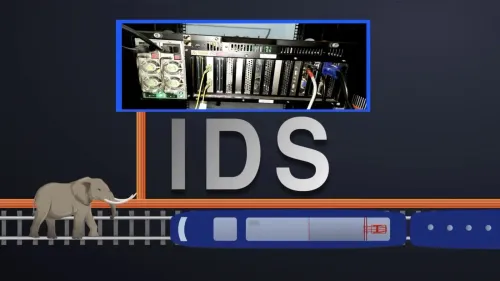
New Delhi, Dec 5 (NationPress) The Indian Railways has launched a groundbreaking Artificial Intelligence (AI)-based system designed to identify elephants on railway tracks across the route kilometers (RKms) of the Northeast Frontier Railway, aimed at averting collisions, as announced by the government on Friday.
Additionally, Indian Railways has issued tenders for an extensive 981 RKms to expand the reach of the AI intrusion detection system throughout the railway network, according to Ashwini Vaishnaw, the Union Minister for Railways, Information & Broadcasting, and Electronics & Information Technology, in a formal reply to the Rajya Sabha.
This innovative AI system employs a Distributed Acoustic System to detect elephants on the tracks and is engineered to promptly alert loco pilots, station masters, and the Control Room regarding the presence of elephants, facilitating timely preventive measures to protect this invaluable wildlife.
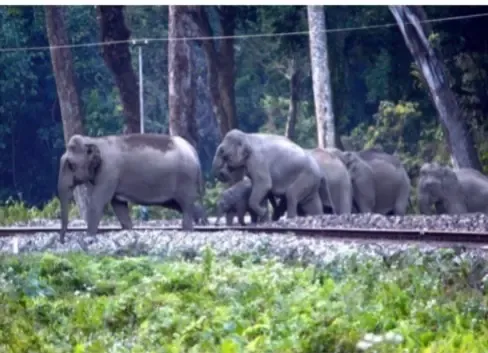
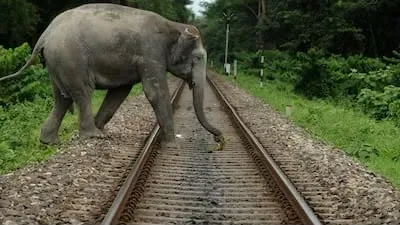
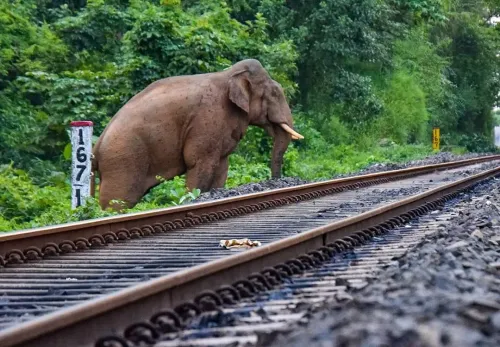
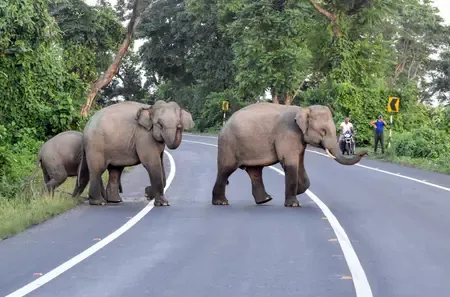
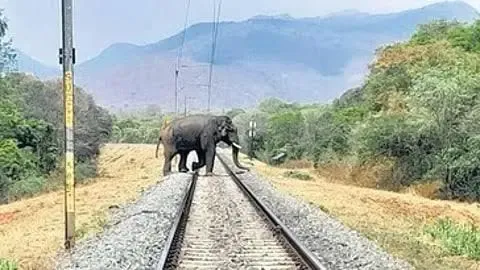
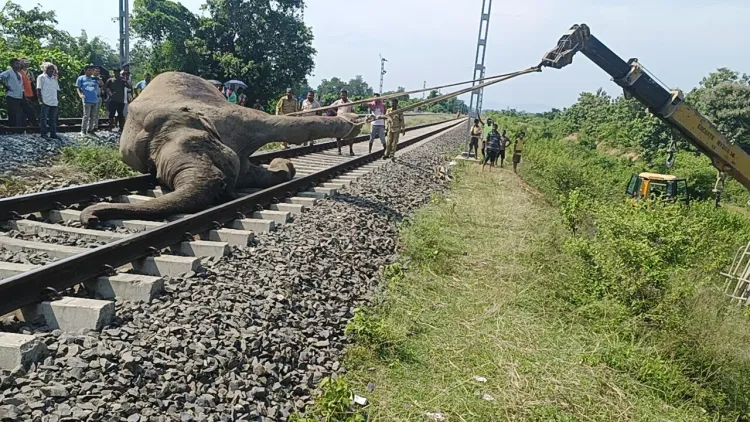
Trains frequently collide with elephants, especially in the Eastern and Central regions of India, such as Assam, West Bengal, and Odisha, due to the railways traversing critical forest corridors. This new system is expected to significantly reduce these tragic incidents in the future.
Pilot projects utilizing AI for predictive maintenance of the signaling systems are currently being assessed at various Indian Railways stations to determine their effectiveness.
Outcomes will be evaluated based on Standard Failure and Prediction Logic, with alerts generated from the trial results at these locations.
A Memorandum of Understanding (MoU) was signed between the Indian Railways and the Dedicated Freight Corridor Corporation of India Limited (DFCCIL) in July 2025 to implement a Wayside Machine Vision-based Inspection System (MVIS).
This AI/ML-driven system is tasked with identifying hanging parts or missing components in moving trains.
Moreover, another MoU was established between Indian Railways and the Delhi Metro Rail Corporation for the introduction of the Automatic Wheel Profile Measurement System (AWPMS), which enables non-contact measurement of train wheel profiles, ensuring real-time monitoring of wheel geometry and wear.
Point of View
I view this initiative by Indian Railways as a pioneering step towards the convergence of technology and wildlife conservation. By integrating advanced AI systems, we can expect a future where both railway safety and the protection of our natural heritage coexist harmoniously.
NationPress
8 Oct 2026
Frequently Asked Questions
What is the purpose of the AI system introduced by Indian Railways?
The AI system aims to detect elephants on railway tracks to prevent collisions and protect wildlife.
How many RKms are covered by the new tenders from Indian Railways?
Indian Railways has awarded tenders covering an additional 981 RKms for the expansion of the AI intrusion detection system.
Which regions in India are most affected by train-elephant collisions?
Train-elephant collisions are particularly prevalent in Eastern and Central states such as Assam, West Bengal, and Odisha.
What technology does the AI system use for elephant detection?
The system employs a Distributed Acoustic System to detect the presence of elephants on the tracks.
How will the effectiveness of the AI system be evaluated?
The effectiveness will be evaluated through pilot projects and measurable outcomes from Standard Failure and Prediction Logics.